Through the Smoke, Behind the Curtain
← Back
English کوردی

Through the Smoke, Behind the Curtain

Photography copyright© by Hawre Khalid, 2014-17

Curated by Shook, Alana Marie Levinson-LaBrosse, and Pshtiwan Babakr
Introduction copyright @ David Shook, 2019
Essay copyright@ Neil Shea, 2019

Interview copyright @ Alana Marie Levinson-LaBrosse, 2019
Translations copyright @ Shene Mohammed and Pshtiwan Babakr, 2019
All other contents copyright @ their respective contributors, 2019


English کوردی

Through the Smoke, Behind the Curtain: The Photography of Hawre Khalid

by Shook 


Born in the contested city of Kirkuk in 1987, Hawre Khalid came of age during the early years of the United States’ invasion of Iraq, and his career as a photojournalist, which began in 2007, has traced the trajectory of life in Iraq since then, with an emphasis on the conflict and displacement that Iraqis have experienced as the consequences of the international military intervention against Daesh (ISIS). Through the Smoke, Behind the Curtain showcases over 60 of his photographs taken from 2014 to 2019, across the country and along the border of neighboring Syria. From Basra to Mosul, Kirkuk to Şhingal, these images document not just one of the world’s most brutal of contemporary wars but also the remarkable resilience and humanity of its everyday survivors.

Drawing from the photographer's vast archive of work documenting life in Iraq since 2007, the photographs of his debut solo exhibition in his native Kurdistan highlight his remarkable eye for story, for the intimate personal experiences that pulse beneath the surface of the broad historical narratives that make international headlines. Selecting the photographs for this exhibition was no small feat. Our process was collaborative and conversational, with co-curators Alana Marie Levinson-LaBrosse, Pshtewan Kamal Babakir, and I working with Khalid himself to identify the visual and narrative themes—the background smoke and recurring curtains and the stories both so often obscure—that thread through his work. 

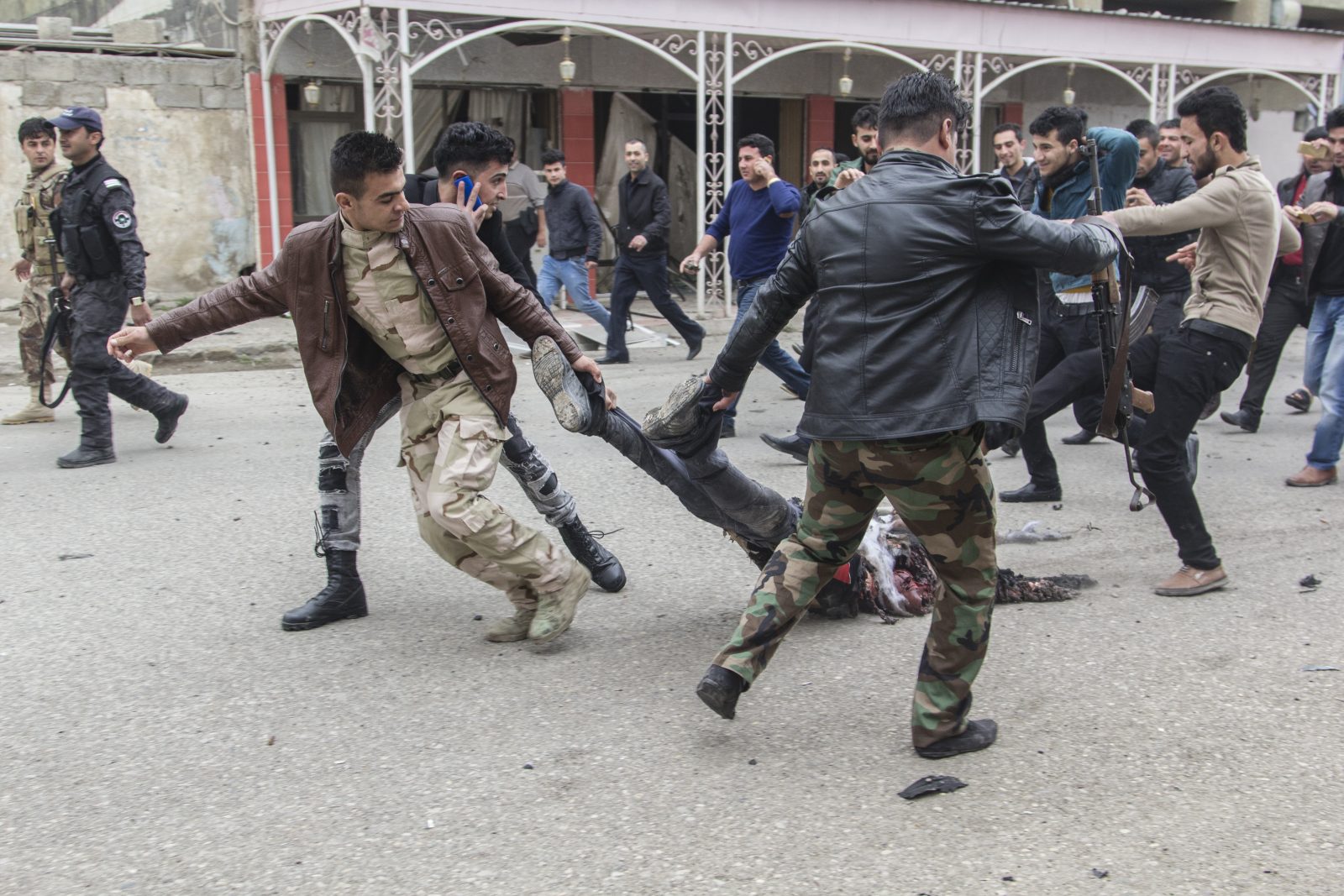
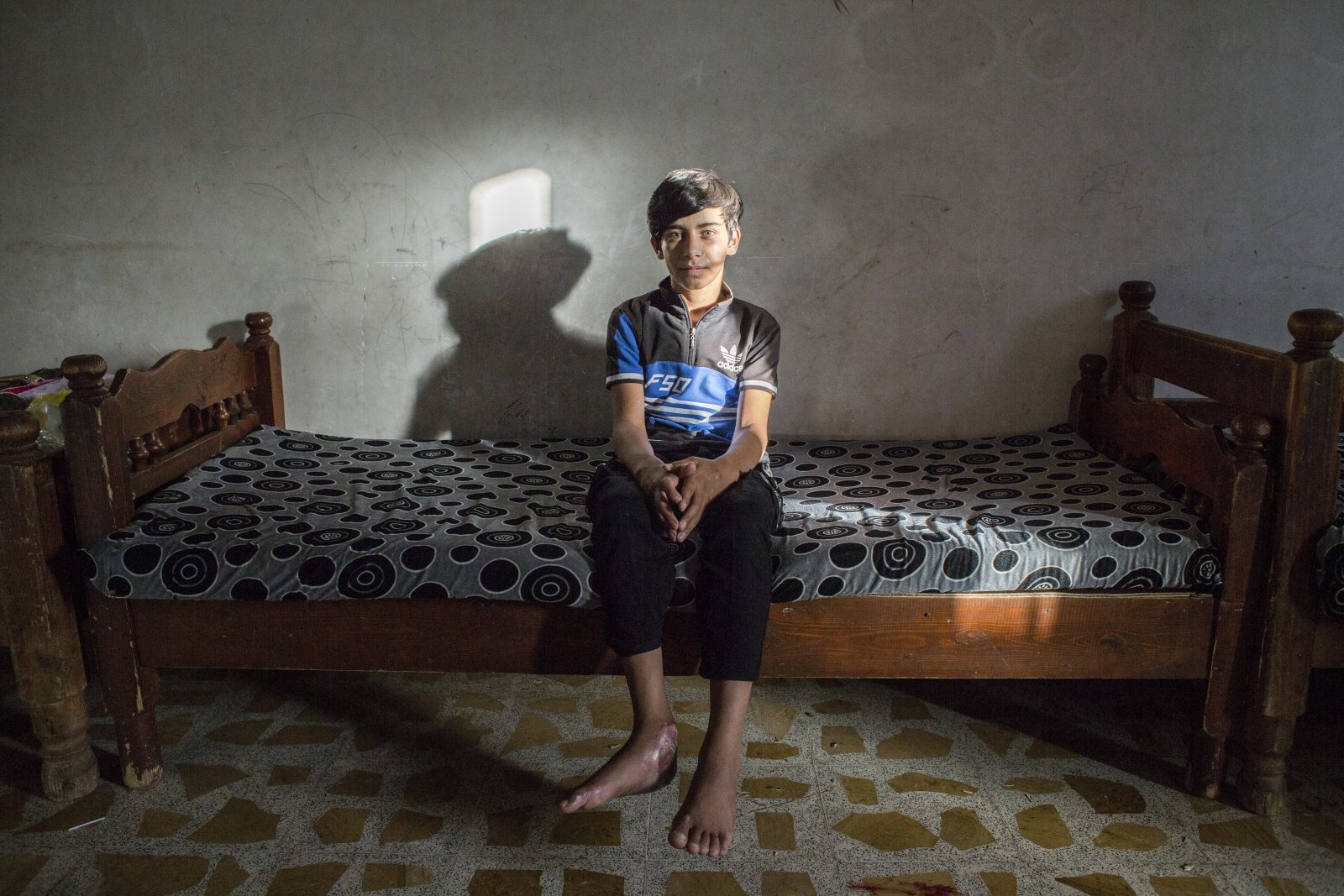
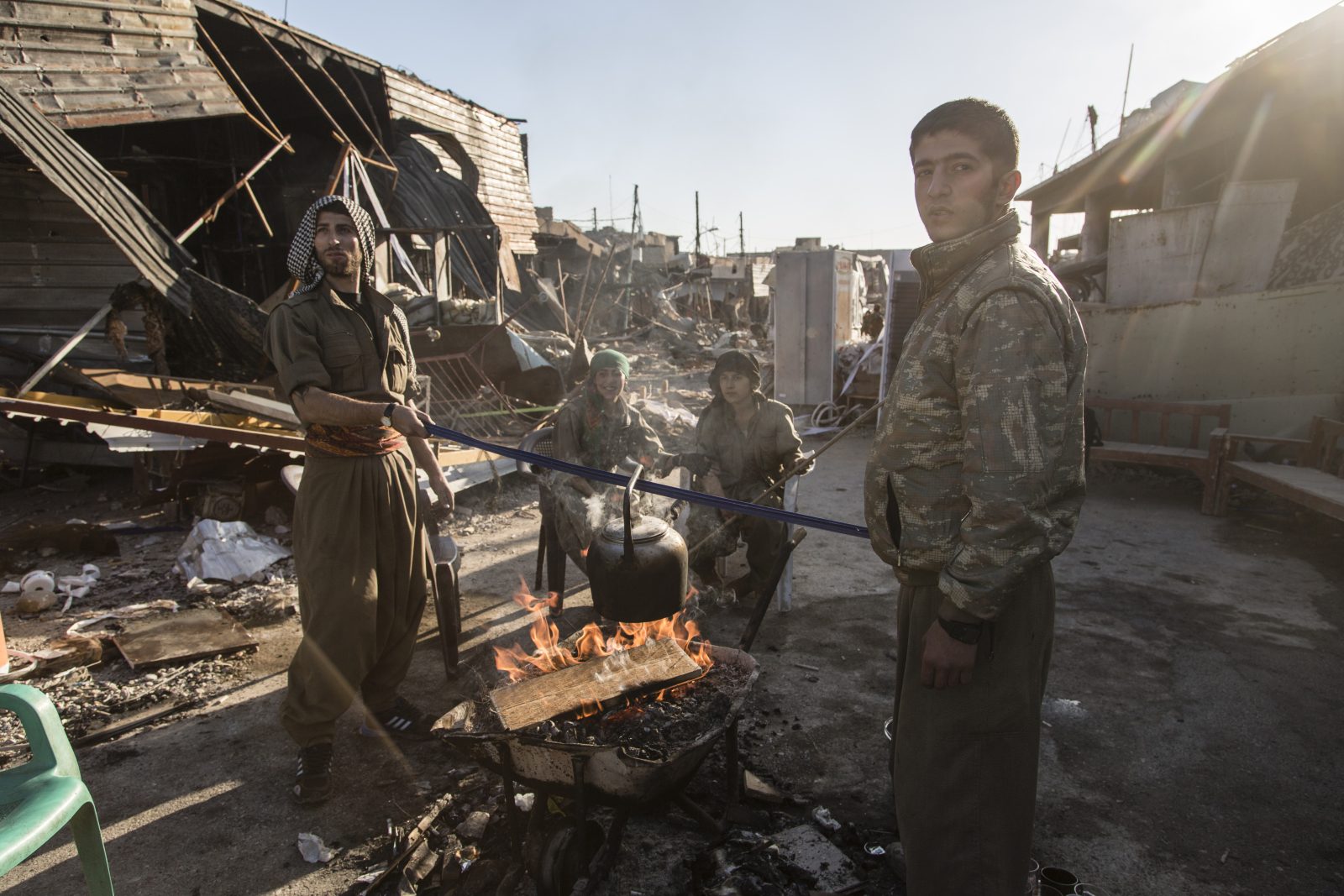
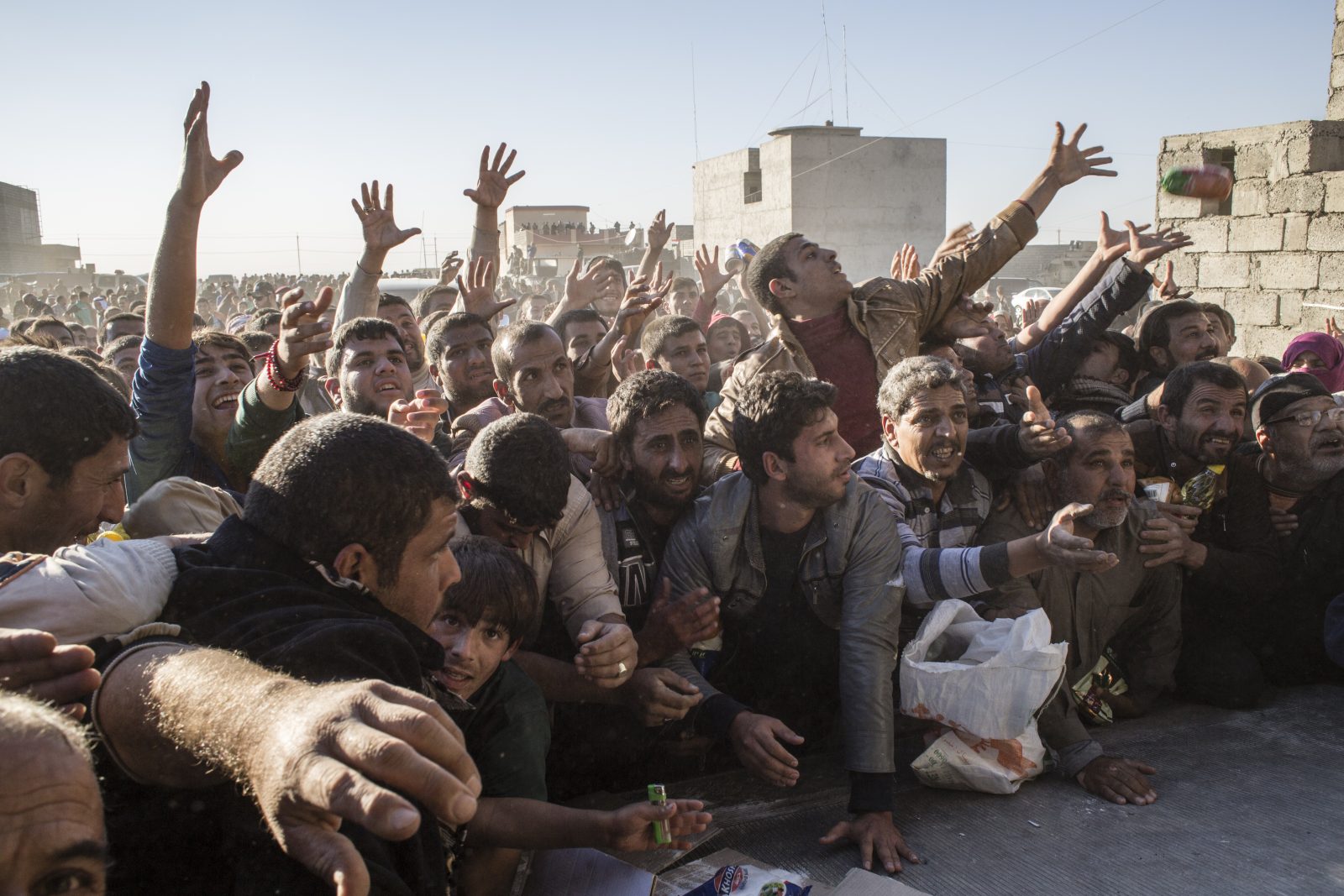
I remember clearly the first time I reviewed the photographs under consideration for inclusion in the exhibition. Even as someone familiar with Khalid’s work, the concentrated experience of taking in so many images of conflict, displacement, and suffering proved intense, and for several hours afterwards I found myself unable to shake specific images: peshmergas dragging the corpse of an Daesh member through the streets of Kirkuk, the desperate hands of the Mosul hungry outstretched with desperation, the absence of hands in a photograph of two brothers comparing the blunted ends of their right arms, the result of Daesh’s brutal, unappealable sentencing for theft, charges both brothers deny. At the same time, I was struck by the remarkable perseverance of his protagonists, by Khalid’s rare ability to capture the dignity of his subjects. An orphaned boy, his foot disfigured by the mortar that killed his parents, stares directly at the viewer, handsome and self-possessed. Children in a temporary displacement camp jump rope, their mid-leap smiles contagious. Fisherman take a break from their trade to relax on a rug draped over the grassy banks of the Tigris, Kurdistan Workers’ Party (PKK) soldiers boil tea amidst the ruins of newly liberated Shingal. Yes, the photographs show, life goes on, even in times of war. And no, they seem to suggest, the scars of traumas endured never fully go away. 

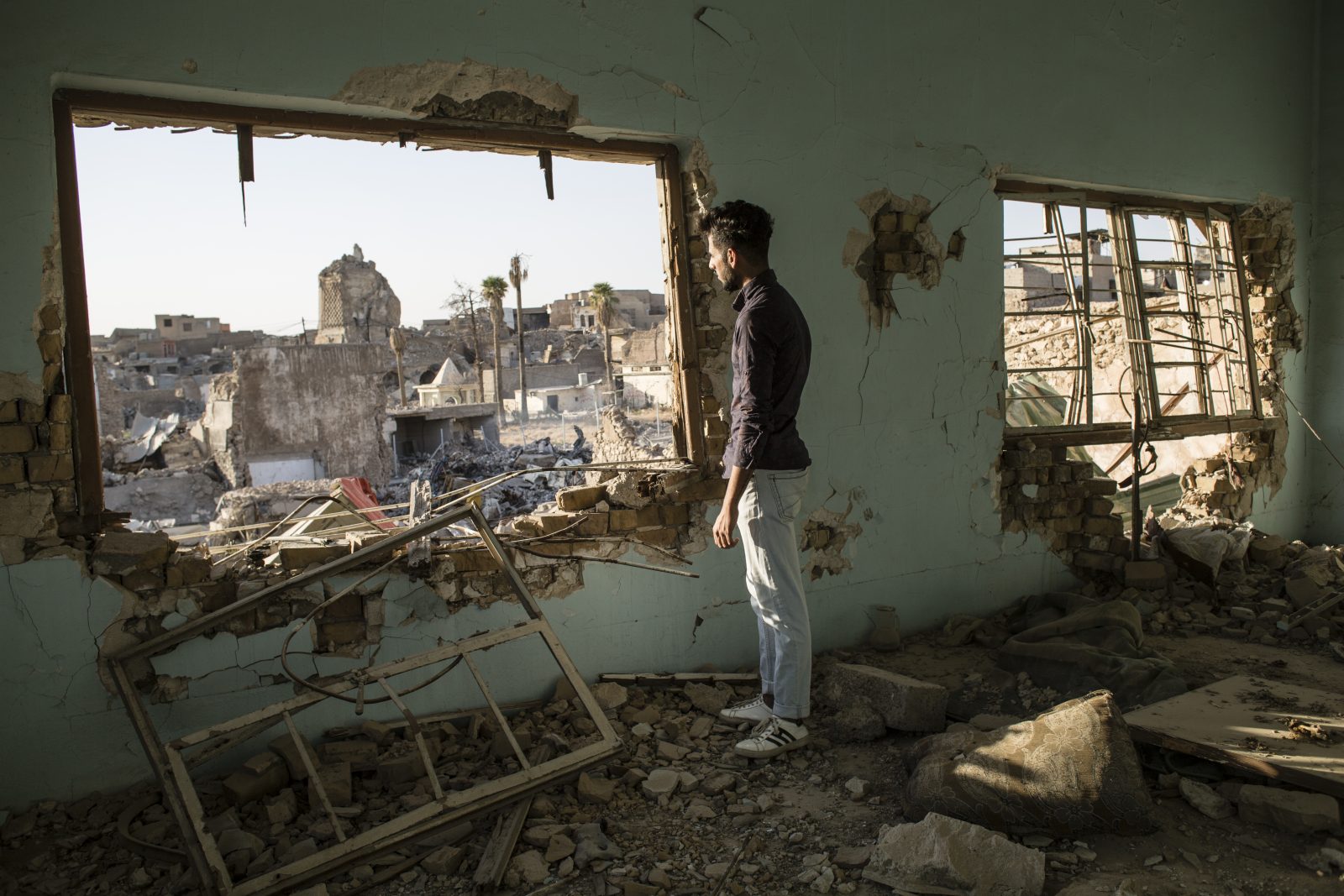
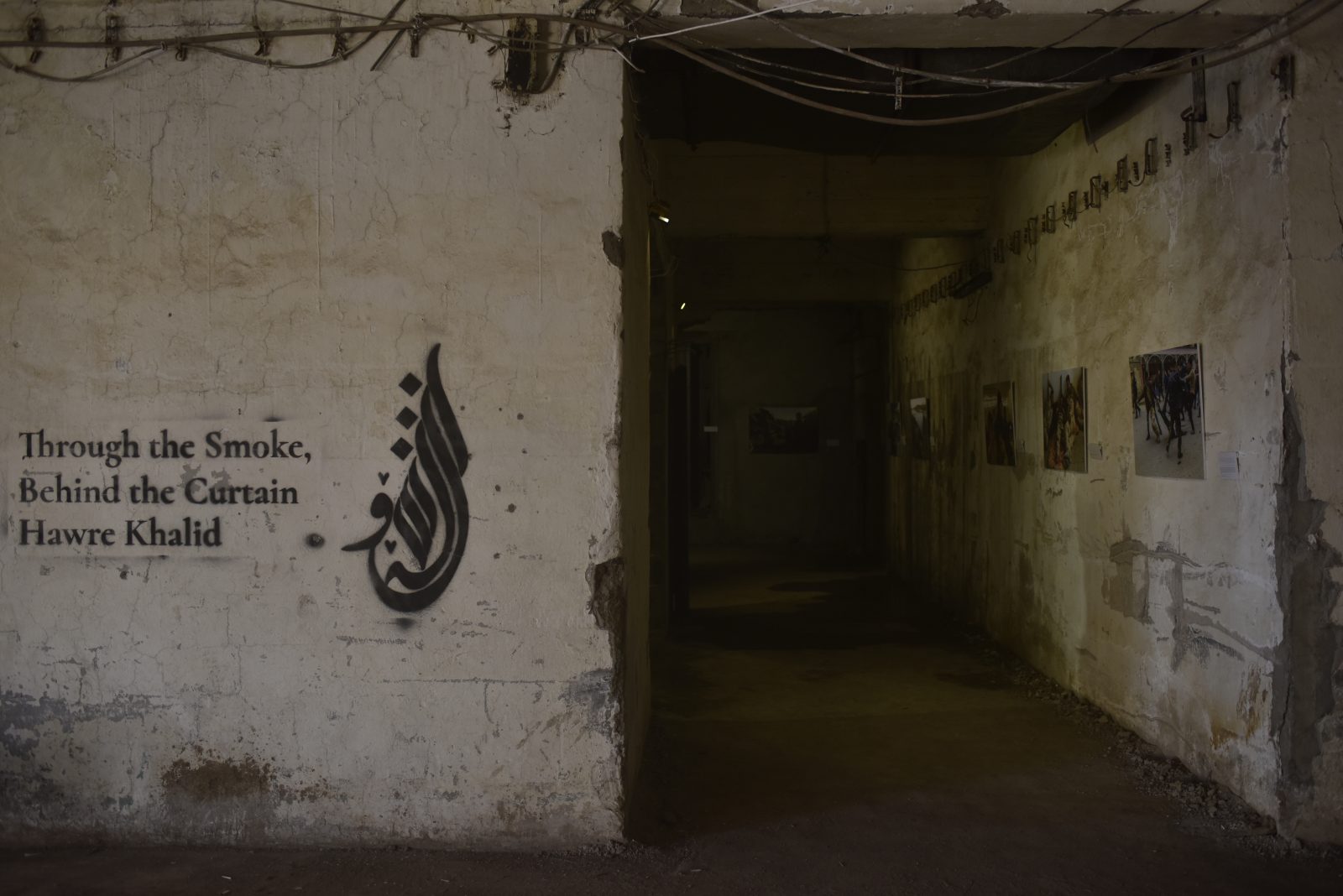
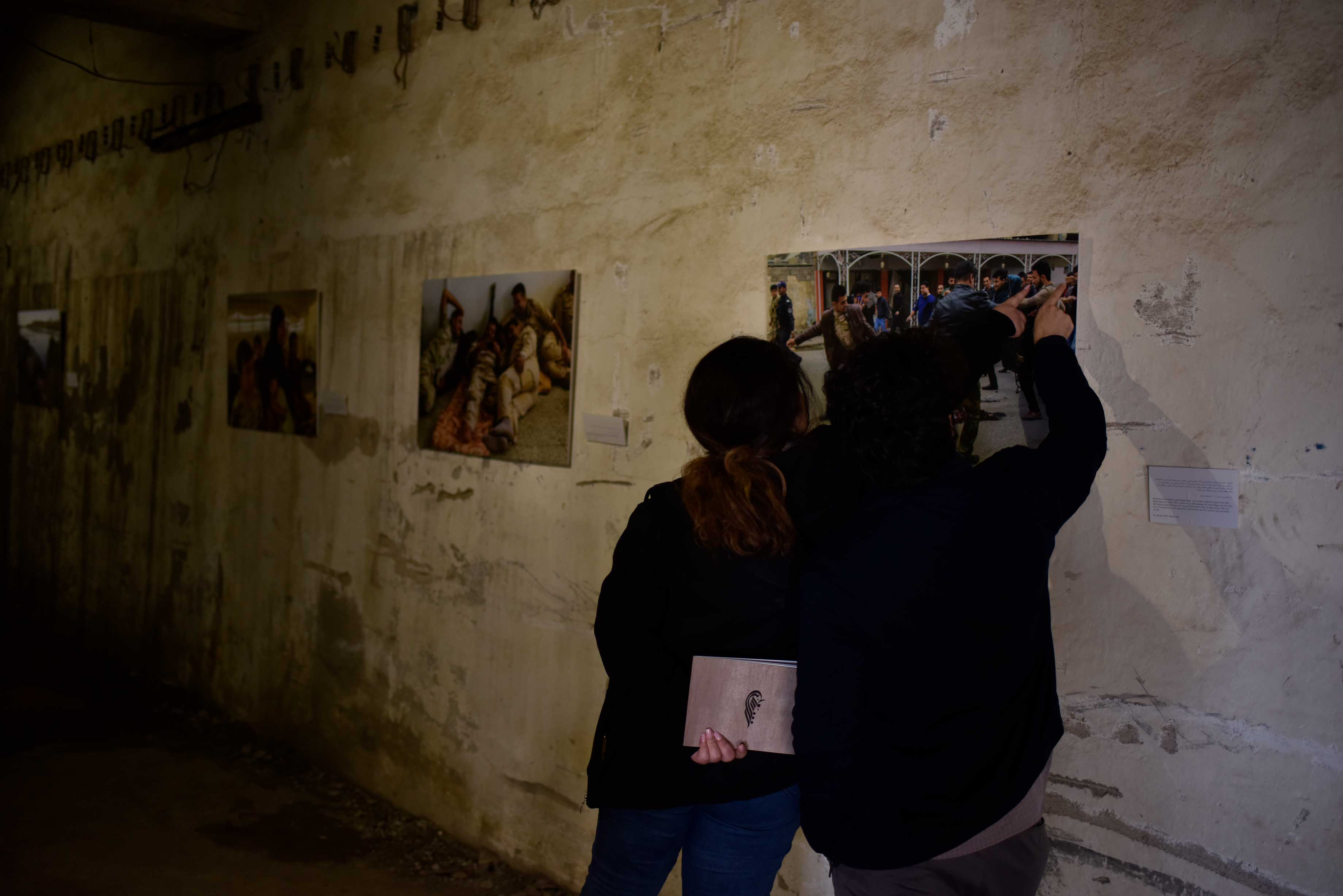
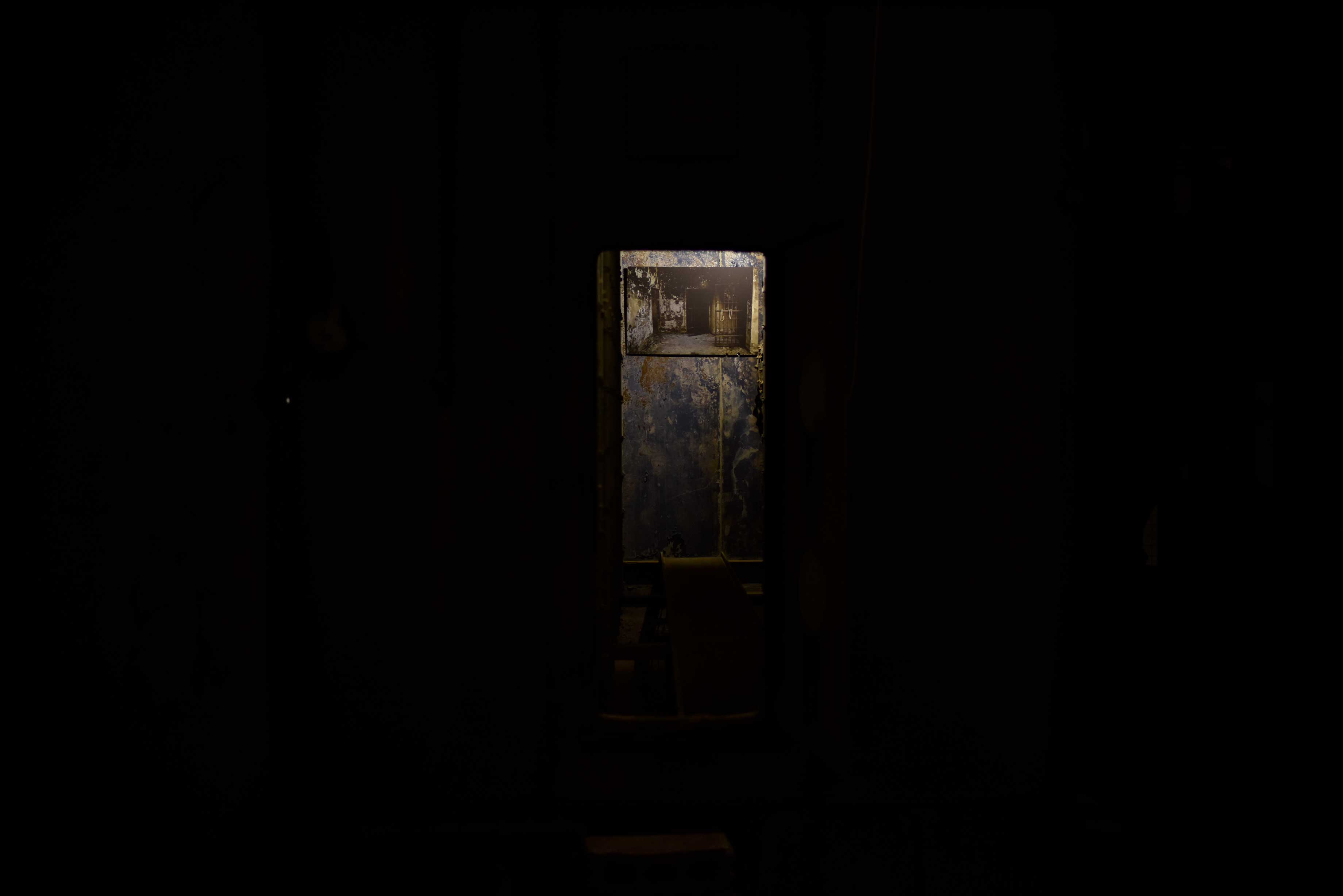
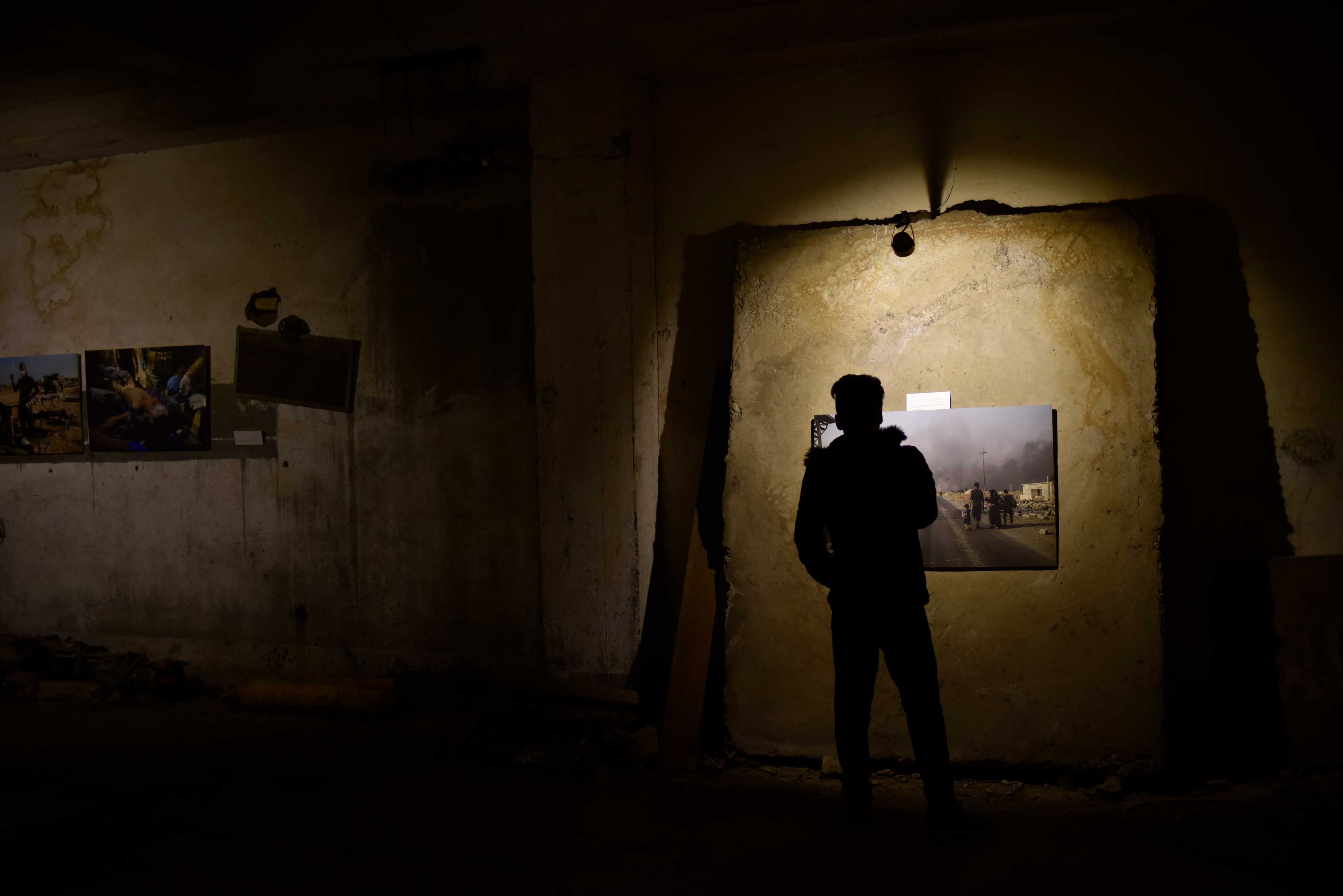
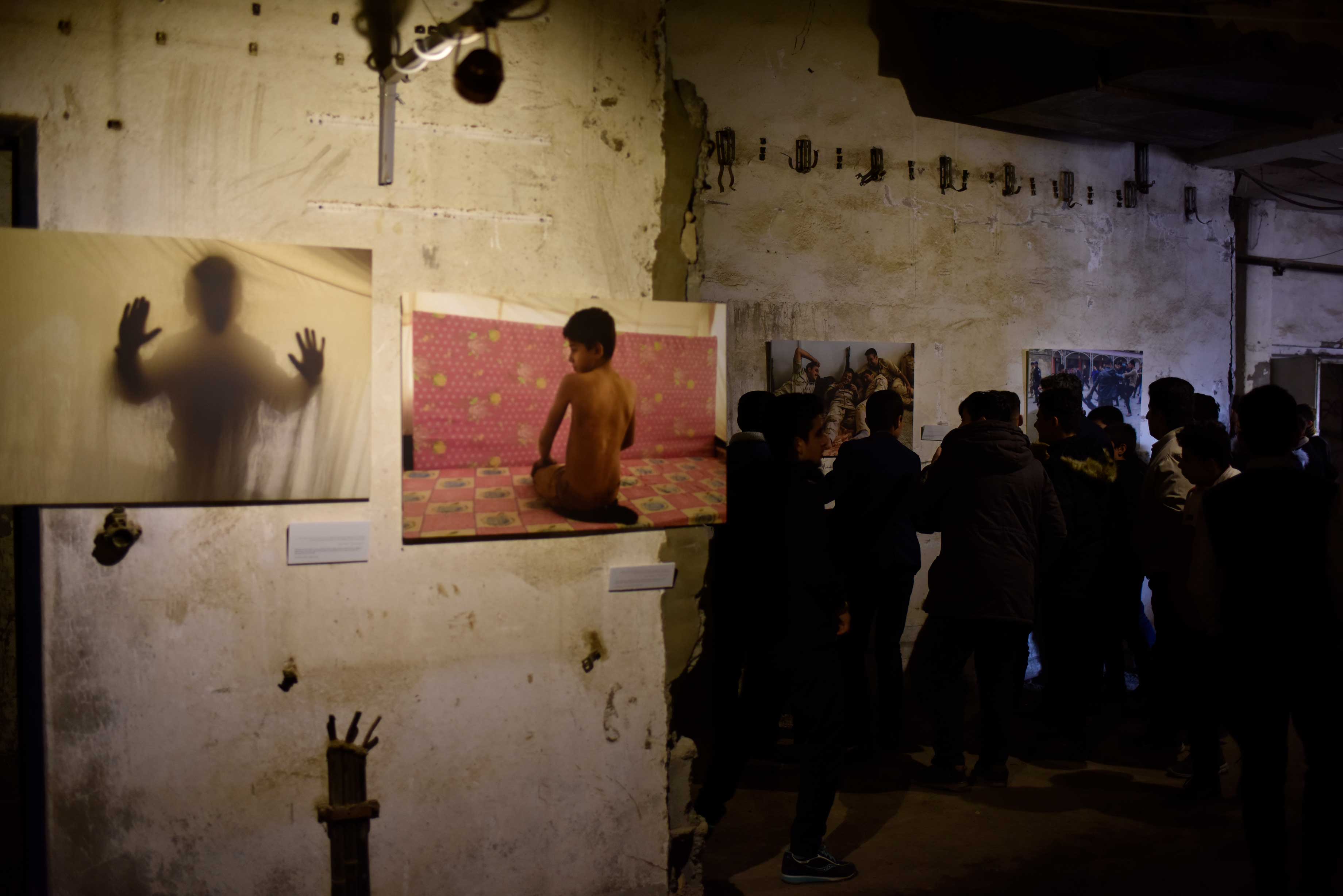
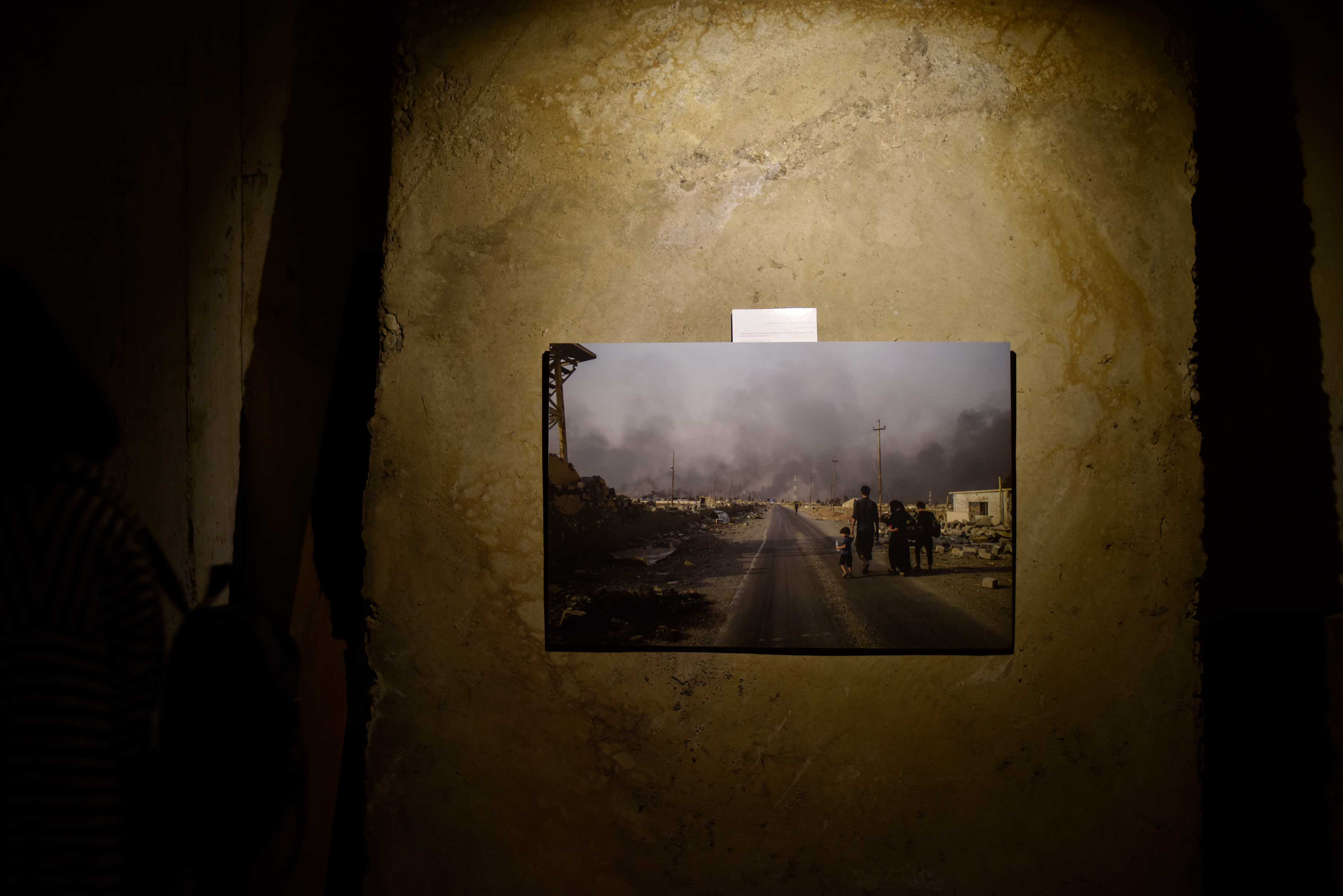
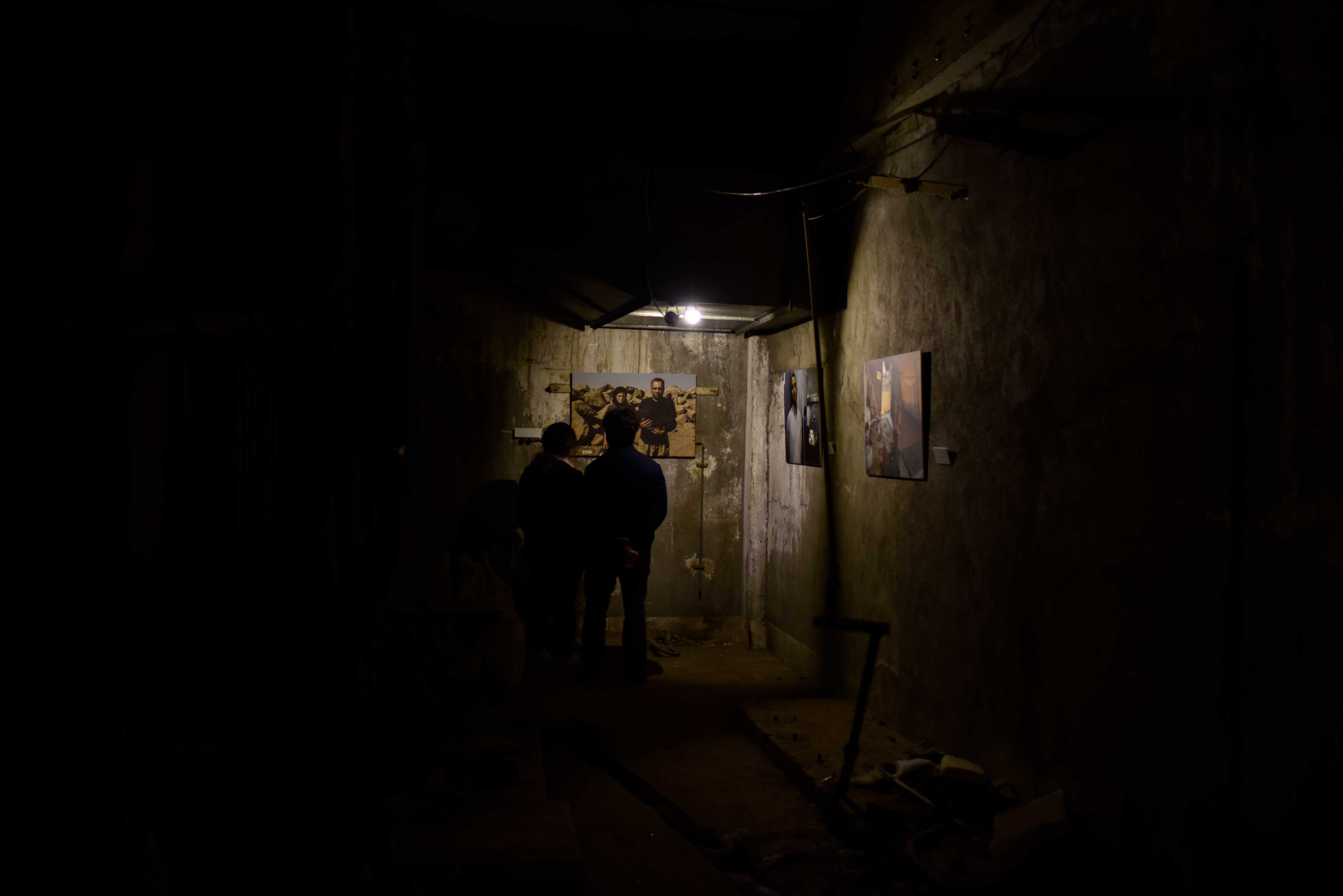
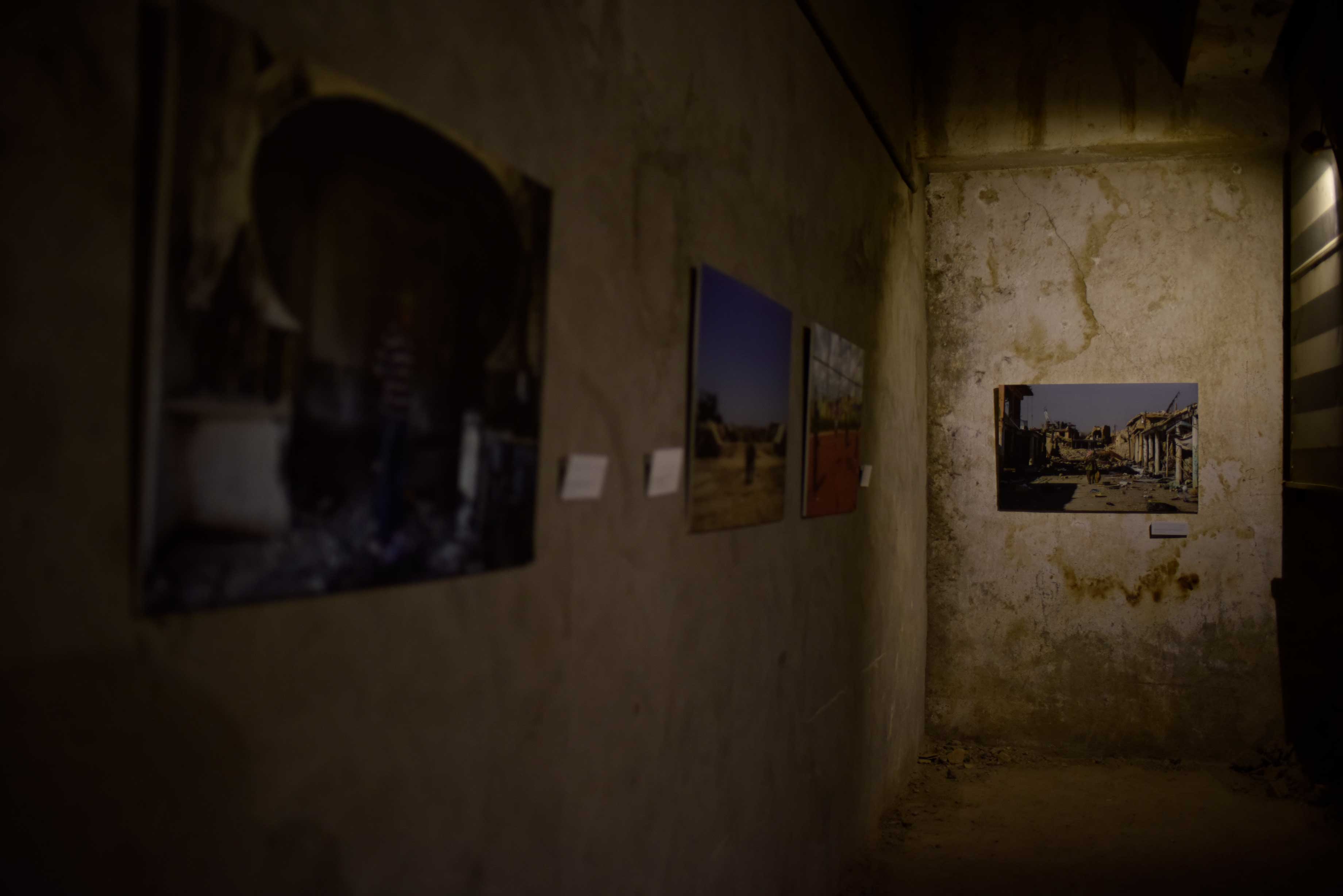
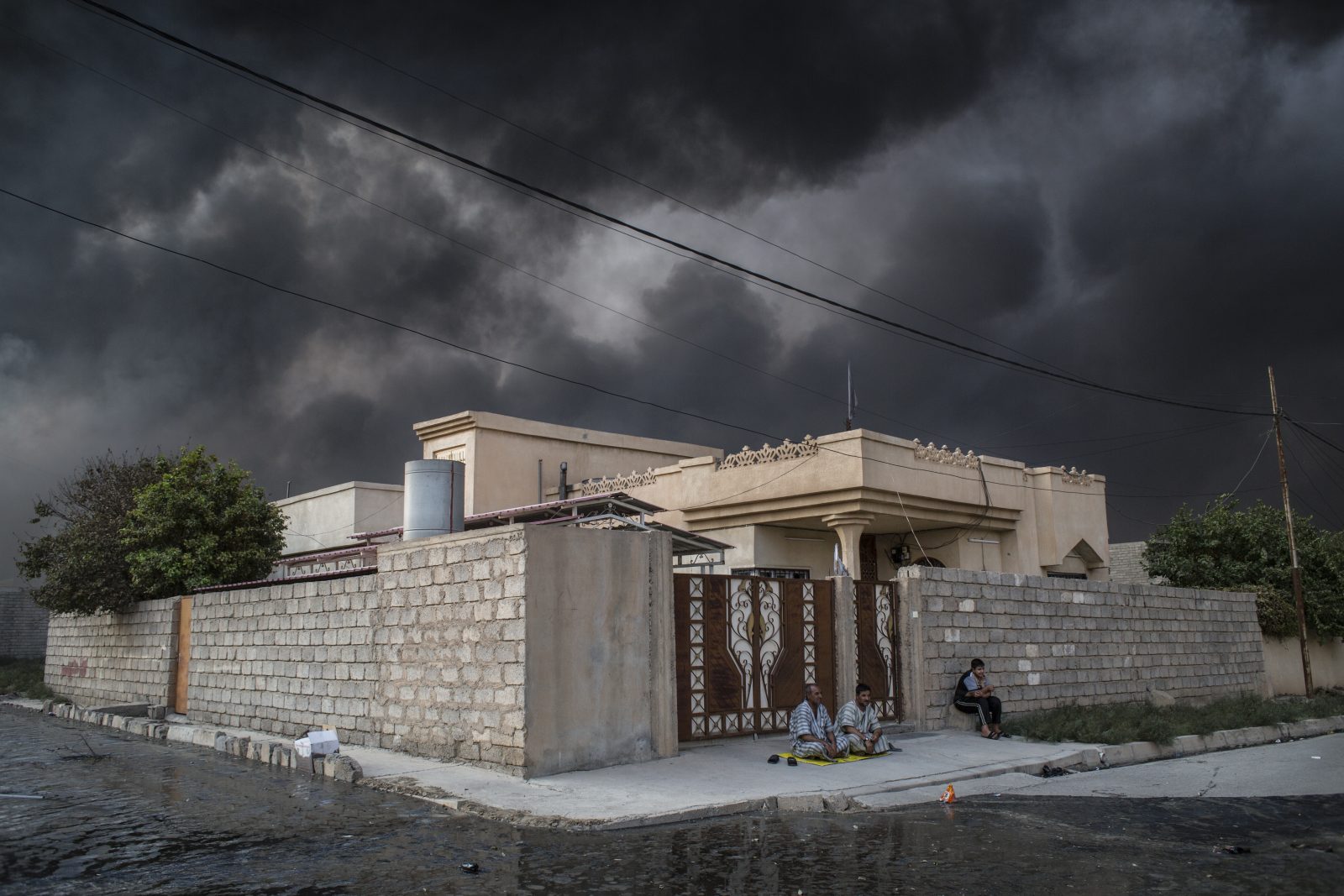
Pshtewan Kamal Babakir scouted the exhibition’s unique setting, an abandoned cigarette factory in a state of advanced decay, scheduled to be demolished and restored just two weeks after the show’s closing. The cracked walls and crumbled moldings echo the scenes depicted in the photographs they frame: two Kirkuki men greet the evening cross-legged before the gate of their cinderblock compound, spilled crude lapping at the curb, a Êzîdî peshmerga rifles through the ruins of Shingal’s central market, searching for any provisions or tools still useful, and a young man in a purple shirt stares at thickets of rebar and the rubble of Mosul’s Grand Mosque of al-Nuri, perfectly framed by the blasted-out window set in a wall painted once-cheery mint. The factory’s wide variety of rooms and nooks also allows for the striking presentation of some of Khalid’s most intense or personal images. A photograph of the knotted choke-ropes that still adorn the empty cell of a Daesh prison house is mounted inside of what appears to have been a sort of boiler room. Accessible only by climbing three makeshift stairs and ducking through a hatch, the viewer imagines the claustrophobic panic of the prisoner, and the photograph’s suggestion of past tortures lingers eerily. Other former storerooms and closets house linked groupings of photos, or frame photos best viewed in a more intimate setting. 

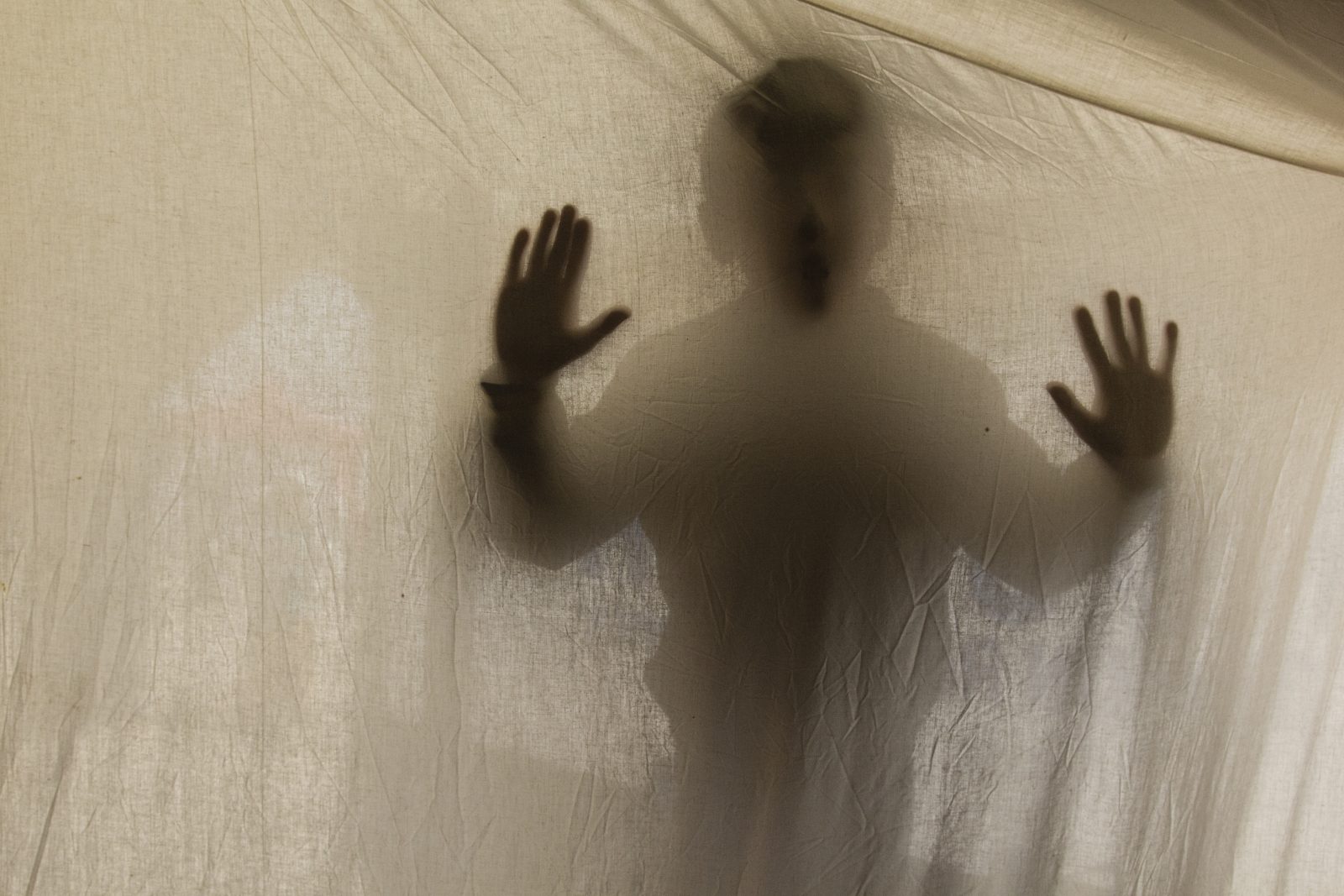
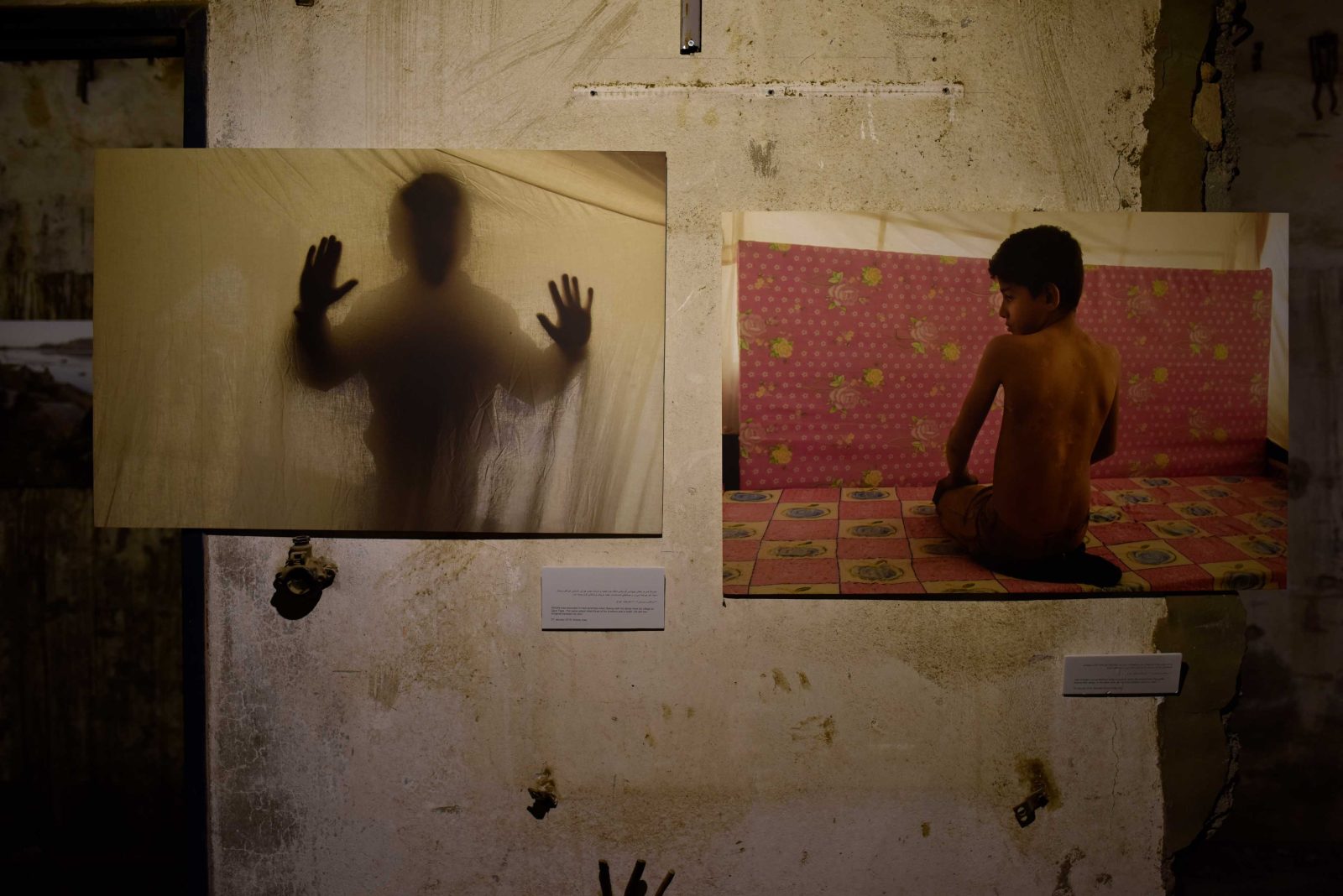
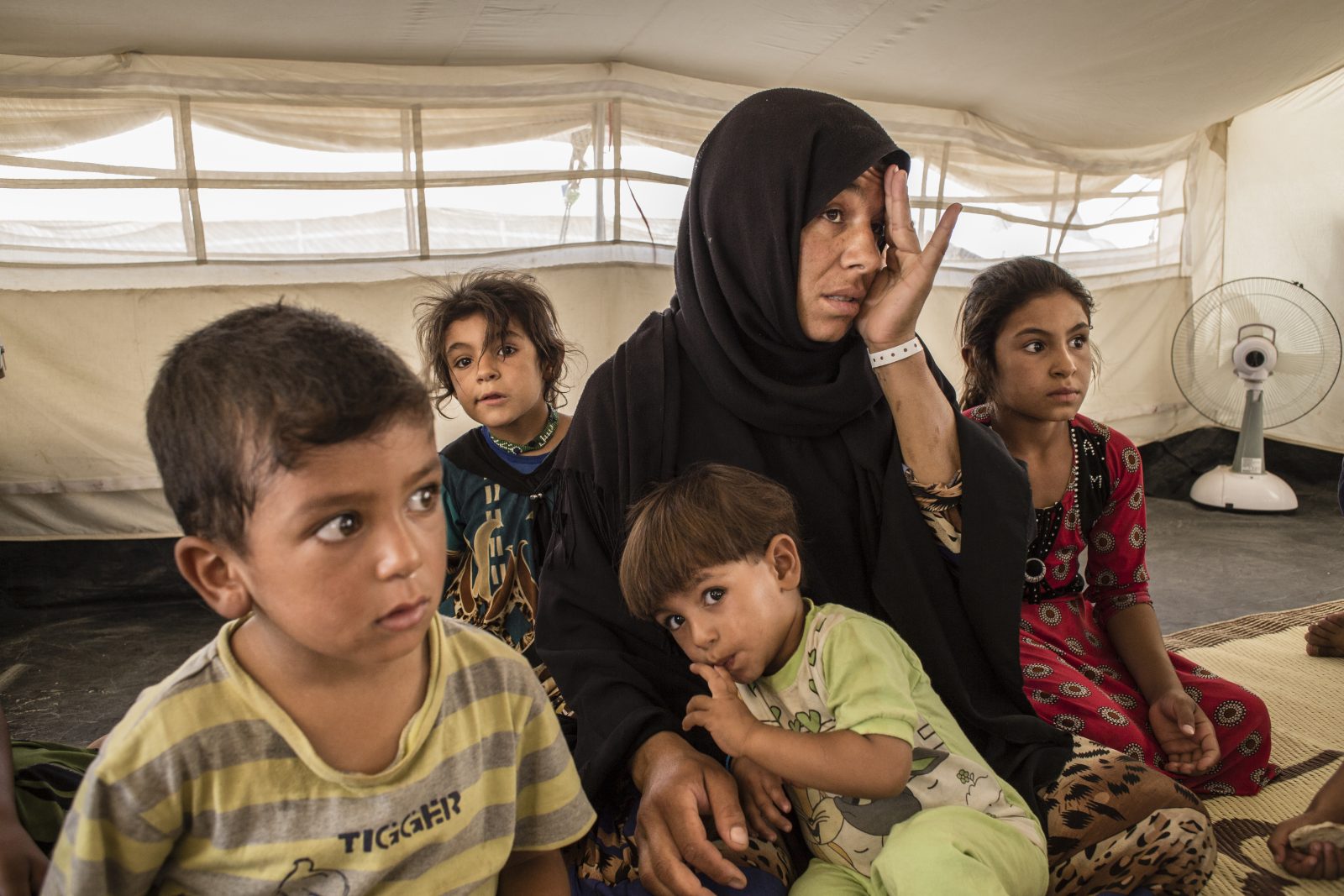
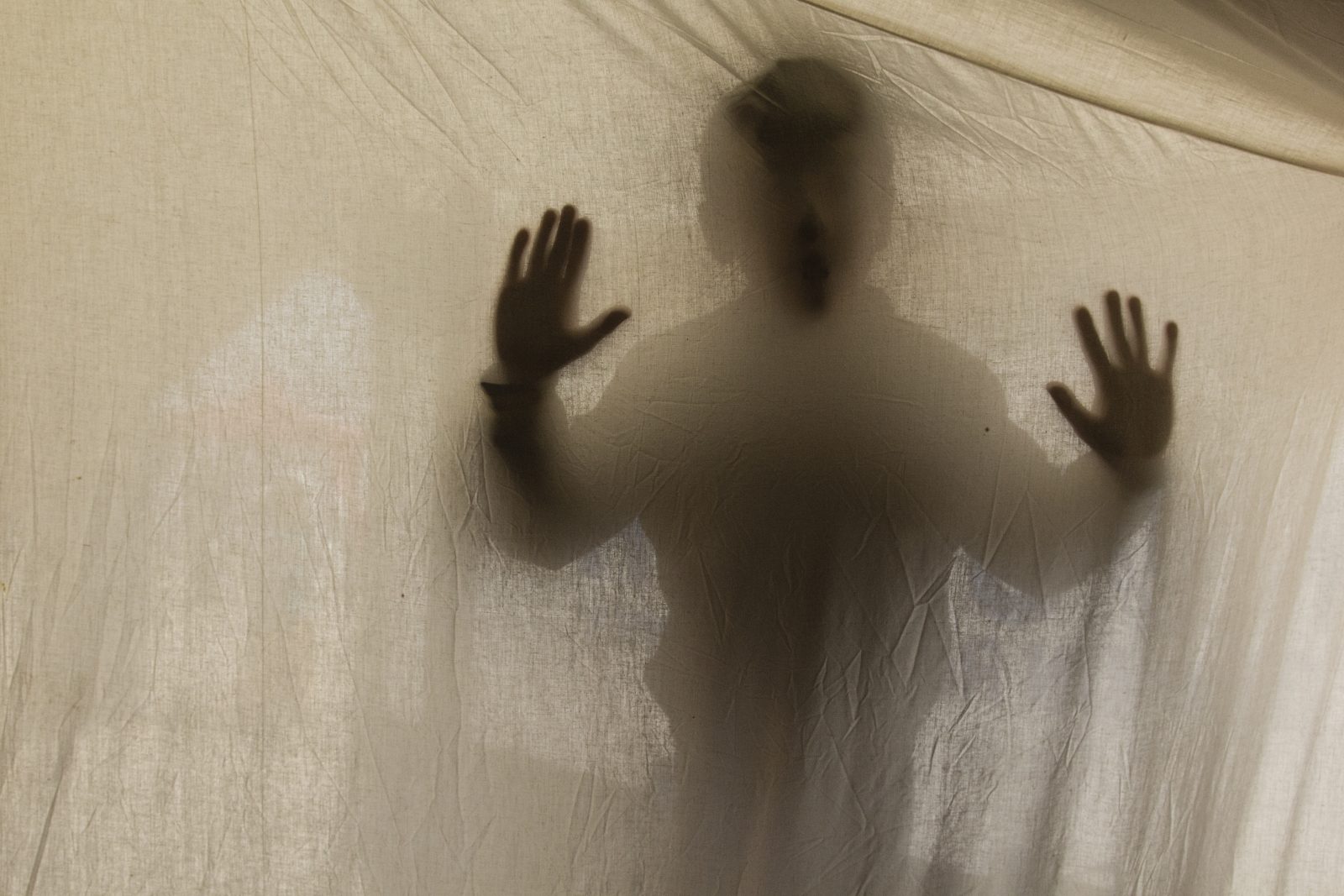
The unique location for Through the Smoke, Behind the Curtain also allows for several features distinctive of the show. Tapered candles sweat red wax from the skeletal metal remains of industrial equipment once mounted to the walls. Occasional votives suggest the solemnity of a wake. Throughout the process of selecting the show’s contents and interviewing Khalid, he often articulated the hope that his photos would force the comfortable to confront the suffering they may have been able to insulate themselves from, not for the purpose of inflicting further pain but to compel the consideration of their complicity in a system capable of yielding such sorrow. Khalid does not consider himself immune to the same critique—in fact, his belief in the importance of accepting his responsibility for what has unfolded in his homeland has informed his rigorous ethics as a documentarian. From that intention came two simple interactive installations: the first, a semi-translucent plastic screen—one more of his curtains—which allows exhibition participants to mimic the experience of the shrapnel-wounded boy who presses his face and hands into a similar tarp inside a displacement camp tent in the show’s poster photo, and the second, a 60 by 90 cm. mirror, mounted identically to the exhibition’s same-sized photographs, with a standard tombstone reading simply “A civilian considers their role in making this world a more peaceful place.” 

The photos of Through the Smoke, Behind the Curtain do not make for easy viewing, but I believe that they are worth the discomfort their consideration demands. At its best, photography is our fastest acting, most striking contemporary tool for humanizing others. While Hawre Khalid’s photos do not shy from their depiction of the dehumanization that war imposes in its wake, in equal part they humanize the survivors they depict, contributing toward the germination of empathy needed—in Iraq and around the world—to lift the veil of simple answers and to squint through the lachrymose smoke, to address our complicity in shaping and sustaining the machineries of war.


English کوردی
PKK fighters make tea over an open fire after Sinjar is retaken by Kurdish forces.

14 November 2015, Sinjar, Iraq

English کوردی
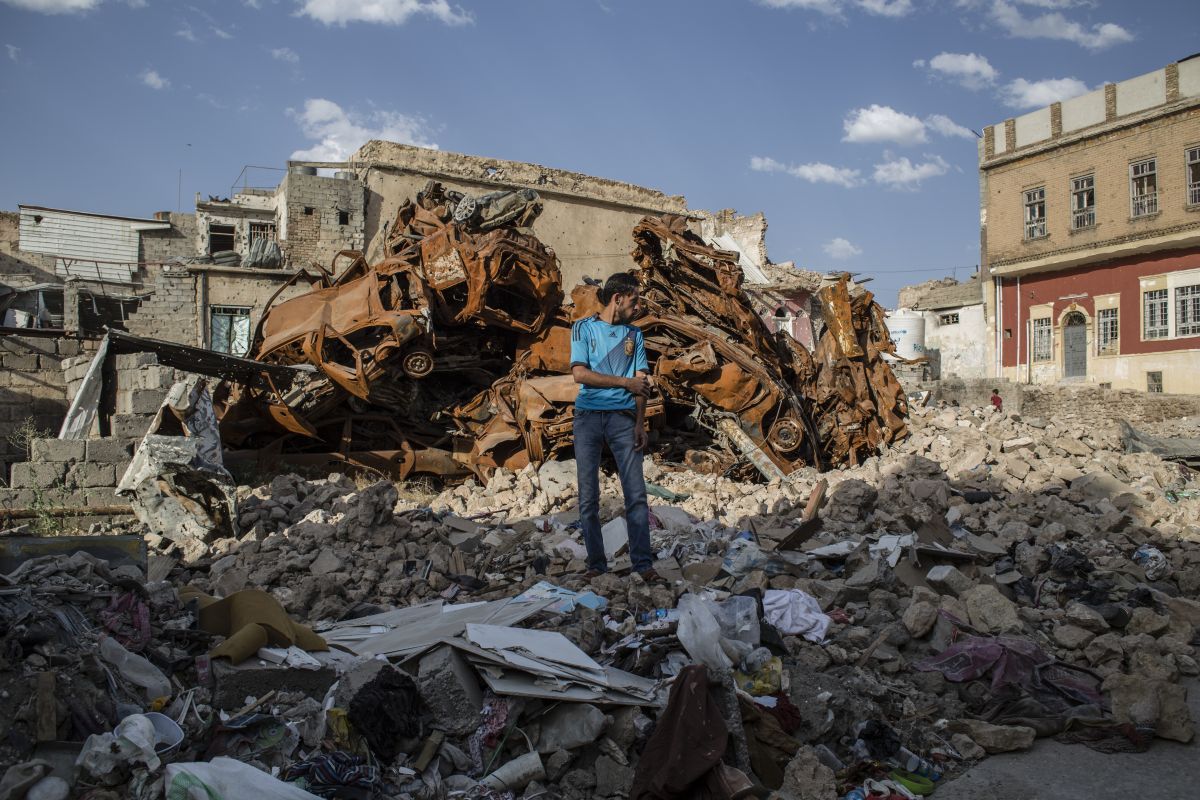
A young man takes in the Al-Nuri Mosque from the window of a destroyed building. 28 September 2018, Mosul, Iraq

28 September 2018, Mosul, Iraq

English کوردی

How will we choose what to remember?

by Neil Shea

On a cool April evening in 2015, I walked down the frontline outside Kirkuk with the photographers Yuri Kozyrev and Hawre Khalid. To our right, the yellow glow of the city. To our left, a huge earthen berm snaked for miles over the landscape, knobbed with fighting platforms, pillboxes and bunkers, every weapon within them pointed west into darkness. Yuri and I had previously worked in Iraq, but we were new to Kurdistan. Hawre told us that we stood where the tide had turned, where the momentum of Daesh had been broken. Daesh was still out there, of course—hiding in nearby villages, building bombs, threatening to invade—but for a season the fighting had slowed. We walked past a group of peshmerga sitting around a kettle singing old love songs, while others slept on the ground in nests of blankets brought from home. Suddenly a soldier called to us. It was one of Hawre’s uncles, pulling guard duty on the line.

Hawre greeted him, each man asked after the other’s safety. And in that moment I felt more deeply than ever how close Daesh had come, and how the war had grown into a family affair. When Daesh first streaked across the desert toward Kirkuk, most Kurds understood what horror would follow if they failed to stop the militants. And so for men like Hawre’s uncle, there were no doubts, no questions: they ran forward. Hawre also found clarity in the danger, though it took a slightly different form. When I asked if he’d ever been tempted to join the peshmerga, he immediately said no.

“Not for one minute,” he told me. “I knew from the beginning I would fight with my camera.”

In many ways, Hawre chose the harder path. The warrior ethos runs deep in Kurdistan. Everyone knows the poems and songs, from Saladin to Saddam, and images of martyrs line the roadsides. But with his camera, Hawre was doing something new. No role models had blazed a trail. There was no career ladder. There were hardly any places to publish photographs in Kurdistan. So his choice defied tradition. Confused his parents. And launched him into a no-man’s land somewhere between poet and prophet, soldier and martyr.

He would be among the first of his generation to pick up a camera. And he would quickly become his generation’s best. 

I’ve now worked with Hawre on several projects. We’ve spent hours together driving through mountains and over plains, from Sinjar to Dohuk, Hawler to Slemani and beyond. I’ve watched his work evolve, and listened as he’s wrestled with its meaning. One of the central tensions of photography is between memory and forgetting, preservation and disintegration. By choosing where to aim her lens, a photographer—by instinct or practice or accident—helps to decide what we remember. But she also helps choose what is lost. The most prescient photographers acknowledge this and hone their craft to account for it. Whatever balance they strike becomes their signature. 

Hawre early recognized that although all photographers call themselves storytellers, there are two broad ways of approaching this problem. One is to pursue singular, iconic images—photographs that are complete within their frame, beautiful and inviolable. The other is to pursue singular narratives, and to encourage the viewer to see that much more is happening beyond the frame than within it. Hawre again chose the harder way, which is the second way, the path preferred by shooters he admires, including Yuri Kozyrev, Andrea Bruce, and Sebastian Meyer—photographers whose work compels us to engage with a story not only visually but with effort, and imagination.

In his images of battles and bodies, refugees and mourning families, young men slouching among ruins and women hiding their faces in fear, Hawre has captured Iraqi Kurdistan’s lost decade like no other journalist. These are not the images of a visitor—a so-called storyteller parachuting in—but of a young man who has in some way lived each of the scenes he has captured. His work expresses the concept, borrowed from quantum physics, of entanglement: he has been a refugee, he grew up in quiet moments between wars, he has watched friends die or go missing. He has been threatened by the police and military, by the Arabs and the Kurds, by the uncertainty of the future and the gravity of the past. He has also lived abroad, and before Daesh came to Kirkuk he had the chance to escape Iraq’s treadmill of violence by becoming a citizen of The Netherlands. 

His work expresses the concept, borrowed from quantum physics, of entanglement: he has been a refugee, he grew up in the quiet moments between wars, he has watched friends die or go missing.

But something compelled him to return to the ancient plains. Once, Hawre told me with a smile that he came back to Kirkuk because “In my heart, I am a Kurd.” But that’s too easy, too modest. It waters down his choice and denies the accumulated entanglements of Kurdish and Iraqi identity. To be the citizen of these countries—one a daydream, and the other a forgery—requires constant adaptation. Code-switching on a whole other level. To be always moving, as Hawre has been, is to be forever hoping for a home. I believe he returned to Kirkuk to search for that idea of home, and to fight for it with a camera. The photographs on display in this exhibition are pieces of the truth he has so far won.

Today, the politics of Kurdistan, of Iraq, of the Middle East and the U.S., conspire to make Hawre a prisoner of geography. Of sandlines. It’s been nearly impossible for him to work outside Iraq. And while his images have appeared in major international publications, Hawre himself has rarely been able to travel and join the broader community of journalists, artists, image-makers and documentarians to which he obviously belongs. So this exhibition is more than a well-deserved celebration of his talent—it is a protest against imprisonment, against borders that restrain talent and vision, that stifle witnesses, or hinder any of us in our quest to find home. 

Hawre has given Kurdistan something it’s never had: a witness who works in photographs, who refuses to let stories become myths, and who before he was 30 gave voice to his generation. I know that for him, this is just the beginning. It’s also my hope that young Kurds will see Hawre’s work, recognize what they have already lived through, and see the questions that lie beyond the frame—Who will define what it means to be Kurdish? Who will write new poems to speak with the old ones? And how will we choose what to remember? Hawre has already started down the path. This exhibition is your invitation to join him.

 

English کوردی
Farah was hit by a bullet in her own yard.

5 March 2019, Basra, Iraq

English کوردی
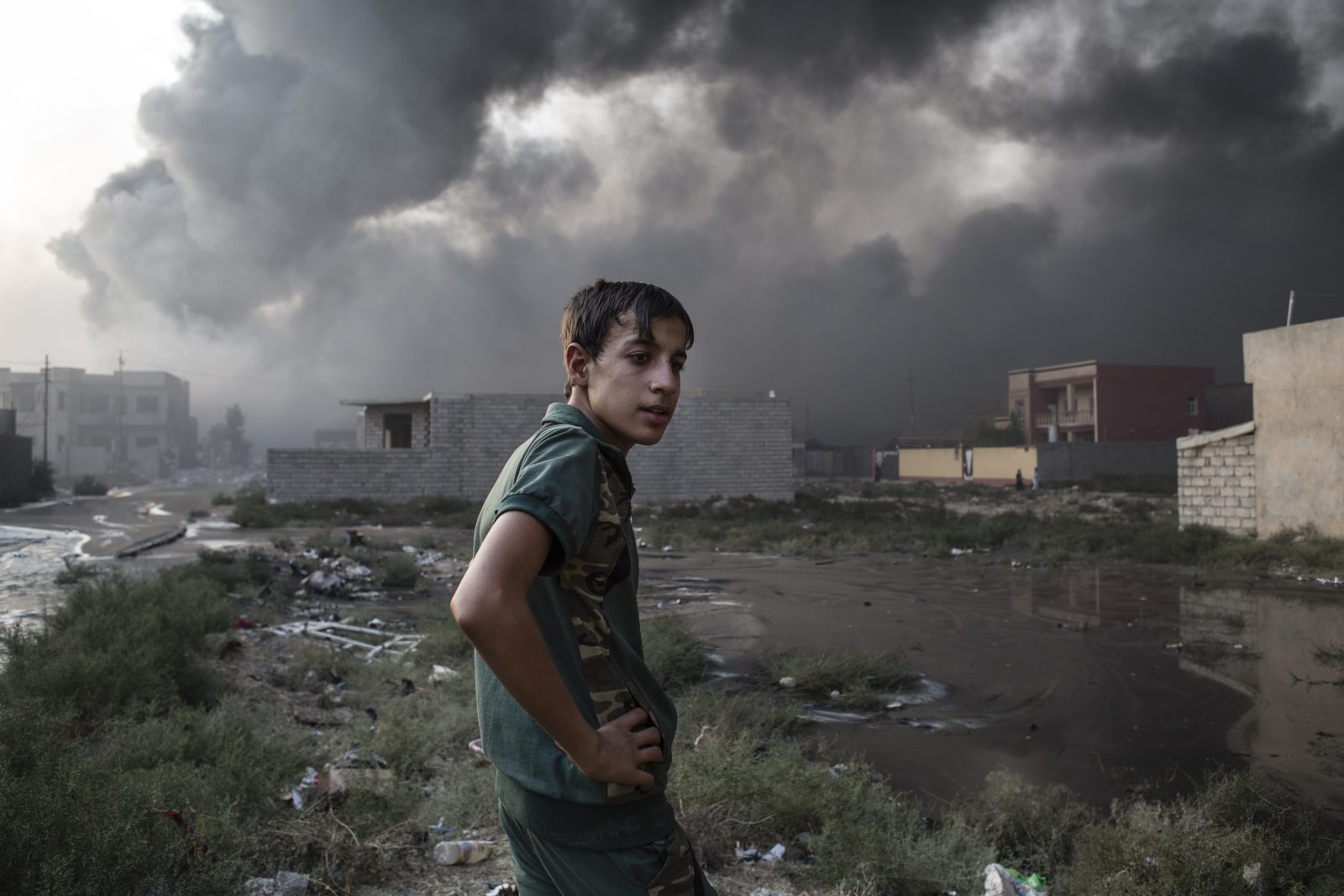
A boy stands near a destroyed oil well on the outskirts of Qayyara.

31 August 2016

English کوردی

That day, four ISIS snipers took the Kirkuk Palace, the most famous hotel in Kirkuk, which is not a hotel anymore. You know, everyone in Kirkuk had a gun, so before the asaish or peshmerga could engage, people did. And it was a mess, bullets everywhere, so stupid. After a couple hours, three snipers had been shot and the fourth jumped to his death. People dragged the bodies from the hotel out into the streets, through the streets, finally hanging the bodies in a butcher shop window—as a warning. When war comes home, whatever you do, you don’t think about humanity. You think any defense of your home is dignity itself. But children saw this.

The same thing happened in Fallujah—civilians, police dragging the bodies of ISIS fighters behind their cars, street after street. I have video of it.

You rethink everything in times like these. Is what we do different than ISIS? Any one of us, after we do something like this, can be ISIS. That mind is in all of us. Somehow.

It’s scary to see these things become normal. Not only to me, but to people in Kirkuk, in any city: a dead body becomes social media.

Am I part of that problem? I show you these things over and over. The more you see it, the more normal it becomes. But I have to show this—I’m a journalist—it’s happening. I often feel guilty I can’t change things, but then that’s not my job. I show you things—and it’s up to you what you do with what you’ve seen.

English کوردی
Asayesh, Peshmerga and civil people pull the body of the ISIS fighter on the street in front of the Hotel. after 7 hours fighting between peshmerga and ISIS around Kirkuk, 4 IS fighters interred the city and they went inside the Hotel palace Kirkuk building at the Atlas street. Peshmerga and Iraqi police after 2 hours fight they have killed 3 of them and the last one killed him selves.

30 January 2015, Kirkuk, Iraq

English کوردی
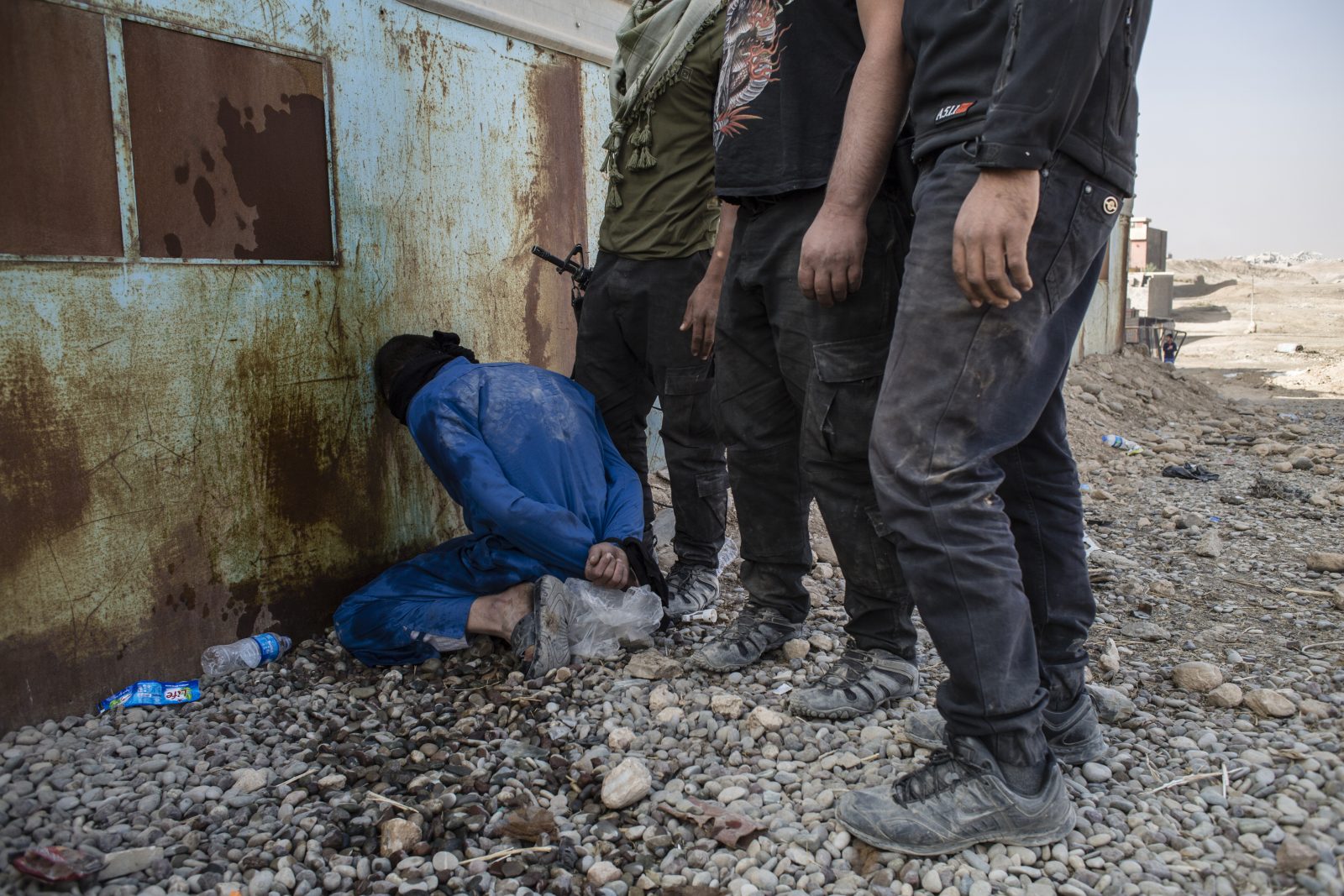
A suspected ISIS arrested by Iraqi special forces ISOF in the Samah neighbourhood in Mosul.

8 November 2016, Mosul, Iraq

English کوردی

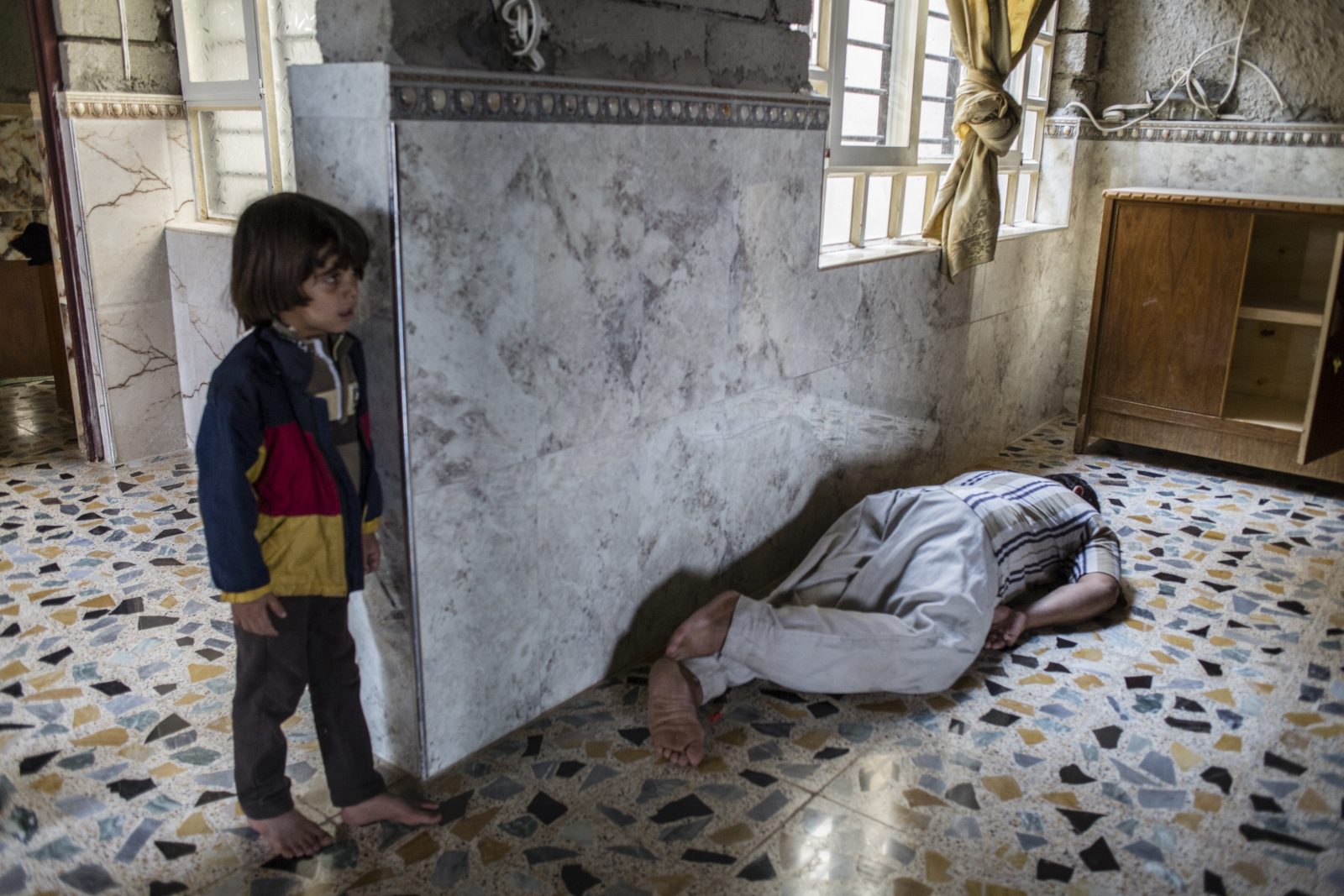
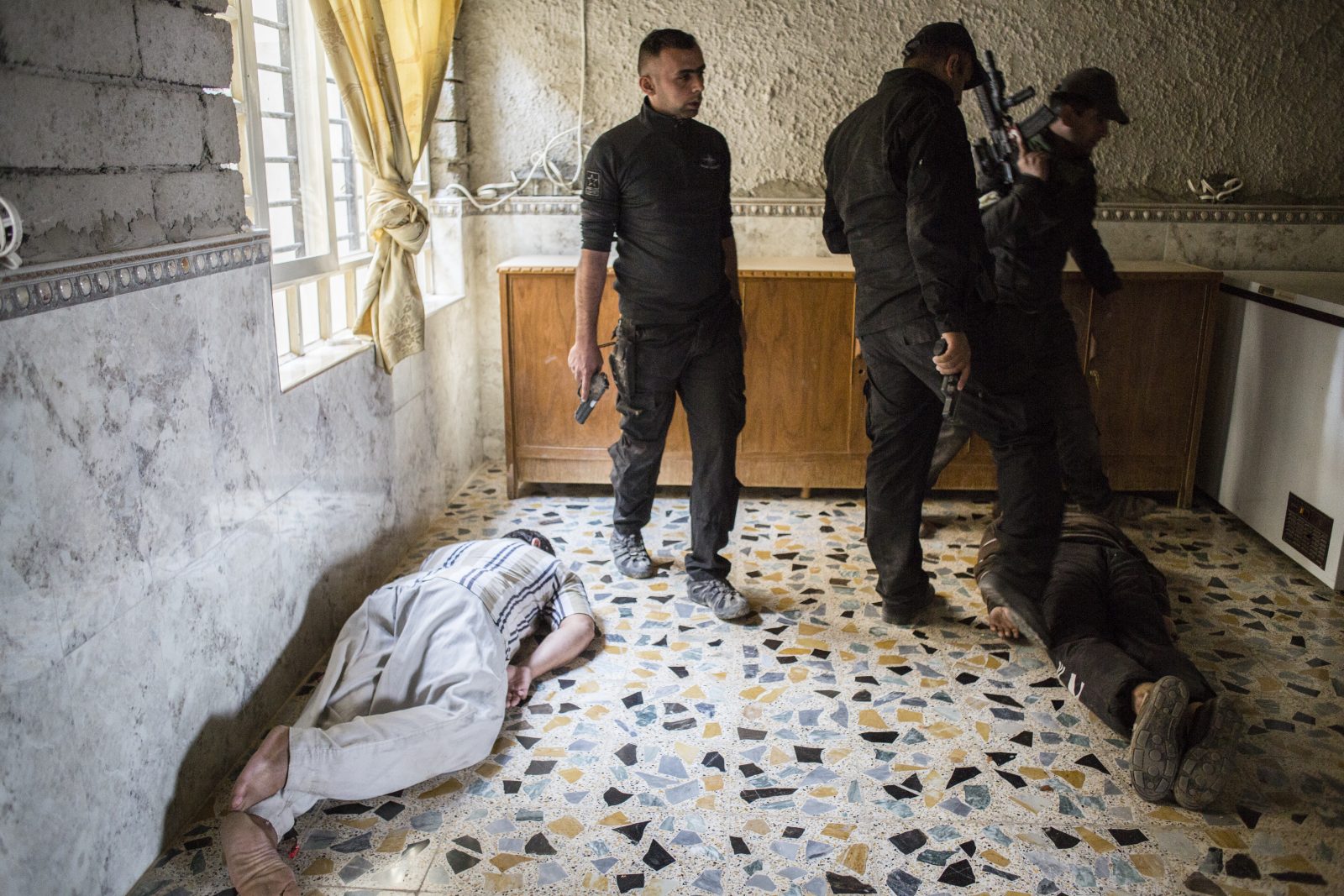
During the Mosul offensive, as I was covering the front line, I realized, photographing—photos—shooting—is all the same. It’s just soldiers shooting into nowhere. So I embedded with Iraqi Special Forces, just behind the front lines, patrolling the liberated neighborhoods. One day, I realized: they were randomly entering houses—they had no clue what they were looking for. They had only one strategy: to yell at people and see if they admit anything. In this house, before they entered, they knocked, which was rare. A teenage boy opened the door. The soldier grabbed the boy by his shoulders and threw him sideways. His face split open against the ground. They beat these two men to the ground. The men kept protesting that they had nothing to do with ISIS.

That boy, those men, what do you expect—when you beat them like this? If they didn’t support ISIS before, what will they do now? You know, in Kurdish, we have a saying: in war, wet and dry wood burn together. That family, God knows how much they wanted to be free from ISIS. They had no idea how close death still was to them. You make hate. And hatred is another kind of death.
English کوردی
A child stands by her father, who is detained by Iraqi special forces searching for suspected ISIS members in Mosul's liberated zones.

6 November 2016, Mosul, Iraq

6 November 2016, Mosul, Iraq

English کوردی

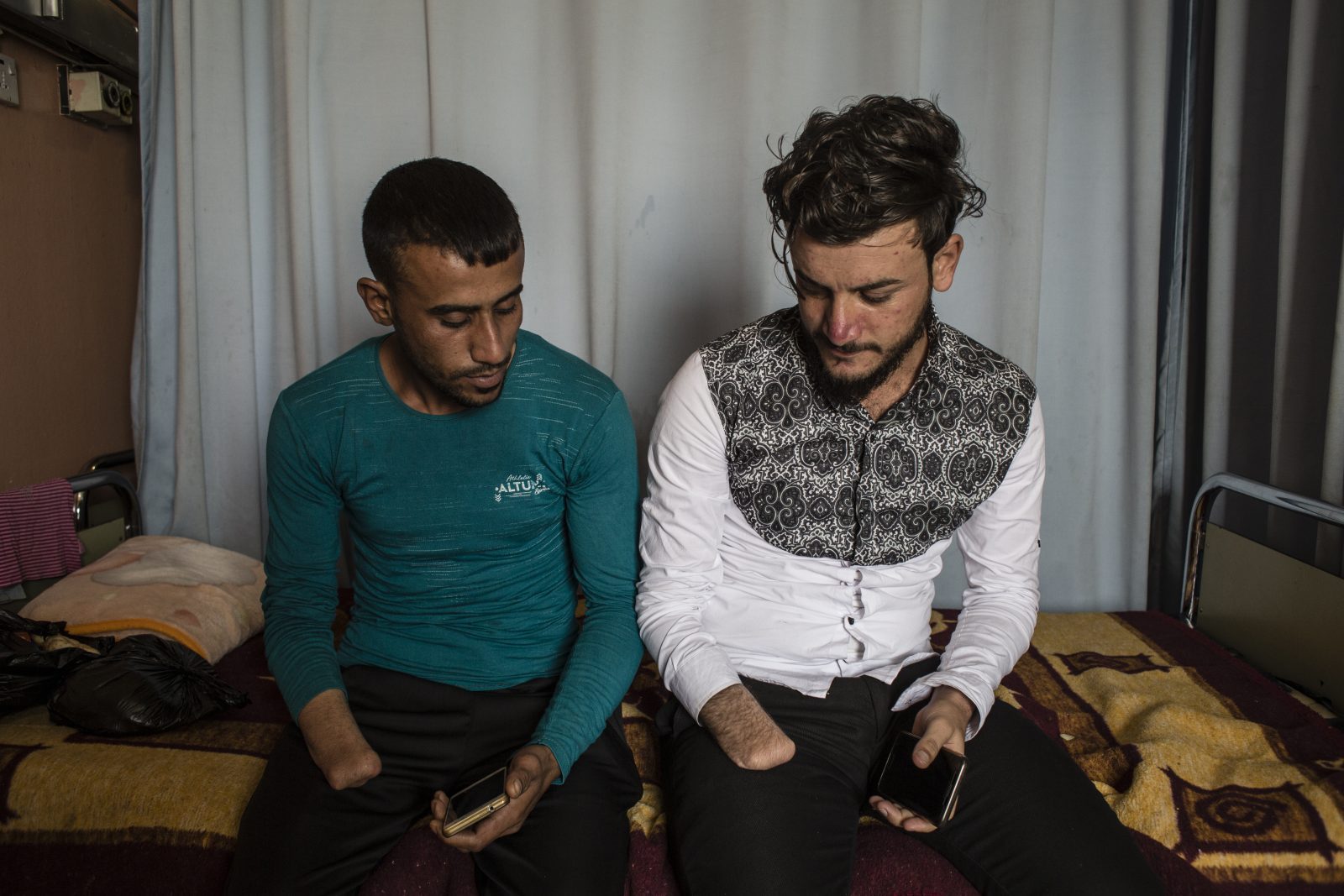
These are two brothers. ISIS said they stole something. I asked why they really did this. The brothers said, ISIS asked us to join them as fighters. We said no. Twice. And as bad as ISIS was, no one was ever forced to fight. Still, they wanted us to know they could give us a trouble. The brothers were imprisoned for a week. Their parents were informed of the charges, but not allowed to see the boys. The father tried to find anyone he knew—any pull—but the order came from on high—no one could do anything. The mother, of course, cried and begged. But in the end, the boys were blindfolded and led out into the street to have their right hands cut off. I mean, they couldn’t prepare themselves. It’s better if you know when that shit’s going to happen to you. Their parents had to watch. ISIS drove the boys to the hospital themselves—to make the pain last longer—to make an example. They cut the right hand so that the amputee can’t raise his right index finger—required as a Muslim during prayer—and God will punish them further. 

This picture looks choreographed, but we were just talking. You keep taking photographs, waiting for that one second, and then it happens. That one second. By the time I took this picture, the boys had gotten used to it. But the whole family, each member, especially the father, kept repeating: we are fucked. We don’t expect anything different. Iraq is one war after another. So much shit after so much shit. Nothing else. At least we are not dead. So many died for nothing.


English کوردی
Two brothers compare what's left of their right arms. After refusing to join ISIS, the brothers were accused of theft, allegations they deny, and punished at a public amputation of their right hands, which ISIS members forced their parents to watch.

15 October 2018, Mosul, Iraq

English کوردی

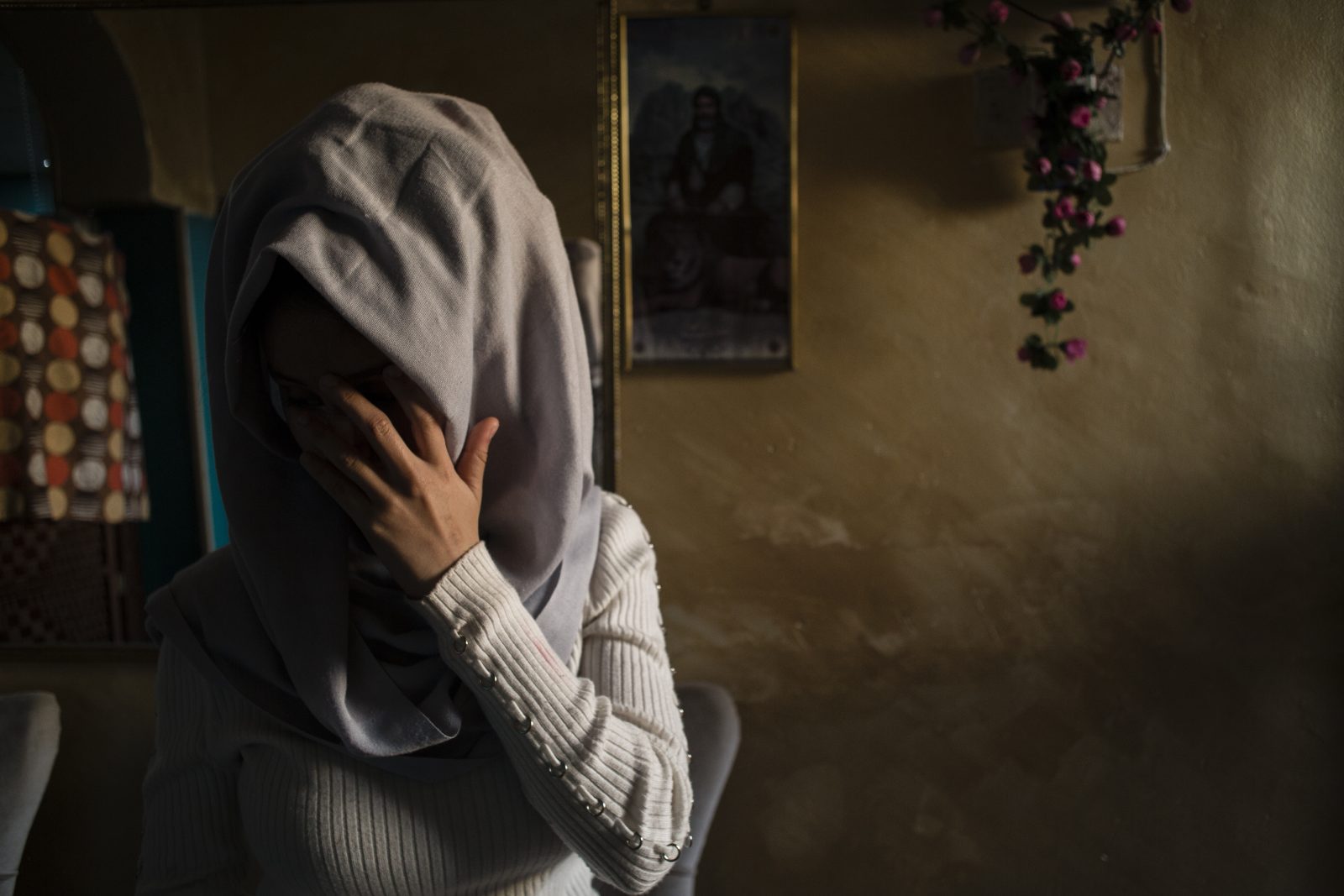
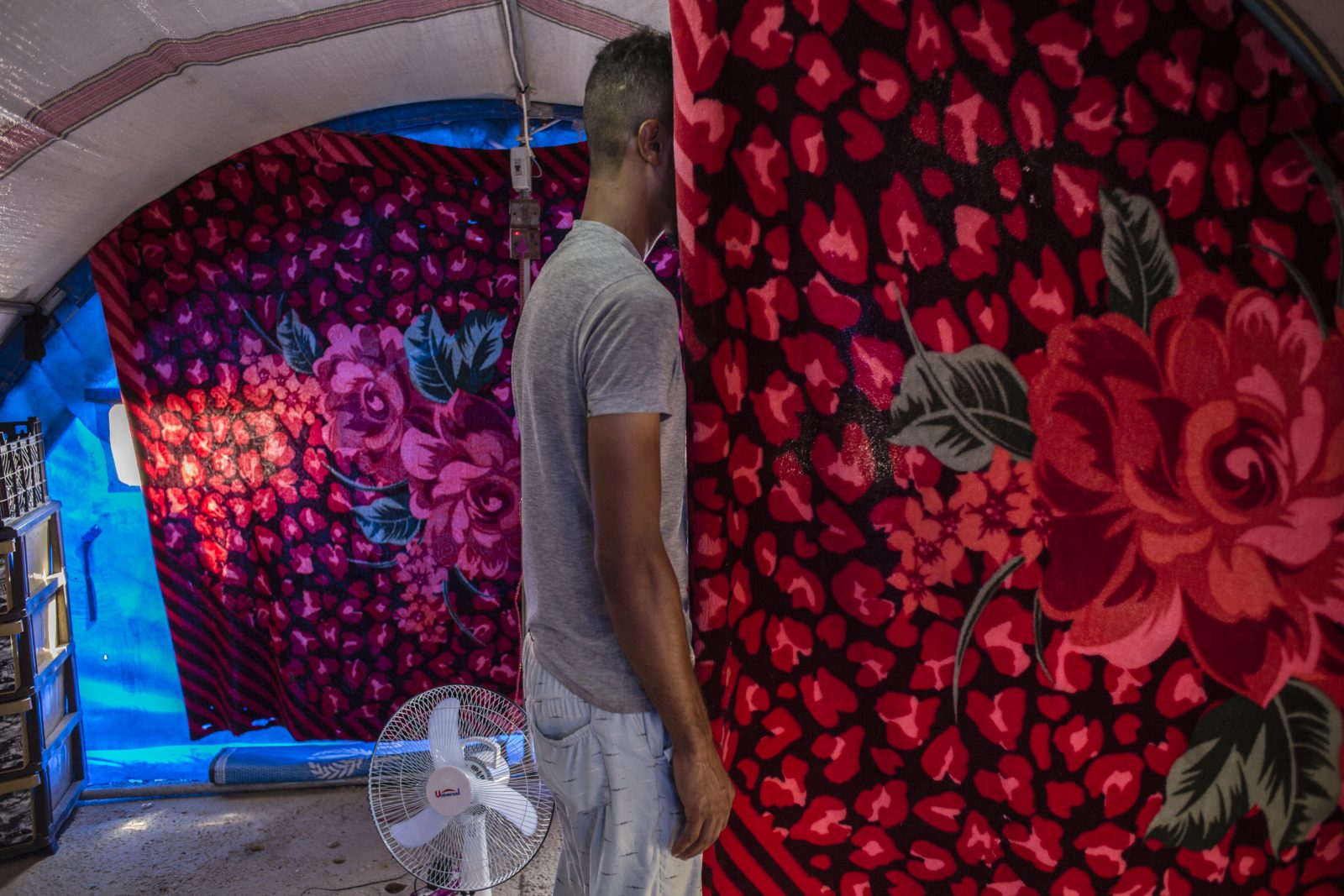
This guy lived in a special section of the camp for people whose family members had been ISIS—his uncle. It’s not five or six tents, this section, it’s hundreds. Women whose husbands had joined ISIS, they said, with their children at their sides, What can I do when my husband wants to join ISIS? 

This guy, he said, It’s a choice. You believe in ISIS. I don’t. What can I do? The government sees me as ISIS. People do, too. No one ever wants to talk to me. When you hear a story like this guy’s, you think, if my brother did something wrong, what could I do? I would never be able to marry.

In the west, your mom’s problem is not yours. But here, your family is you. This boy in the tent did nothing. But it doesn’t matter what he did or didn’t—the war found a different way for him to die. 

And how do I take the picture? I ask—-can I show your face? And of course he says no—and then he was walking by and his face was slowly disappearing behind the colorful blanket and I asked him—because it was a portrait, I could interfere—to stop just there.


English کوردی
A young man from Mosul hiding behind a curtain in a tent in the refugee camp Jad'a, in Qayyara. He lives in a special section of the camp designated for families with ties to ISIS.

22 July 2017, Qayyara, Mosul, Iraq

English کوردی

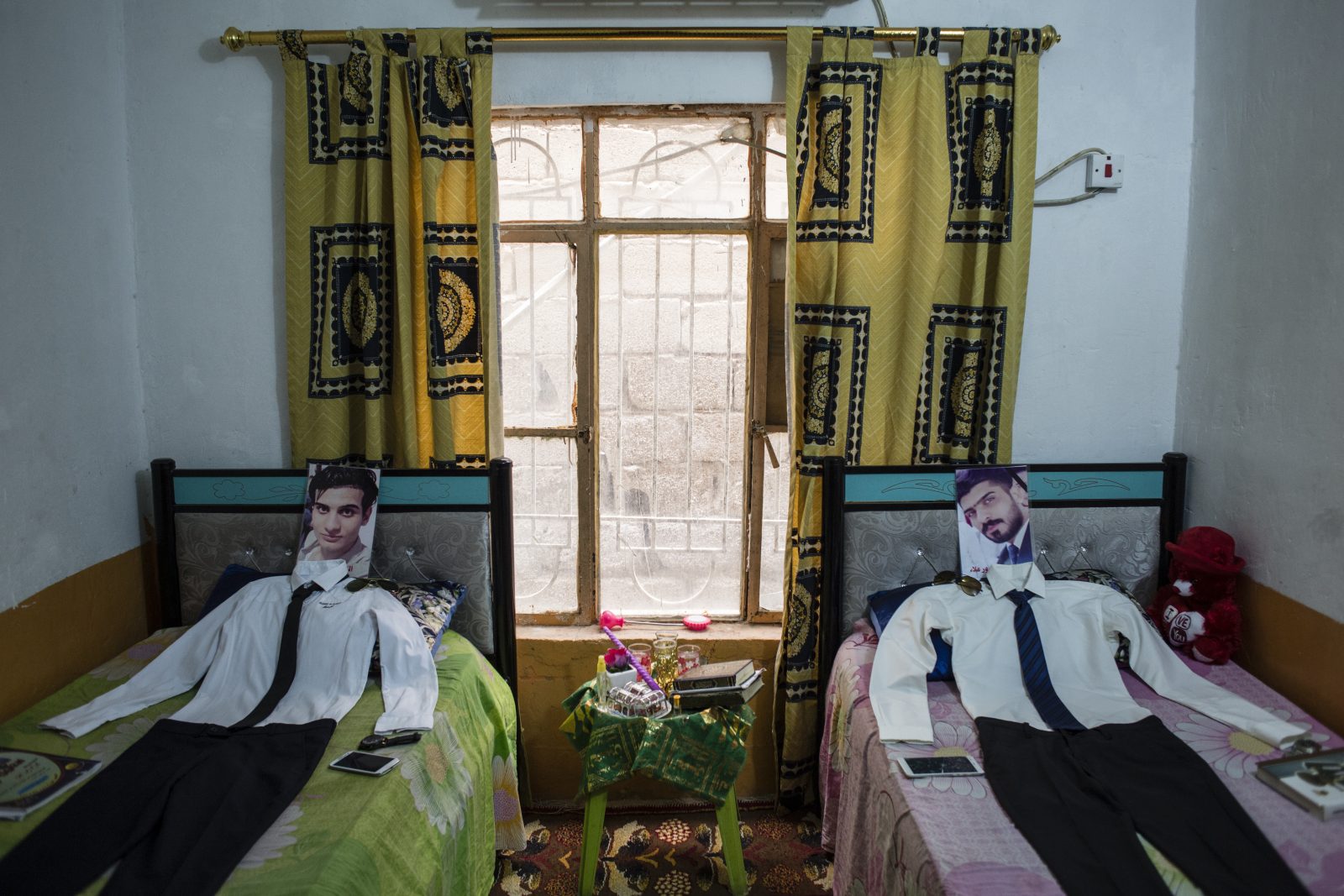
I went to Basra to cover the protests. I found a guy who had been protesting since Day one. He told me about this family. A mother and father who lost their two sons within months of each other, one the day before his engagement party

For six months, every morning, the mom laid out her sons’ clothes on the beds in the room they had shared. Every evening, she put out their pajamas.

When I came to their door, straight after as-salaam ’alaykum, she took me to this room. I froze. I couldn’t take the photograph. I knew I had to—and quickly, for the mother’s sake. To hurt her as little as possible. When I left, she gave me the sweets, you know, in a decorative box, that they would have given out at his engagement party. I still have that. And this is war’s reach. The war meant no jobs for people, so they protested, so the brothers died. Still just war.


English کوردی
Alaa and Ahmed killed in October 2018 during the protests from the local residents in Basra, Iraq demanding for basic services in the city. They got killed in the range of 28 days. Alaa supposed to go for his engagement party one day after his death. Since then their mother has a different life. Very different than most mothers seeing their children get killed. Since then every morning she wakes up and go to their room. She gently open the door and go to the cupboard to take the clothes. She then put the clothes in their bed room as they used to prepare to go for university before they died. Before night she put their sleeping clothes on the same bedroom again. Every night ends with the mother looking at their bed room as she still believes they are alive or better to say she want them to be alive. The light turns off as she close the door and sleep. The next morning the same routines starts.

6 March 2019, Basra, Iraq

Tahseen Abdulhussein lost two sons within 28 days. one of his son was killed during the protest last summer.

6 March 2019, Basra, Iraq

English کوردی

As part of Saddam’s forced Arabization, my family was displaced from Kirkuk to Diyala. After two years in Diyala, they allowed us to return to Kirkuk, but before they—Saddam—could displace us again, we moved to Chamchamal. But then the Anfal Campaign forced us to flee to Iran. I don’t remember much of Iran. I remember walking.

We just walked. It took nine days. Chamchamal to Slemani to Penjwen to Iran. You couldn’t stop. Saddam was right behind you. You’d die if you stopped.

When we returned to Chamchamal, my parents went on to Kirkuk. I stayed with my grandmother. All my education was in Kurdish and all education in Kirkuk was in Arabic. If I’d gone with my parents, I’d have had to start school all over. 

During those days, Saddam’s forces bombarded Chamchamal every day from Bani Maqan Mountain. God knows how many died. And I saw all the bodies. Seeing this once, you are curious to see it again, you want to see every single dead body. Even though I know a dead body is a dead body. Still. I want to see each one. Even during the Kurdish civil war, I snuck out to see.

In 2003, I walked to Kirkuk. You know, we were excited to lose Saddam. We thought America would make us a great country. We thought we would be able to travel on our passports, freely, like Americans. That we would be able to kiss a girl on the street. I mean, we were teenagers and this is what we thought. The news was so slow, a month behind, and not every family had a TV. I wanted to see what was going on. Curious—as always. I wish I had been a photographer at that time. 

In 2003, Kirkuk was only half liberated. Only Chamchamali crazy dudes and military transports drove the Kirkuk road then. The soldiers allowed only trucks into the city, no cars, so people would smuggle themselves—just like now—and run out of oxygen and die. Too, soldiers—mad at oil smugglers or just bored—would throw fire into the backs of trucks. I watched people burn this way. No one cared.

Sure, they were civilians, but they were Kurds.

Oh, God, it was a pain in the ass to visit my parents—and so dangerous. 

I was very young when we were in Diyala. I was always curious how my daily life was. So, I spent time in an IDP camp in Kirkuk. I met a family from Diyala. I met Abdullah, the boy in this photograph. Iraqi air strikes caught him and his family on the road, fleeing ISIS. He lost three brothers, a sister. When I met him, I could still touch the metal left in his skin. They had no money for surgery. Even if they’d had it, they couldn’t leave the camp. Abdullah was me.


English کوردی
Abdullah Hazbar from out side of the tent. Abdulla was wounded by Iraqi air planes bombing when he left their village with his family to Qratapa in the same time he lost 3 brothers and 1 sister. He can still touch to the some peace of the bomb inside his skin.

27 January 2015, Kirkuk, Iraq

English کوردی
Through the Smoke, Behind the Curtain

November- December 2019, Slemani, Iraq


English کوردی

I kept following the news of the referendum. I knew there would be a war—without rest from the ISIS war. I pitched a story to a newspaper. I said, here, look, this war is coming and Kirkuk will be the main issue and it’s my hometown. They said we don’t care what’s going to happen. So, I went with a Rudaw reporter to Tuz Khumatu. We went to the front lines. The peshmerga started beating us. They yelled, We know what you want and why you came. But we hadn’t said a word. We didn’t know what was going on. They said, Leave or we will shoot you. And I knew they could because it’s war. Anyone can shoot you and say, Ah, ISIS. Anyway they took my camera.

So, I left, but I didn’t go far. I called people who called people to get my camera back. It wasn’t a time to not have a camera.

My whole career I’ve never been scared. But that night—the idea of not having a camera—I was scared. When I’m photographing, I’m feeling less. When I come back, and see the photos, then I feel what I have seen. When the camera is in your hand, it protects you, gives you purpose.

You think about getting the story, seeing the frame. In those places, if you’re not working, you get killed. So, I had to get my camera back, so I could see whatever I was about to see.

We went to another front line. Fifteen minutes later and they kicked us out again. Driving, we got a phone call. Hashid al-Shabi were already in the city. Peshmerga were crying, withdrawing without fighting, civilians were throwing their shoes at the peshmerga and crying. I cried, too. Thousands of soldiers died to take that city. I thought of those soldiers’ parents—and how they would feel. Their sons died for nothing—but, too, if there had been more fighting, more would have died. God knows how many more.

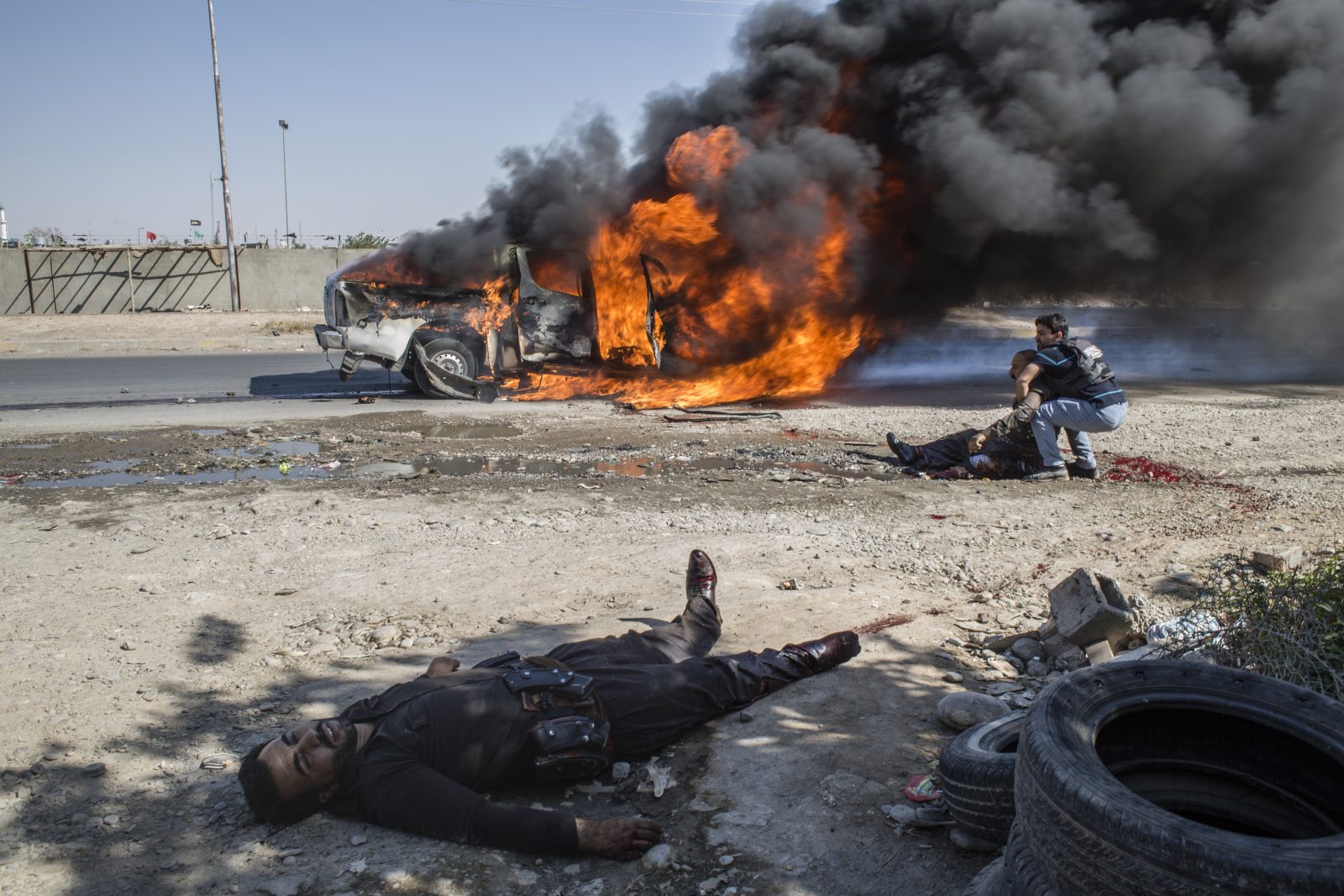
The Rudaw reporter and I were at the southern entrance of Kirkuk when Hashid entered the city and started shooting anyone on the street. You know, everyone had guns—how were they going to know who was a soldier? We were driving—one car between us and the Hashid. They must have had an RPG. We saw it in our rear view mirror. We pulled over in an alley between houses. We saw people bleeding on the pavement. We wondered what to do. We decided, if it wasn’t for their car, it would have been us, so we had to do something. I took two, three pictures, put the camera down and walked into the street. The Hashid were shooting from several hundred meters away. For half an hour, we were under fire. Still, I don’t know how we did it—but it could have been us—and so we said, if they die, let us die, too.

They were all from one family—a son, a father, and an uncle. The uncle burned in the car. The father died later. The son survived, but lost his leg.

Rudaw put that footage online and the Hashid thought I was peshmerga. They started looking for me—found my parents—after all my running, I had to start running again. To this day, I haven’t gone to work in Kirkuk because I don’t know if it’s finished. But when I did that, I did it for people. I would have done the same if they were Hashid. I don’t mind you writing this. It was something to do for humanity.

English کوردی
At the Gate to Kirkuk, a journalist drags a peshmerga to safety after his vehicle was struck by an RPG fired by the al-Ḥashd ash-Shaʿbī.

16 October 2017, Kirkuk, Iraq

English کوردی
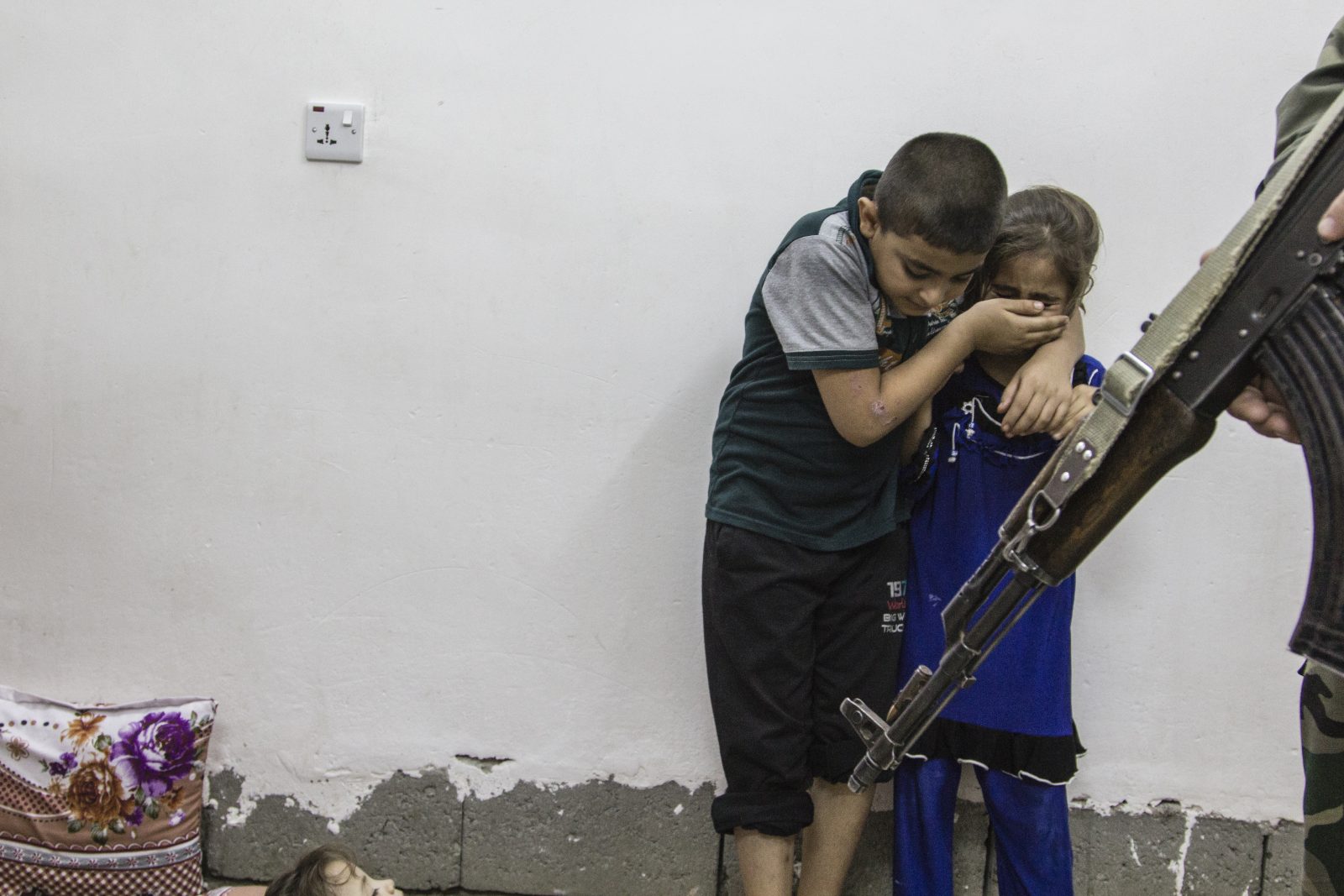
Children watch in fear as Iraqi police enter their home in a midnight raid to search for potential ISIS members.

21 July 2015, Kirkuk, Iraq

English کوردی
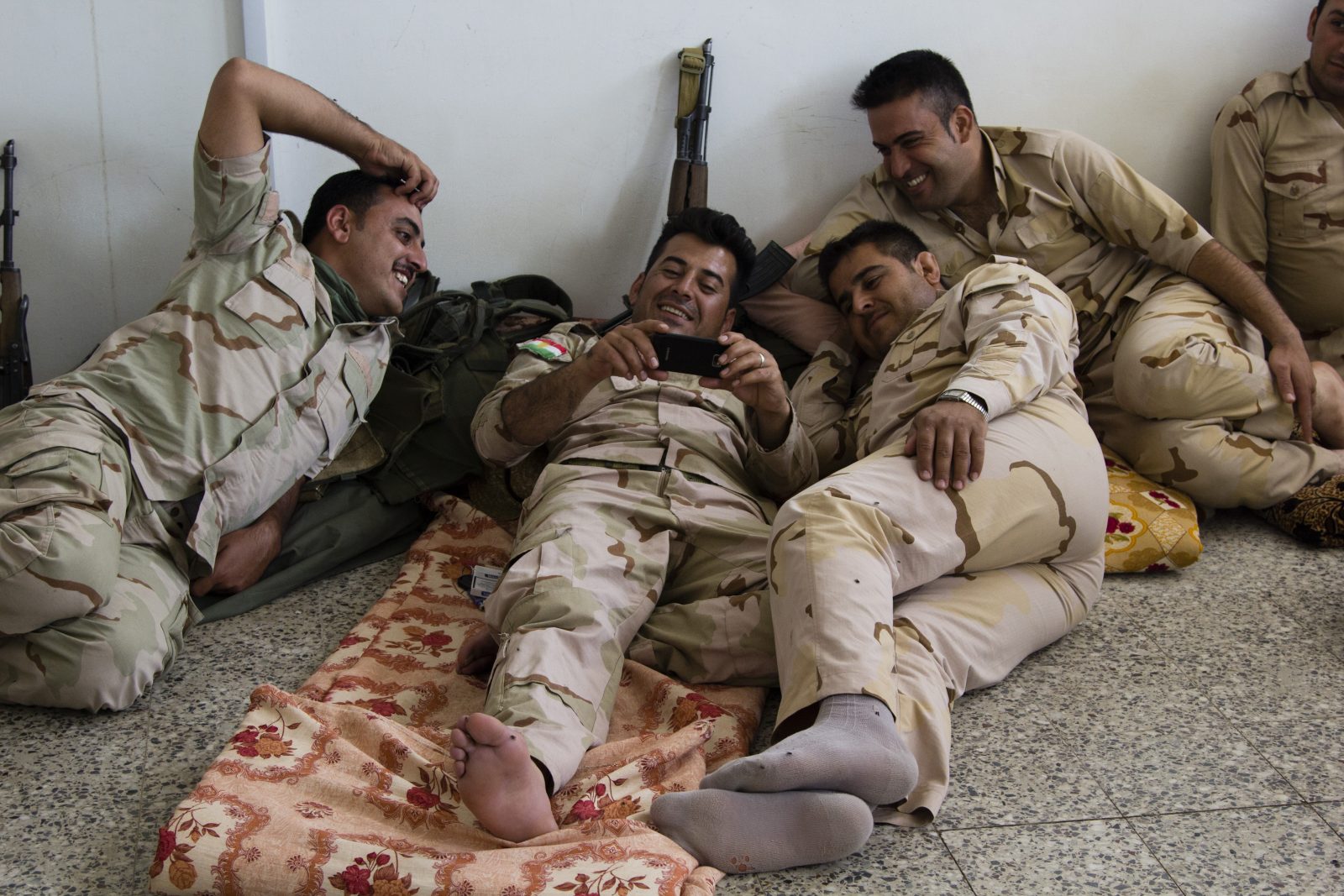
Peshmarga forces relax during the hottest hours of the day at the Maktabi Khalid Peshmarga Base on the outskirts of Kirkuk.

29 July 2014, Kirkuk, Iraq

English کوردی

“I met Hawre in 2014 in Sulaimani. He was working as a photojournalist and we soon began to collaborate, traveling around the region and documenting the aftereffects of the ISIS war on the people of Iraq and Kurdistan. Hawre's generous knowledge and sense of humour made our working days fun and interesting; his insight into the history of Iraqi Kurdistan illuminated my own work and made me profoundly grateful to be his friend and colleague. Hawre's photography is searing, emotional, and artistic. As an artist, he is both thoughtful of the pain of others and willing to take huge risks to document the joys and sorrows of his homeland. I can't think of another photographer more deserving of acclaim, or more committed to telling the deep history of those around him--defying social conventions and foregoing his own personal safety to do so. From Shingal to Jalawla, Baghdad to Kirkuk, refugee camps to police raids, Hawre's work brings light and joy and reveals the chaos and pain at the heart of war.”

Cathy Otten, author of With Ash on Their Faces: Yezidi Women and the Islamic State

English کوردی
A woman named Umm must remain in the refugee camp in Hammam al Alil, as the Hashid Al-Shaabi will not allow her to return to her village of Tal as Shab, because of its proximity to the ISIS-held town of Tal Afar.

20 July 2017, Hamam Al-Alil, Nineveh Governorate, Iraq

English کوردی

“Hawre Khalid is one of the most promising and talented photographers to come out of the Middle East this decade. With a focus on his home country of Iraq, the young Kurdish storyteller has captured moments of horror, love, and loss with thoughtfulness and skill. Most well known for his years documenting the fight against ISIS, Khalid portrays the realities of war in horrific detail. It’s among this body of work that Khalid’s compassionate ability to showcase humanity in the midst of tragedy shines through. Rarely is the public offered images by a single artist that showcase such a wide array of events for a nation. Khalid has truly captured this chapter of Iraq like none other. Above all, and perhaps most importantly, Khalid is a deeply loving friend and colleague.”

Cengiz Yar, photographer and editor
 

English کوردی
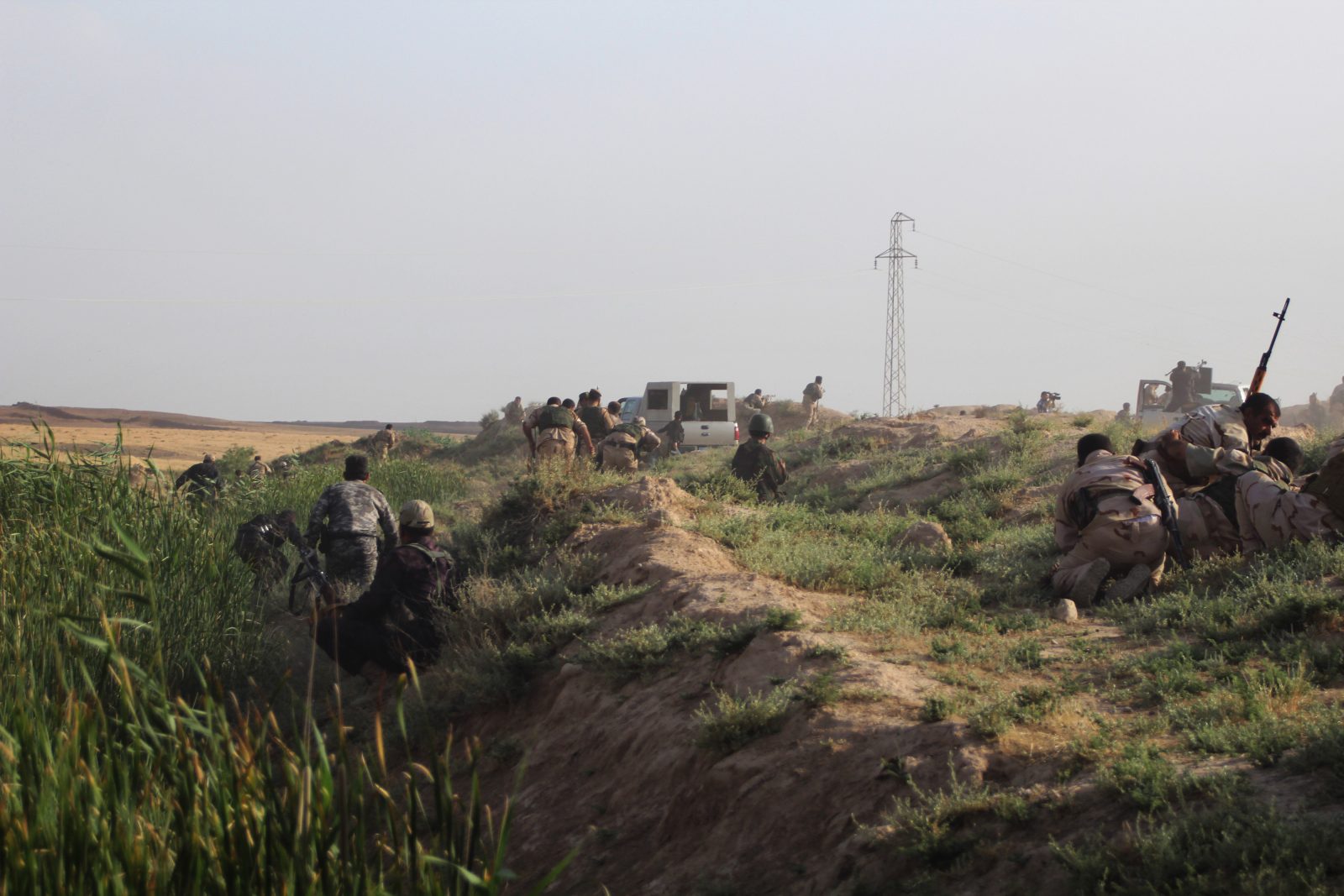
The Peshmarga and Iraqi police fight ISIS in the village of Mula Abdulla, just south of Kirkuk.

12 June 2014, Mula Abdulla, Kirkuk Governorate, Iraq

English کوردی

“Since I first met Hawre in 2015, I was struck by his commitment and ambition. Hawre is not simply a photojournalist, but a young man on a mission to document and tell the world about what’s happening in his country. While many of his images are shot during war, they often avoid didactic representations of tragedy, as Hawre’s gaze is drawn to the quiet moments that tell of resilience and the everyday life of the Iraqi people. Hawre’s photography is an essential voice for today’s Iraq.”


Dario Bosio, photographer and founder of DARST
 

English کوردی
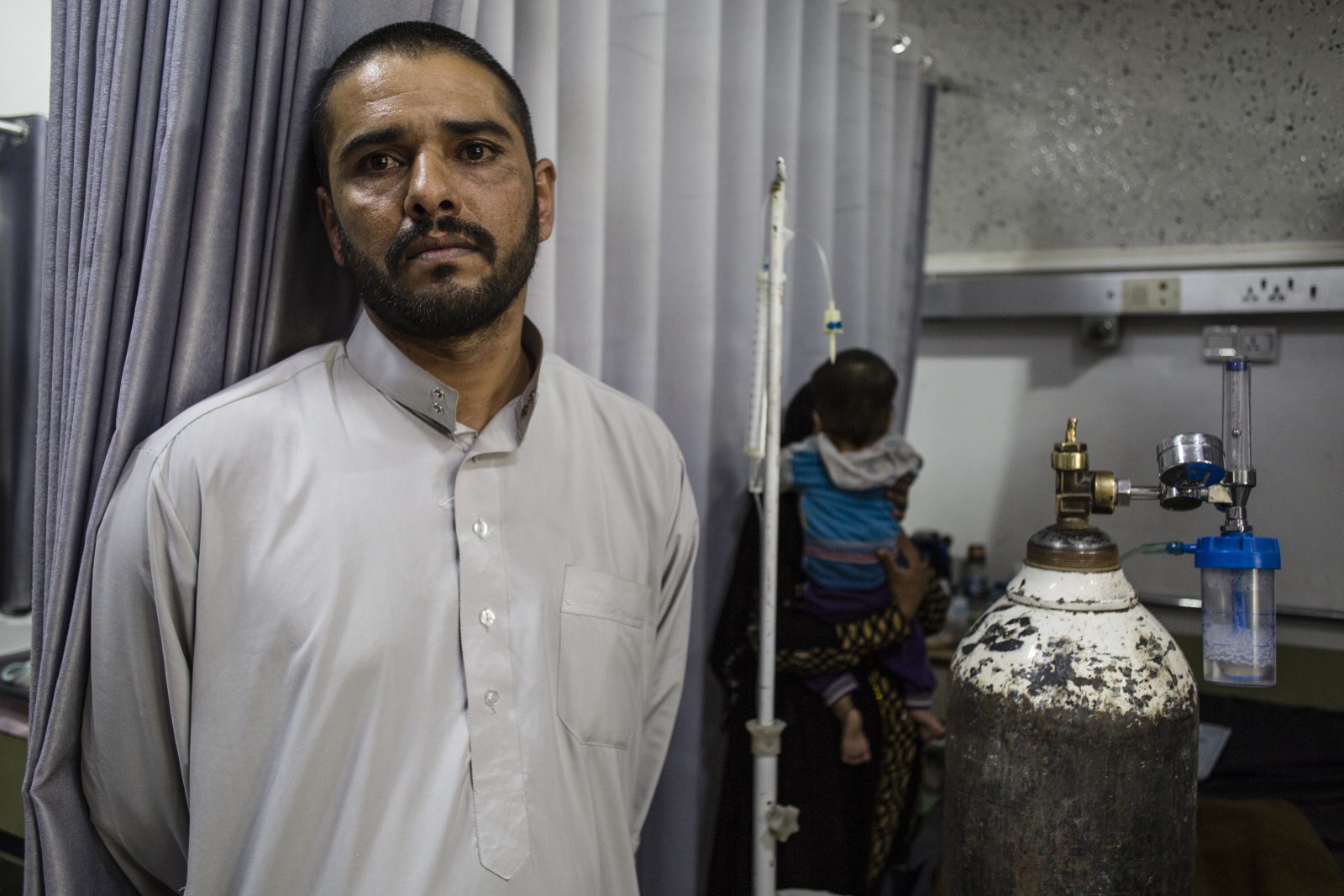
An unemployed father who lost two of his children during the Mosul offensive struggles to afford the healthcare costs of his third child, who has required hospital treatment for over two years.

15 October 2018, Mosul, Iraq

English کوردی

“Although Hawre Khalid’s photography often shows us the explicit brutality of Iraq’s strife--the act of fighting and it’s bloody effects--it is truly important because it reveals the degradation of the individual within that strife. Figures, often alone, are placed in devastated landscapes with baffled and blasted expressions on their faces. People sit in or traverse his images as though they are trying to work out what happened, what it was that passed through this place and left these buildings so mutilated, this corpse on the floor, this sky forever obscured by smoke. The world that Mr. Khalid’s subjects inhabit is a world that, like a bad dream, is almost recognizable but also like nothing you’ve ever seen. Wars occur as politics and social structures break down, and we can, to some degree, explain this. What Khalid’s pictures speak to is the breakdown of reason, the collapse of the individual; essential to war and nearly impossible to explain.” --Jacob Russell, photographer, video journalist, and writer


English کوردی
ISIS killed Adam’s father because he had formerly belonged to the Iraqi army. He's now cared for by his grandmother Sana, along with 21 other orphans.

5 June 2018, Mosul, Iraq

English کوردی

“Hawre’s passion for photojournalism is inspiring. He’s one of the most dedicated photojournalists I have ever met and it was such a pleasure to edit his work at Metrography. His photographs transcend simple documentation, weaving together hard truths with a deep tenderness for humanity.” --

Sebastian Meyer, photographer and filmmaker, co-founder of Metrography


English کوردی
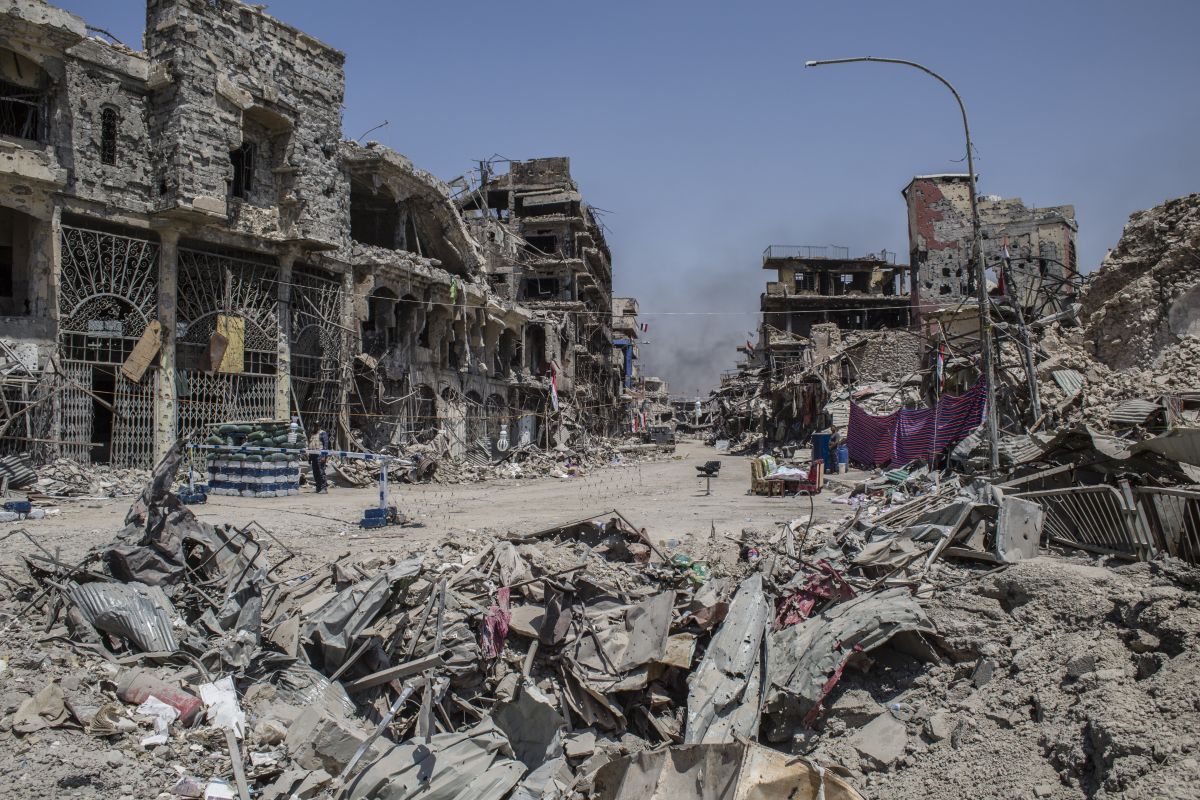
A view of the destroyed building of Mosul’s Old City.

25 July 2017, Mosul, Iraq

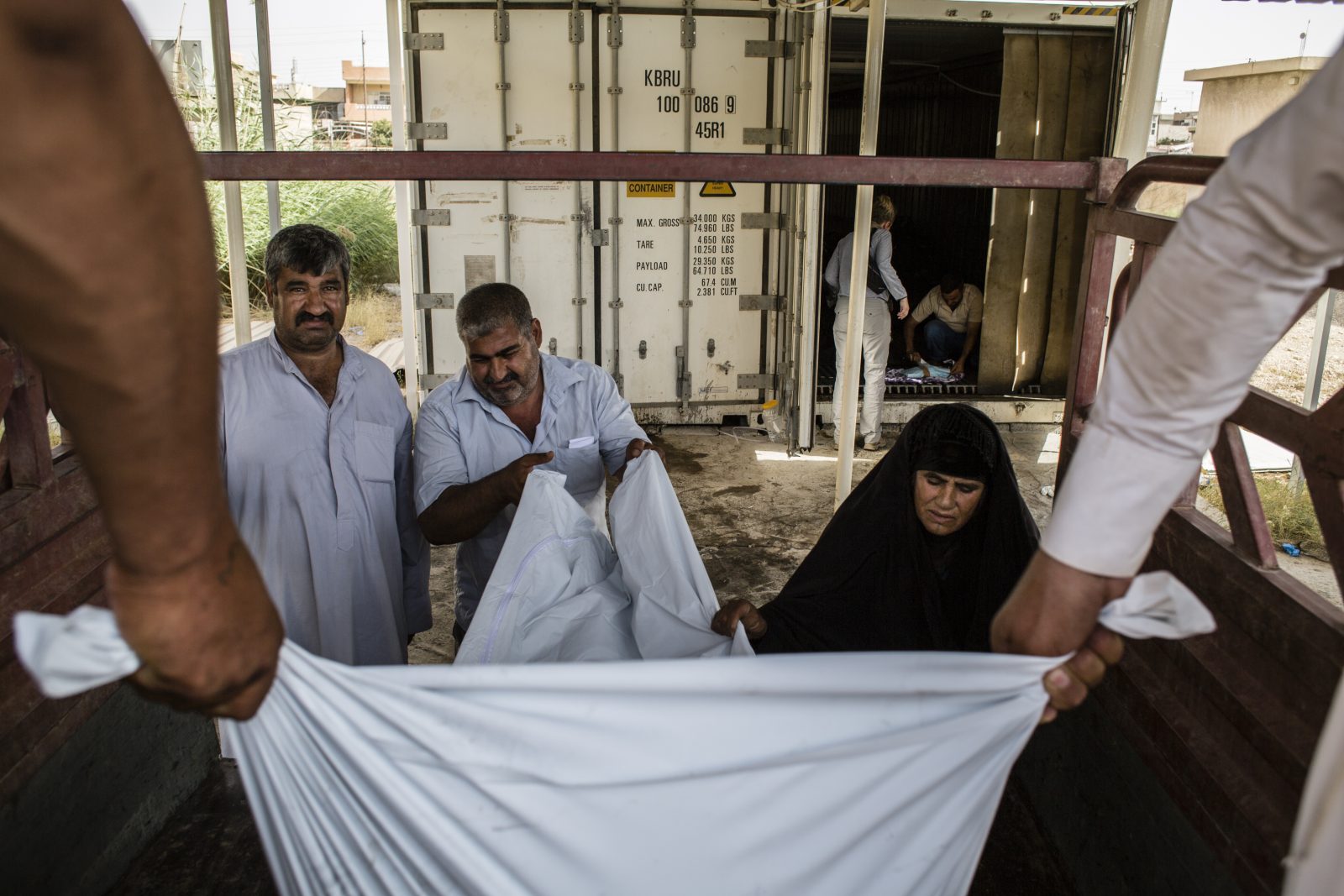
Mosul residents recover the body of a family member after nine months of fighting between Iraqi forces and ISIS.

23 July 2017, Mosul, Iraq

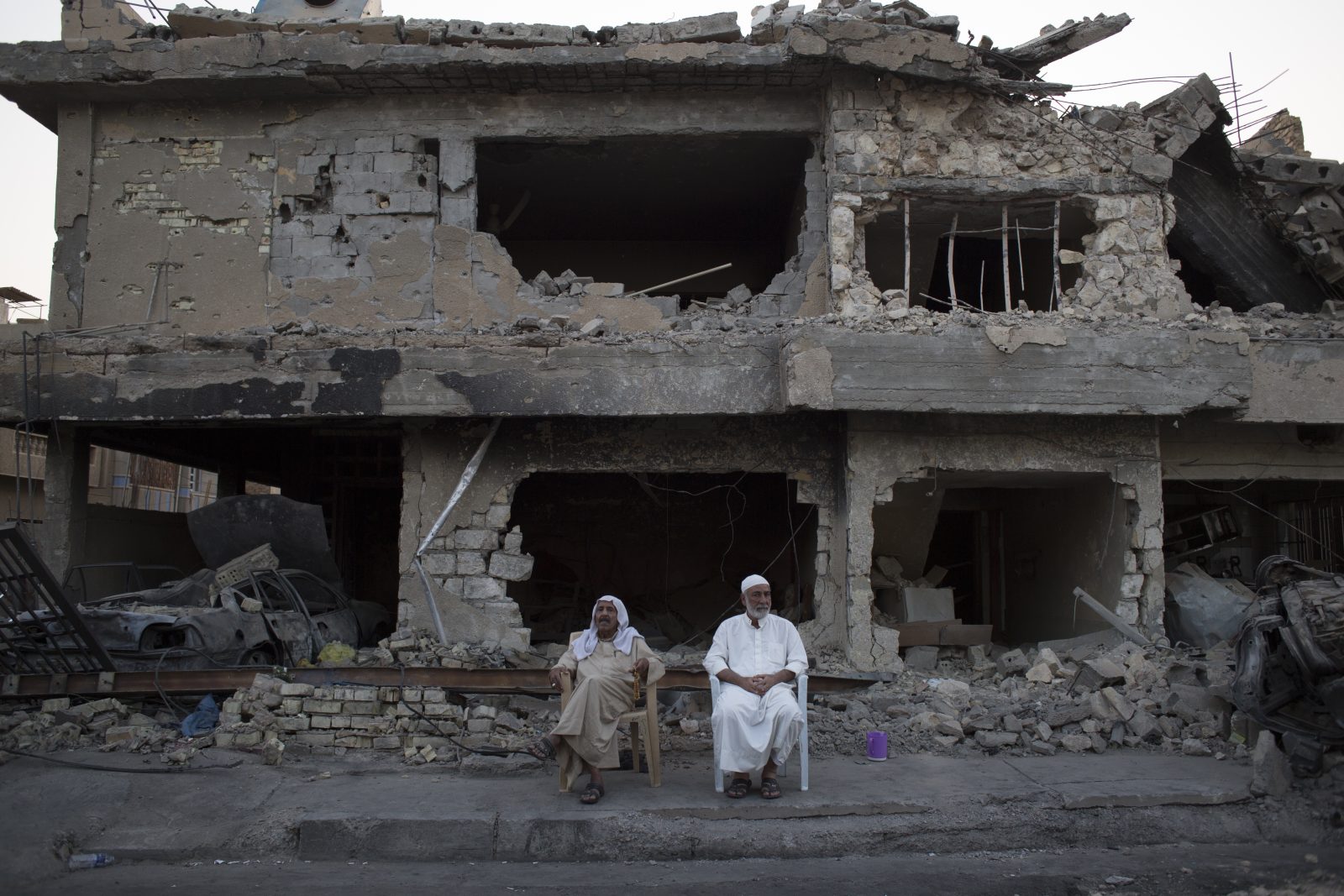
Two Fallujah elders relax at sunset.

21 October 2016, Fallujah, Iraq

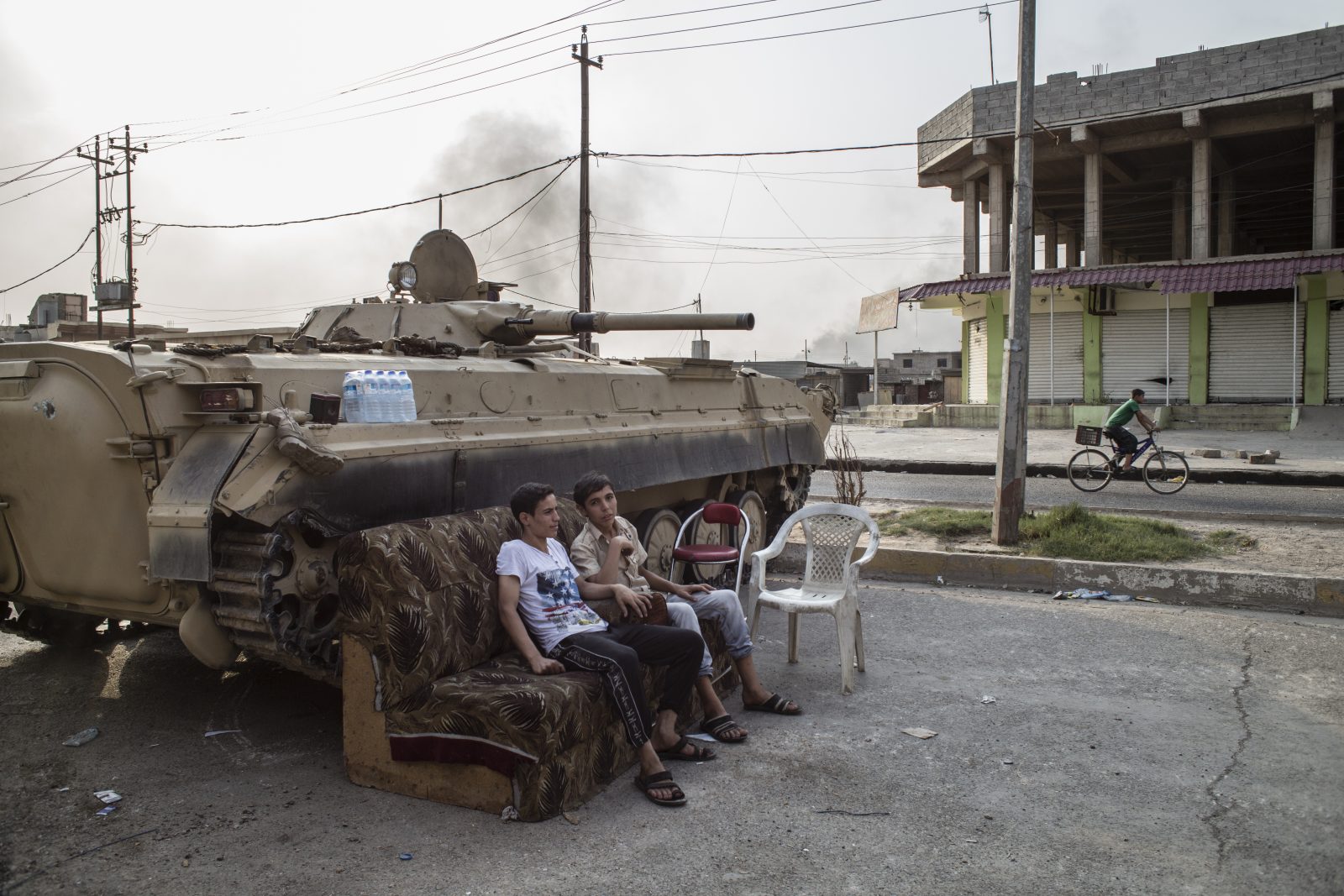
Two boys relax on a couch abutting a tank on al-Qayyarah’s market street.

31 August 2018, al-Qayyarah, Iraq

Satar stands on the ruins of his destroyed house on the West Bank of Mosul. “Once a week I come here and think about what happened to us.” He now lives on the East Bank with his wife and three children, in a former ISIS house. After more than a year of unemployment, he now works at the al-Muntanza cafe, where he earns a salary of $250 USD per month.

2 June 2018, Mosul, Iraq

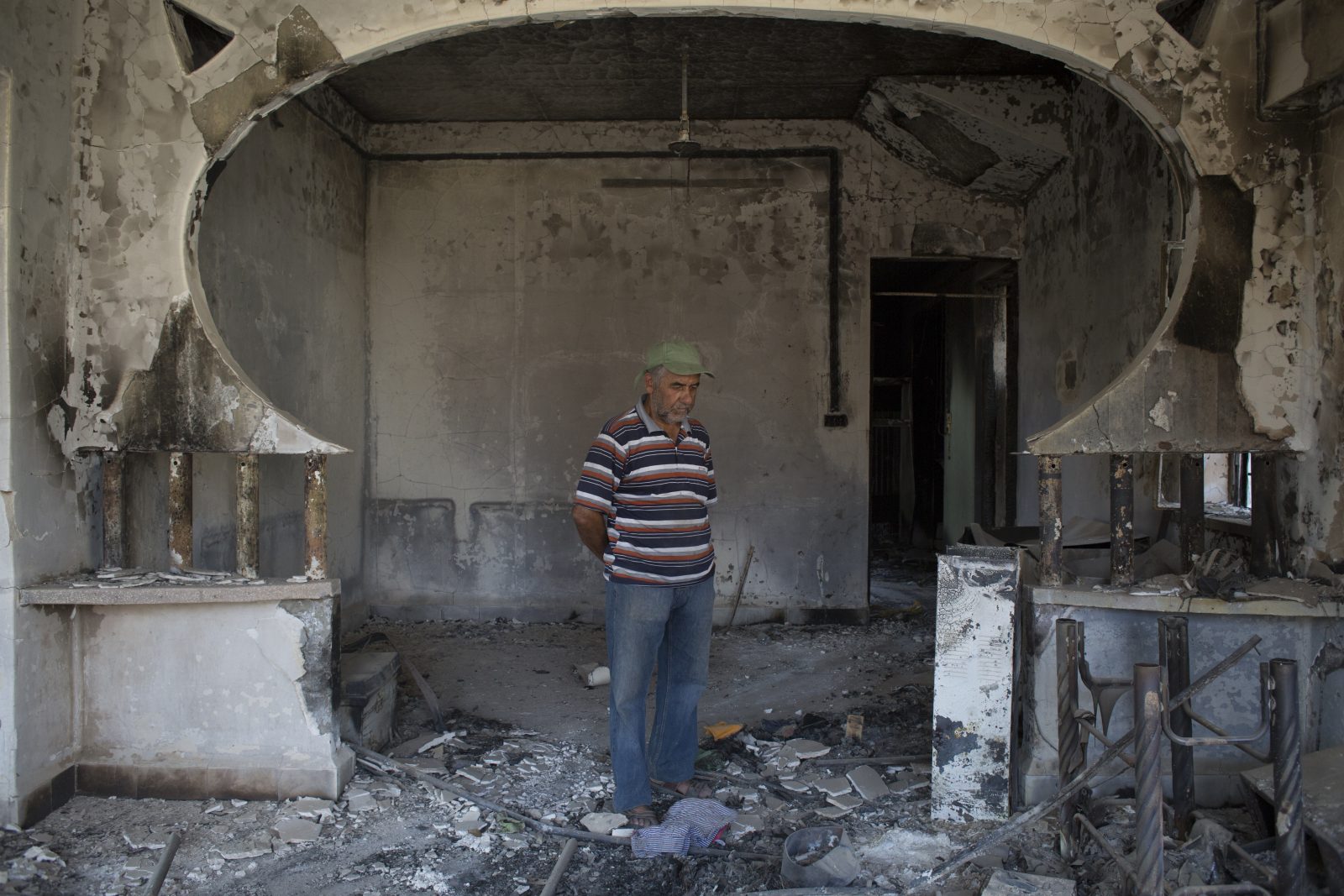
Bashar, a civil servant at Mosul’s Ministry of Culture, surveys the wreckage of his destroyed house in the al-Najar neighborhood of West Mosul.

25 July 2017, Mosul, Iraq

Mosul’s residents compete for food distributions on the east side of the city.

20 November 2016, Mosul, Iraq


Mosul’s residents compete for food distributions on the east side of the city.

20 November 2016, Mosul, Iraq

Two elderly men sit outside a house surrounded by a flood of crude oil seeping from a nearby well in al-Qayyarah. ISIS fighters destroyed the wells, setting them on fire in an attempt to create a smokescreen meant to deter coalition airstrikes.

31 August 2016, al-Qayyarah, Iraq

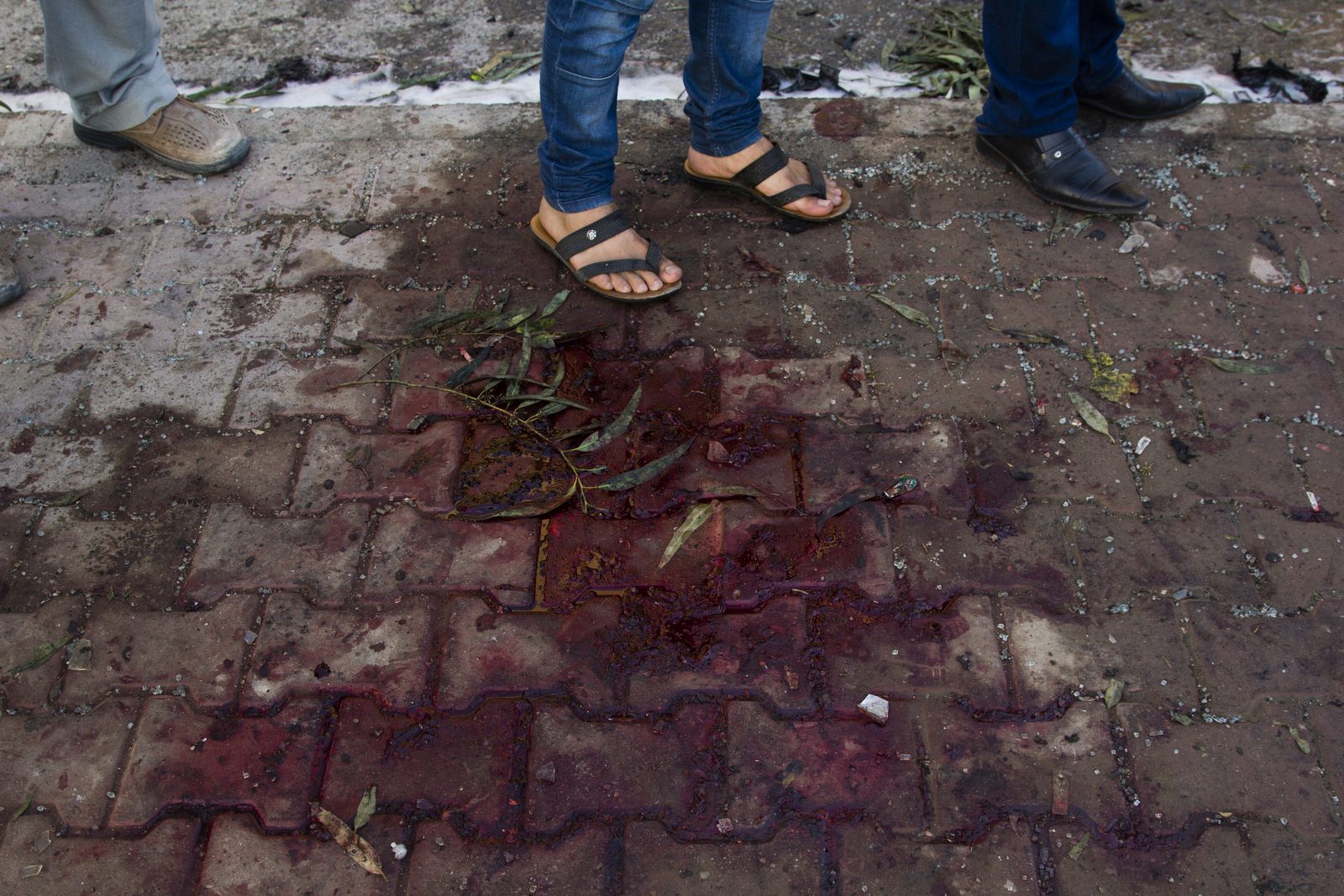
The pavement in the predominately Kurdish neighborhood of Rahimawa in northern Kirkuk is drenched in blood following a suicide bombing that killed five and wounded 19.

25 June 2014, Kirkuk, Iraq

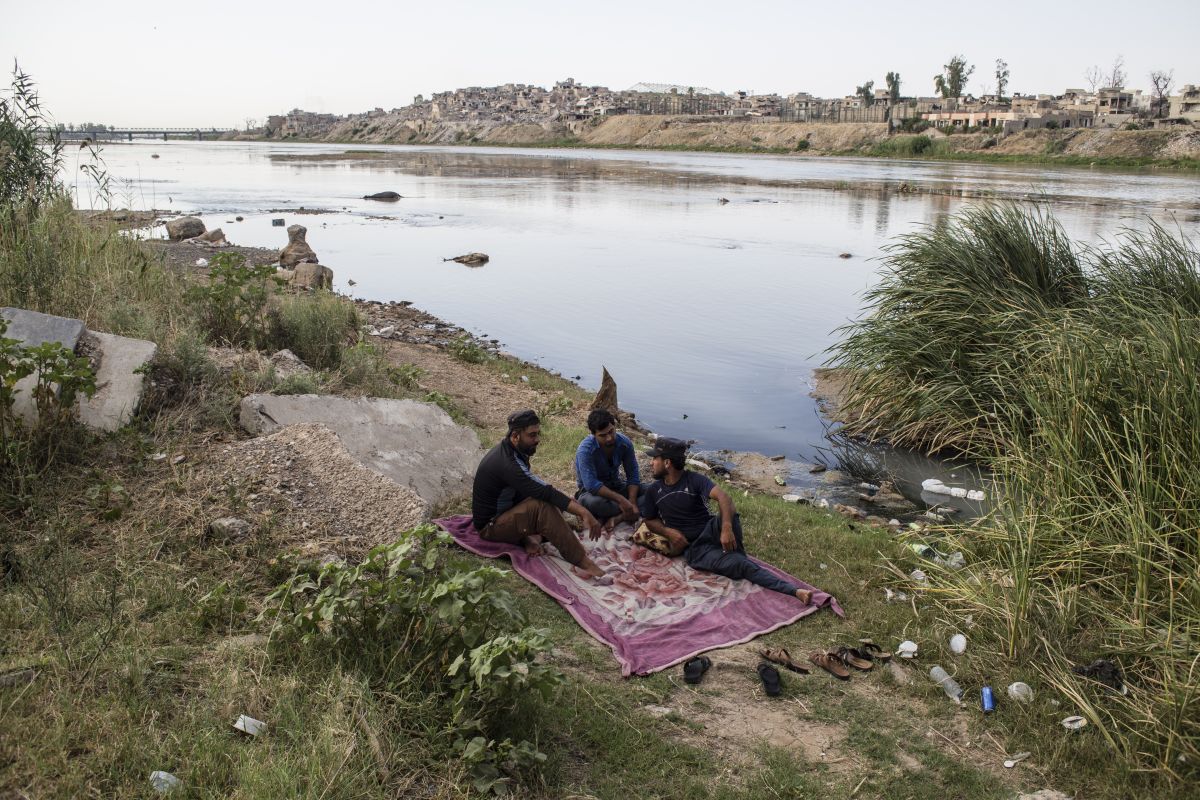
Lifelong fishermen Ahmed, Younis, and their friend take a break from fishing on the bank of the Tigris. Ahmed and Younis, both from Mosul's West Bank, had their homes destroyed by ISIS, and now fish from the East Bank, where they have been forced to move.

5 June 2016, Mosul, Iraq

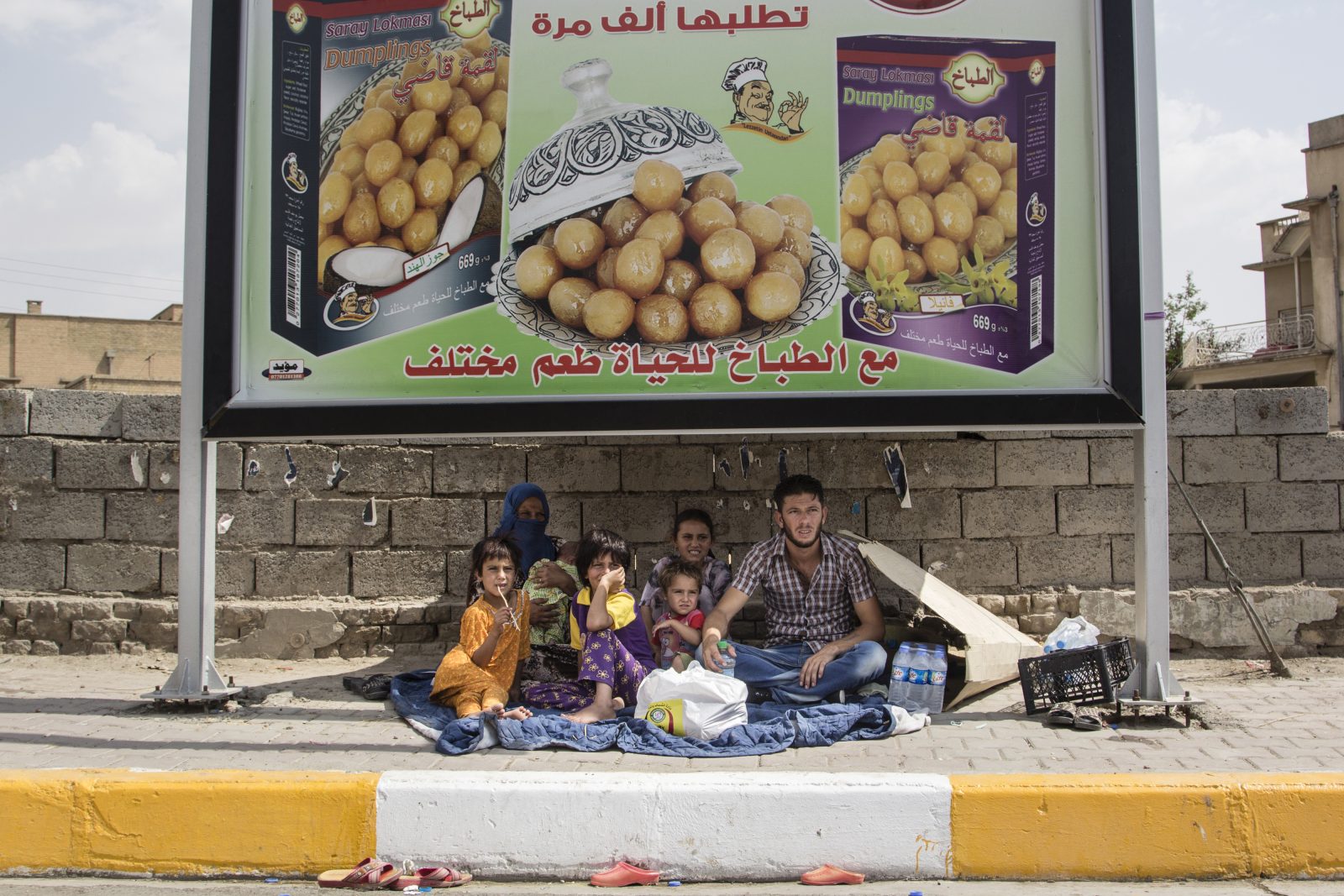
A family of Sunni refugees from Mosul seeks shelter beneath a billboard advertising sweets. Forced to abandon all of their belongings in Mosul, the family fled to escape airstrikes by the Iraqi Air Force.

22 July 2014, Kirkuk, Iraq 

English کوردی

“I try to remember how I met Hawre, and I wish I could recall a different time, for it was a time of enormous sorrow, pain, and tragedy. It was at the beginning of the war with ISIS, in 2014. The world has not yet realized the magnitude of the events that unfolded around us. We were in Sulaimani, in the Kurdistan Region of Iraq. Hawre had just been to the frontlines in Kirkuk, where the Iraqi army and the Kurdish peshmerga had been overwhelmed by ISIS and forced into a disastrous retreat. 

  Hawre was there, right in the middle of it, and with his camera he photographed. He photographed rare moments of uncertainty, fear, confusion, the waiting and the battle. Those became some of the first pictures depicting the war with ISIS that the world would see. From that moment on, Hawre never took a break. His camera was always in hand, ready to go deep into the stories he wanted to tell, never hesitating, never turning back. He worked hard, eager to learn, eager to test himself, eager to understand what was happening around him--to his people, to his country--and eager to share it with the rest of us. 

  His images became better, day after day, increasingly more layered, more meaningful. Together we would look at them. We would comment and criticize, sometimes demolishing his work so that he could go back out there to start over again, work harder, and create more impactful images, telling the story in a more penetrating way. His work gained power and meaning. His images are strong--they punch you in the face and force you to think, to reflect. Hawre does this with complete dedication, and he goes right into the situation, often forgetting about personal risk, always remembering why he is doing it: to document, and to communicate to the rest of us what is happening while trying to get us emotionally involved.”


Stefano Carini, photographer and editor, former Editor in Chief, Metrography
 

English کوردی

Uncovered Through the Smoke

Stories are always present in Hawre Khalid’s photos, and the strength of the photos lies inside those stories. The same can be said of all war photographers when people are taken to the events beyond the photos, with their multidimensional stories. The periods of Hawre’s work correspond to the historical context we live through. Hawre lives with and works in the events of his time. What distinguishes him from other Iraqi photographers is that he captures the particularity of each instant. He does not work within the general templates that constrict all other photojournalists and photographers. When war happens, Hawre converses with a story deeper within the war, depicting the heroes and victims we don’t see on TV, in newspapers. He is the traveler who seeks out war’s distinctive stories. His photos depict our crisis and human suffering. He emphasizes real subjects, wanders in search of unheard stories, and reveals the truths around us, the truth that photojournalists are responsible to. I see Hawre’s belief in the strength of a photo, a belief shared with war photographers. For them, the job goes beyond the click to show a photo that can move its viewer’s thought. Anytime I encounter his photos, I also confront sorrow, but with a hope for the survival of the stories that they tell. Who else could reveal them? Who else has the power to drive into a story in such detail? I notice his reaching for topics that the rest of us fear. Though to be on the frontlines itself is frightening, working in these social situations inspires twice that fear. They highlight the red lines between the individuals, the community, and the powerful. A photographer is not the only possible victim in these situations; the figures depicted once more become victims who approach the edge of death. Hawre does not permit the victimization of his subjects. In accordance with his ethics, he delivers their narratives in the proper context. Hawre not only captures the pain of our region’s people, but also proves his wide search for stories, and his empathy for all humanity. 

Friends from Kashkul have collected Hawre’s years of work depicting war in a space that draws us deep into what we see in the photos, in search of a deeper response. As viewers slip into an atmosphere in congruity with the events depicted in the photos, the space itself begins to share importance with Hawre’s work. In this space, Hawre becomes an artist who attempts to leave something within us—the world Hawre himself calls for, a world far from violence. A world that can proclaim, War is the ugliest human creation. It is time for peace. Through the Smoke, Behind the Curtain forces us to think of bloodshed before aiming the bullet, to think of peace before war.         


Shaho Abdulqadir               


English کوردی

Hawre Khalid

was born in Kirkuk, Iraq in 1987. After earning a degree in journalism at the Sulaimani Technical Institute, he pursued a life as a photojournalist. His photographs have appeared in the New York Times, Time, National Geographic, Washington Post, Sunday Times, Le Monde, Newsweek, Al-Jazeera English, and many other publications. Khalid himself has been a refugee on four distinct occasions, allowing him to understand the experience of the displaced with particular nuance and compassion. His photography has been exhibited worldwide, in the Czech Republic, Kurdistan, Italy, Slovenia, and the United States. Through the Smoke, Behind the Curtain is his first solo show in Kurdistan. 
 

English کوردی

Neil Shea is a journalist based in Brooklyn, New York. He is a contributing editor with The American Scholar and The Virginia Quarterly Review, and his writing regularly appears in National Geographic magazine. Neil occasionally teaches journalism and non-fiction writing at Boston University and The University of the South. 


English کوردی

Curatorial Team

Pshtiwan Babakir is a filmmaker, archivist, and translator who works as a primary investigator at Kashkul, where he manages its archive of visual art. He graduated from the American University of Iraq, Sulaimani in 2017. Babakir has acted in a theatrical adaptation of Sherko Bekas’ book-length poem Now a Girl is My Homeland, and has directed, produced, DPed, and edited many documentaries. His films Red Land and Not For Sale have been screened at film festivals around the world, and his writings and translations have been published by World Literature Today, On the Seawall, and Loch Raven Review.


Alana Marie Levinson-LaBrosse is a poet, translator, and professor who has lived and worked in Iraq since 2011. Levinson-LaBrosse completed a PhD in Kurdish Studies at the University of Exeter, focusing on nineteenth-century Kurdish poetry. Her book-length translations include Kajal Ahmad’s Handful of Salt (The Word Works, 2016) and Abdulla Pashew’s Dictionary of Midnight (Phoneme Media, 2019). Her writing has appeared in Modern Poetry in Translation, Words Without Borders, Sewanee Review, and many other publications. Today she serves as Founding Director of Kashkul, the center for arts and culture at the American University of Iraq, Sulaimani.


David Shook is a poet, translator, and editor based in Sulaimani and Northern California. Their writing on literature and the arts has appeared on Hyperallergic and in the Guardian, the Los Angeles Review of Books, and World Literature Today. In 2013, they founded Phoneme Media, a nonprofit publishing house that has since published over 30 books translated from 26 different languages.

English کوردی

Acknowledgements

Thanks to Dario Bosio, Stefano Carini, Sebastian Meyer, Cathy Otten, Jacob Russell, and Cengiz Yar for their brief reflections on Khalid’s work and person, and thanks especially to Neil Shea for the generous contribution of his essay.


Thanks to Berham Anwer, for his work preparing the exhibition space and mounting the photographs, and to Zêdan Xelef for his assistance with lighting. Thanks to Kashkul’s staff and interns for their work cleaning, maintaining, and manning the exhibition space.


Thanks to the Culture Factory and its director, Khabat Ma'roof, for providing the exhibition space, and to Kazim Ali, Hemin Farhang, Ahmad Abdulla from Nzaran for printing Khalid’s photographs and to Hawzheen from Karo Printing House for printing Khalid's book, and Jan Cafe for providing refreshments in the opening of the exhibition.   


KashKul Watermark