A Glittering Darkness
← Back
English کوردی

A Glittering Darkness

Artwork by Salar Majeed 

Curated by Pshtiwan Babakr, Sufyan Jalal

Introduction by Bachtyar Ali

English کوردی

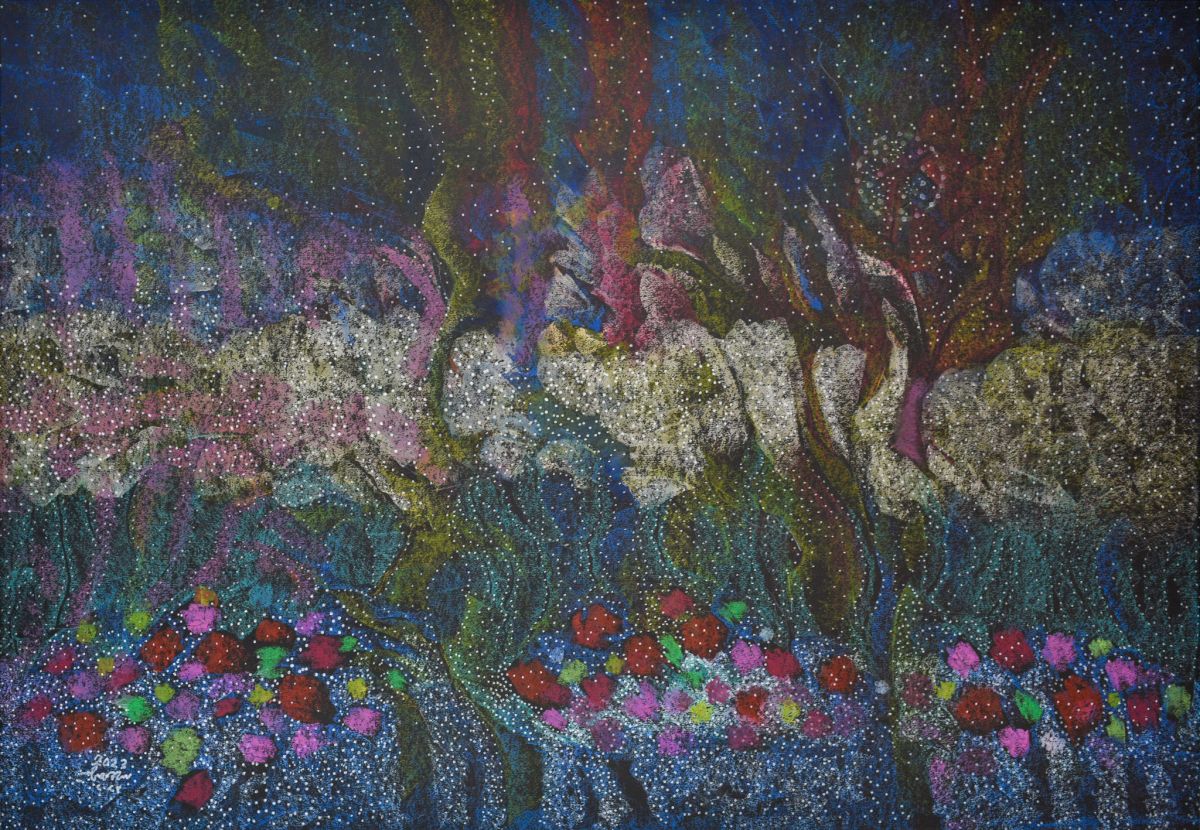
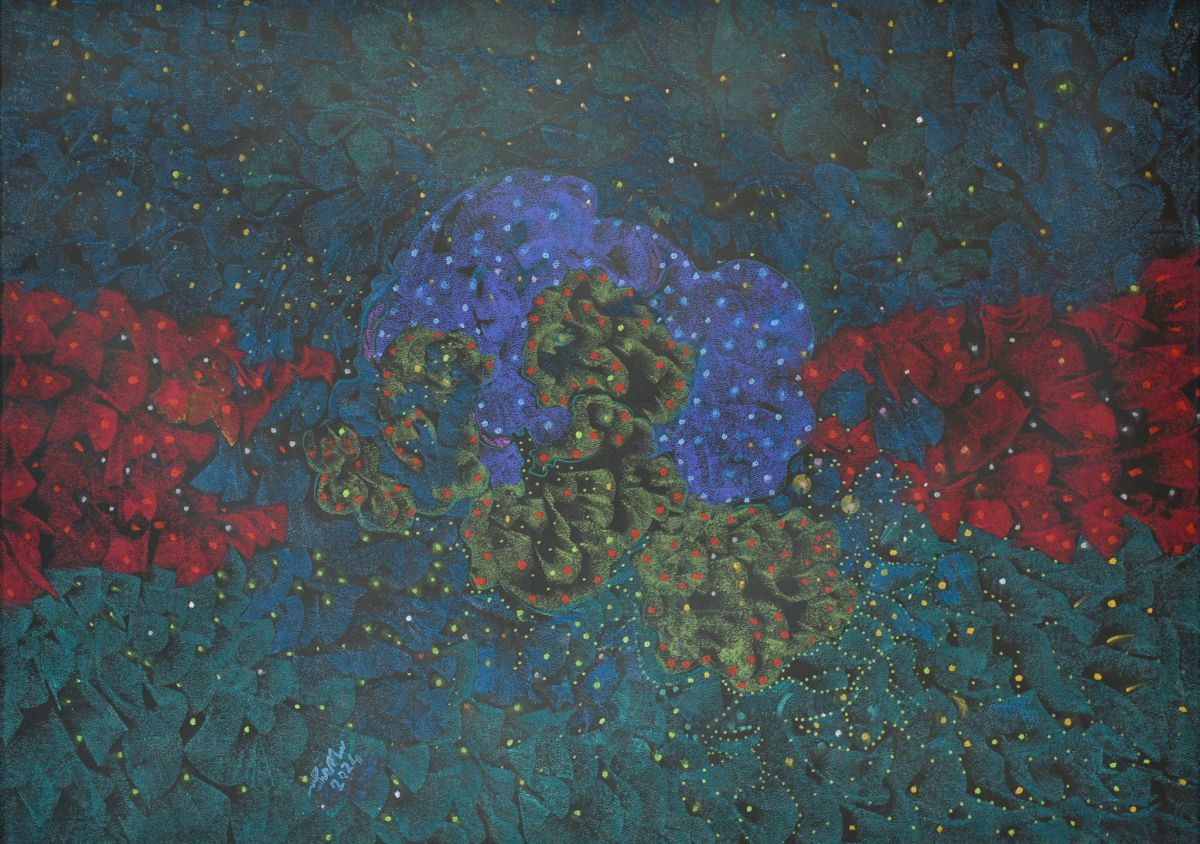
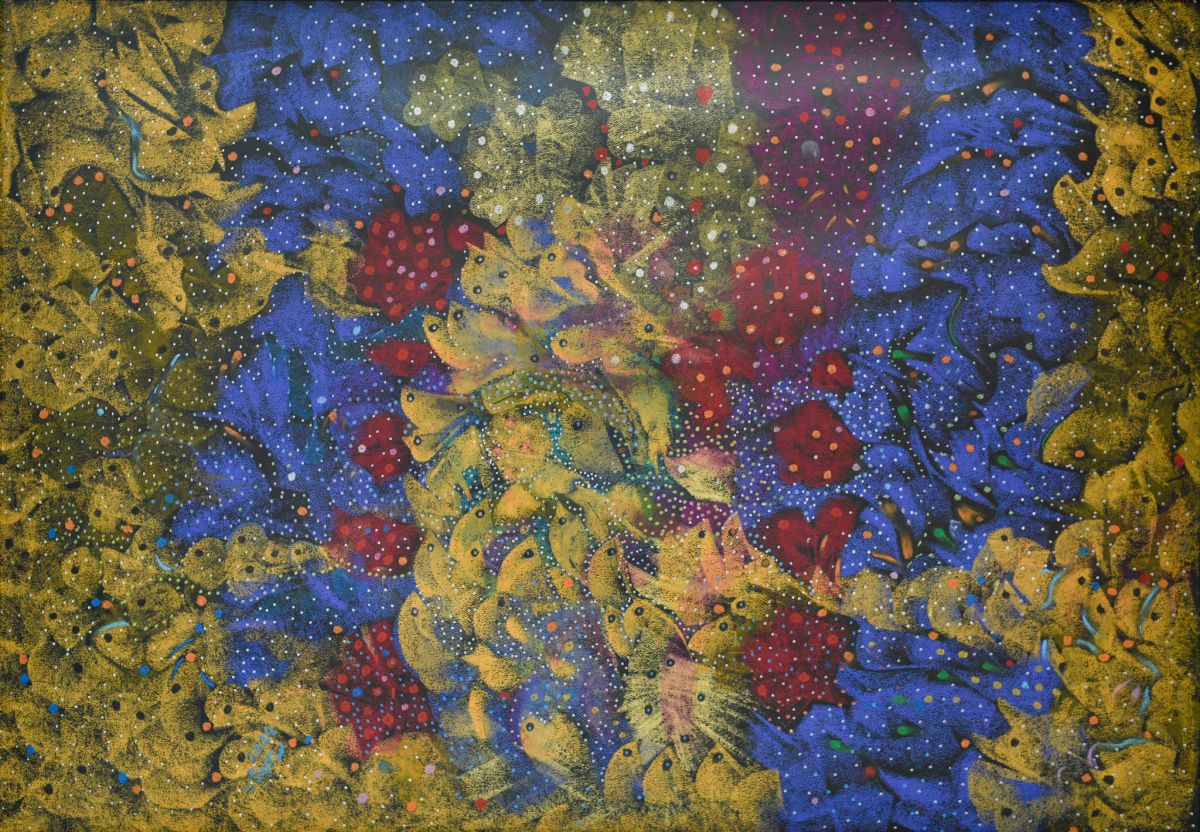
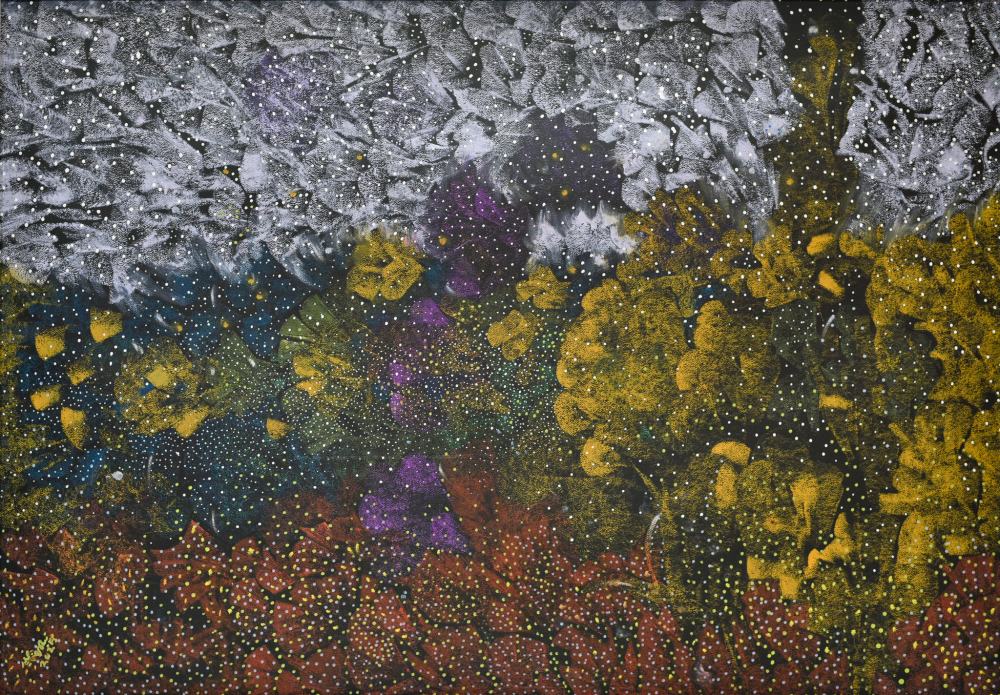
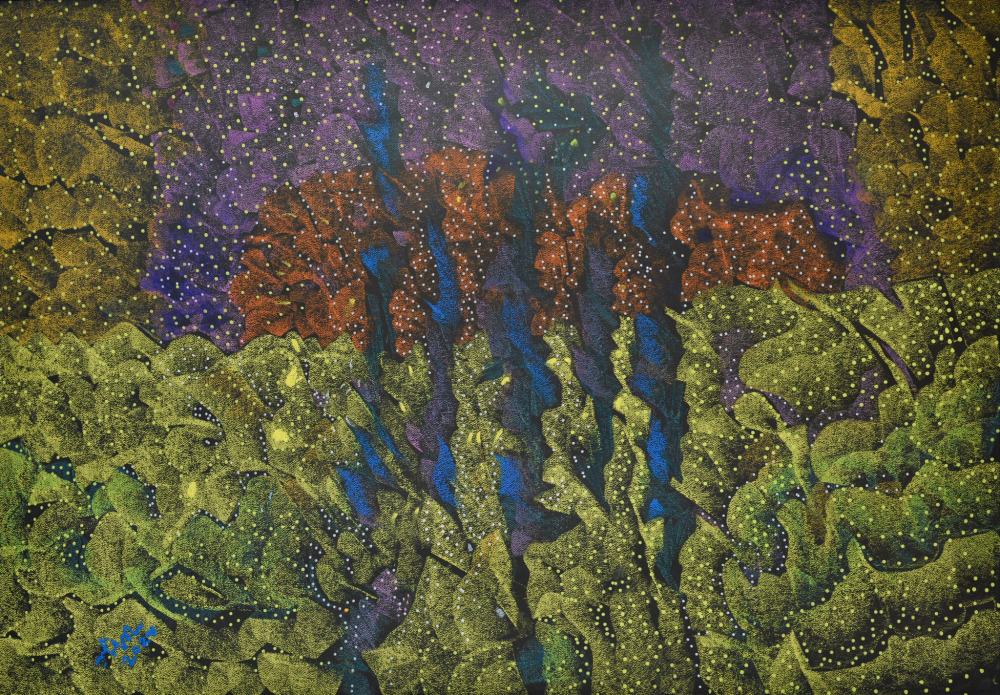
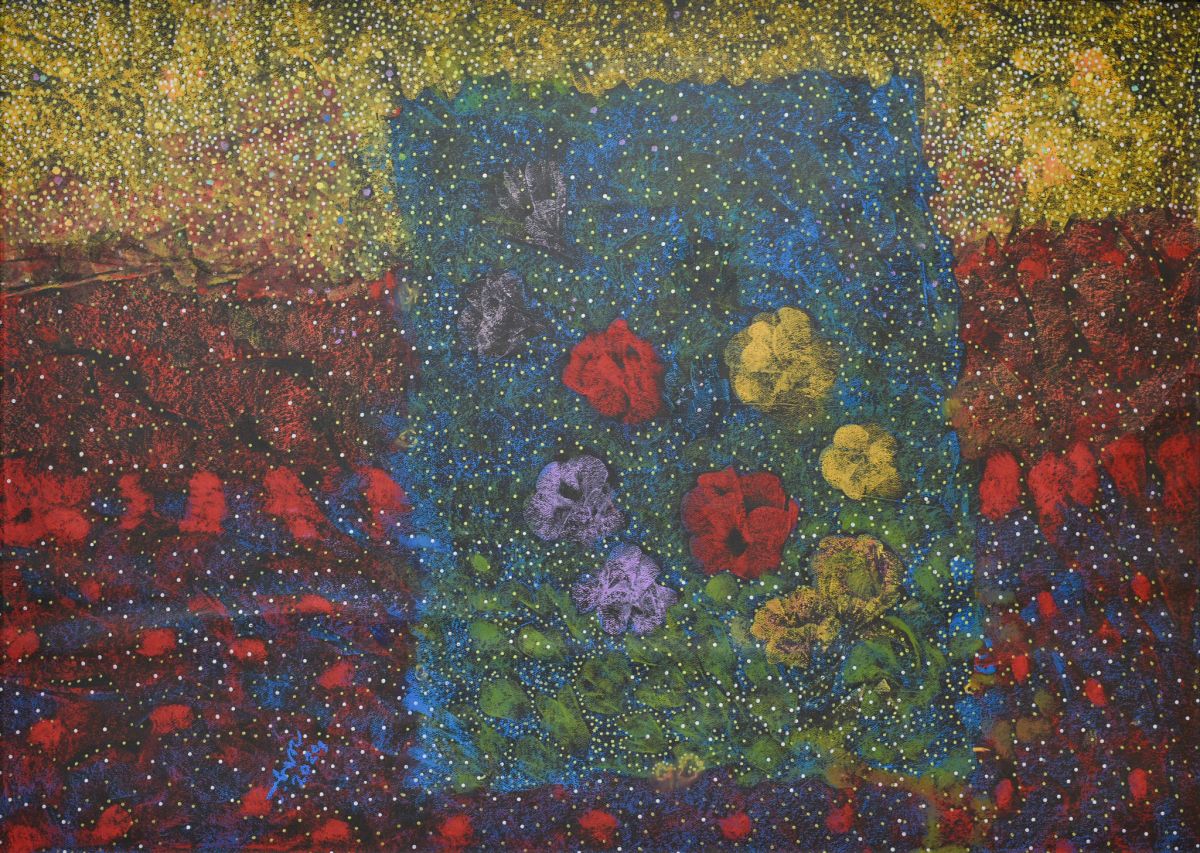
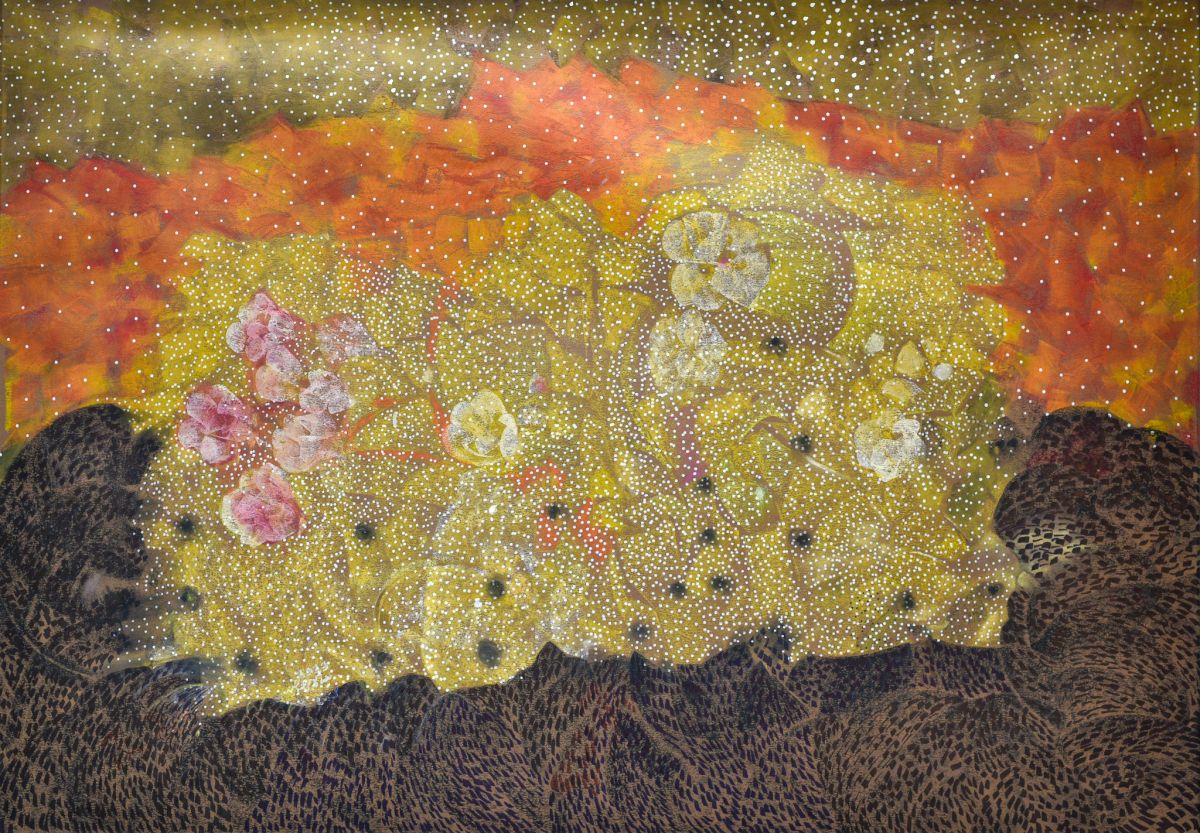
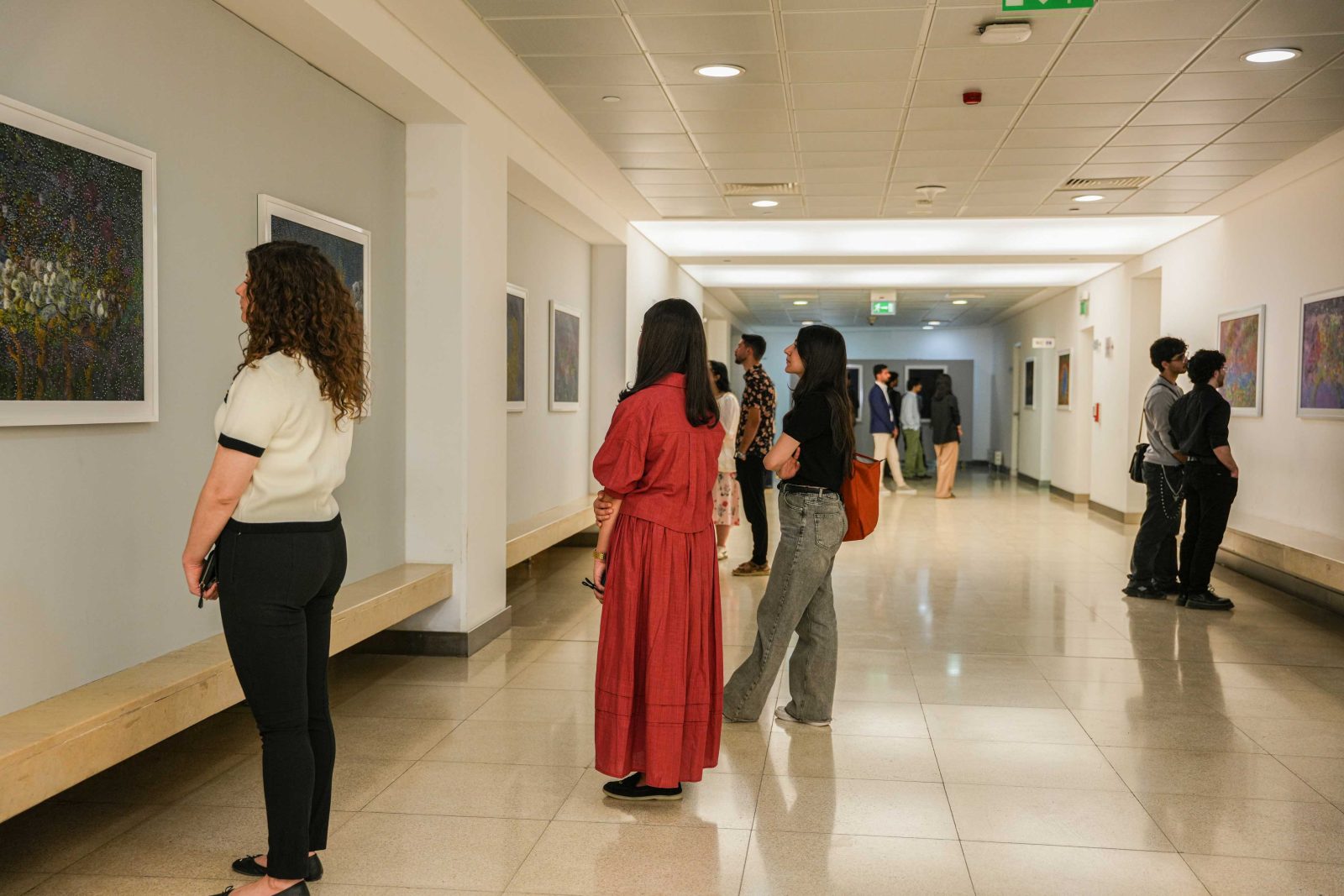
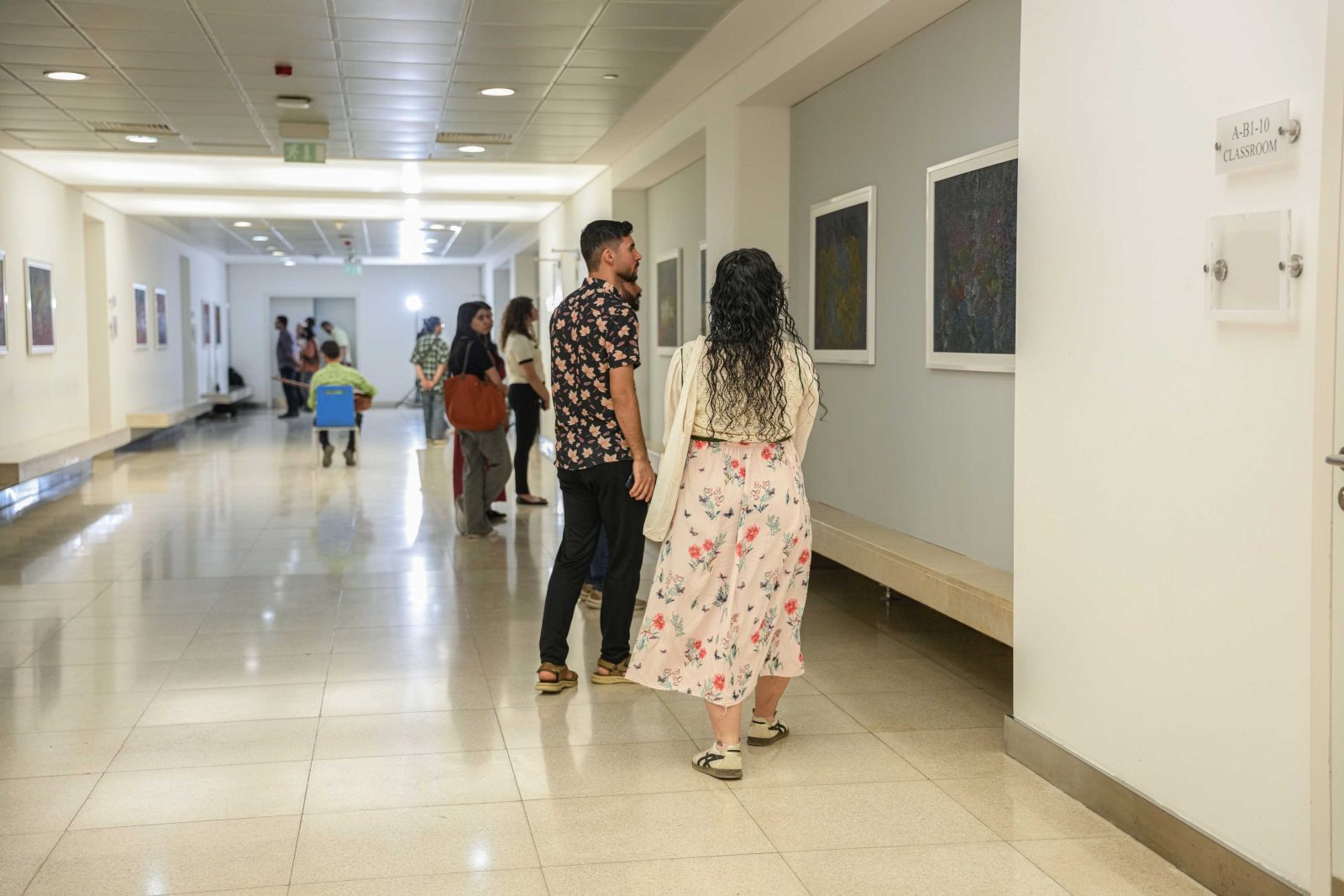
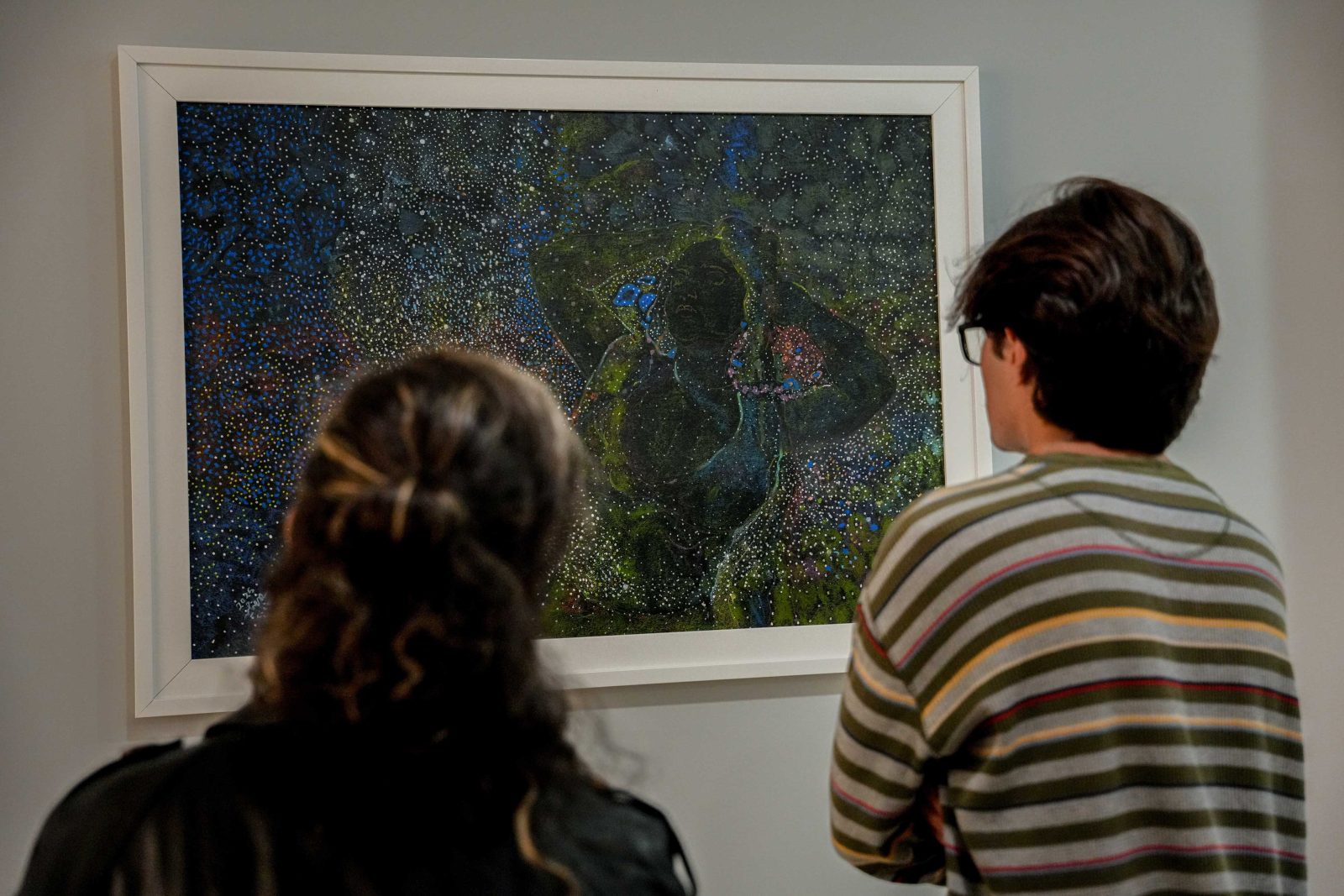
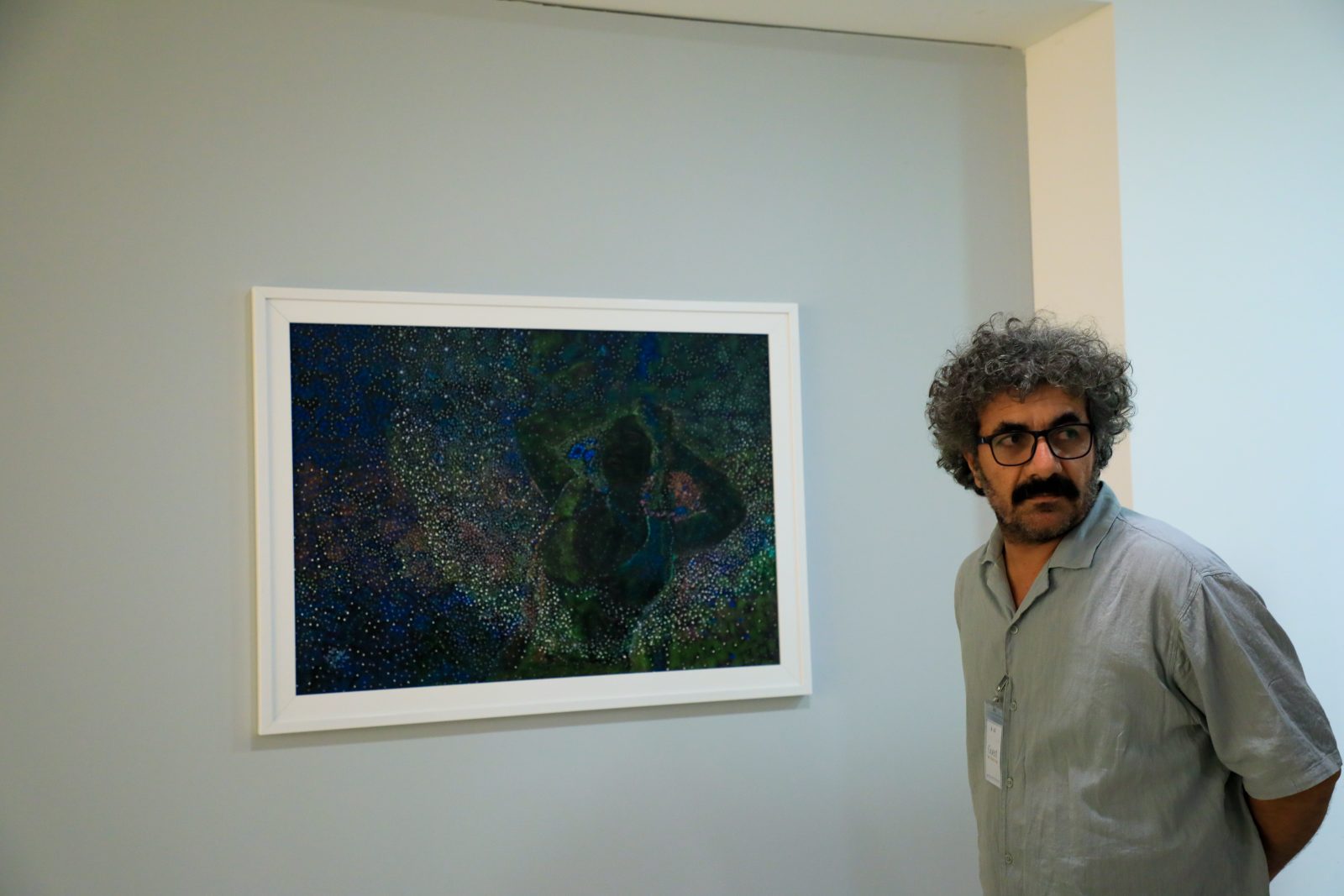
“A Glittering Darkness” featured 24 works by Salar Majeed at the American University of Iraq, Sulaimani. The exhibition was organized by Kashkul, the university’s center for arts and culture, for its inaugural Kurdish Studies Forum in September 2025. Curated by Pshtiwan Babakr and Sufyan Jalal, the exhibition grew out of the ongoing work of the Kashkul Art Archive, led by Pshtiwan Babakr.

English کوردی
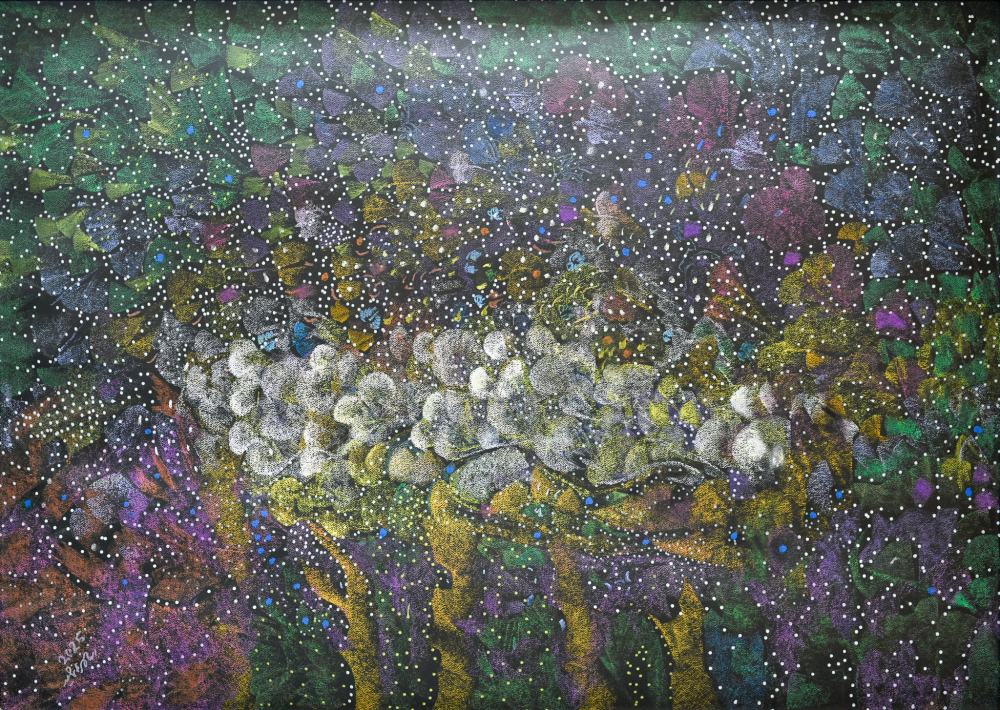
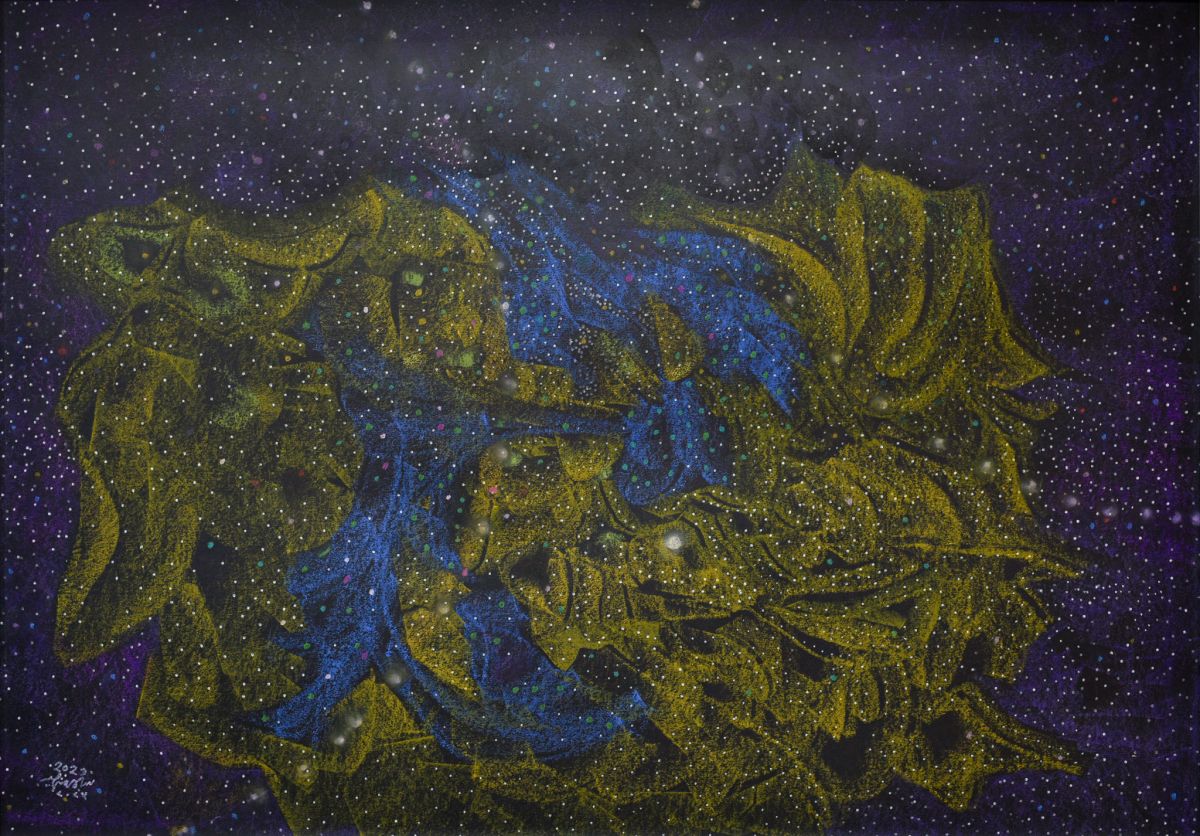
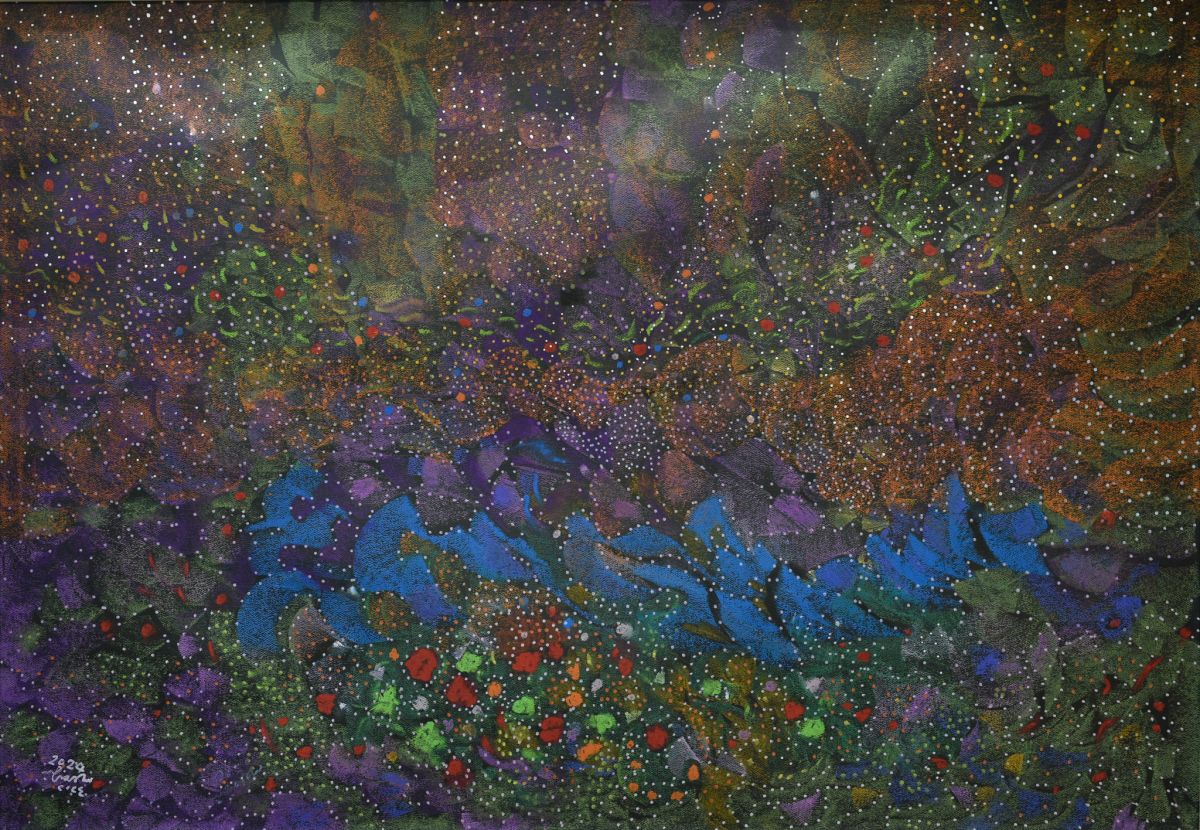
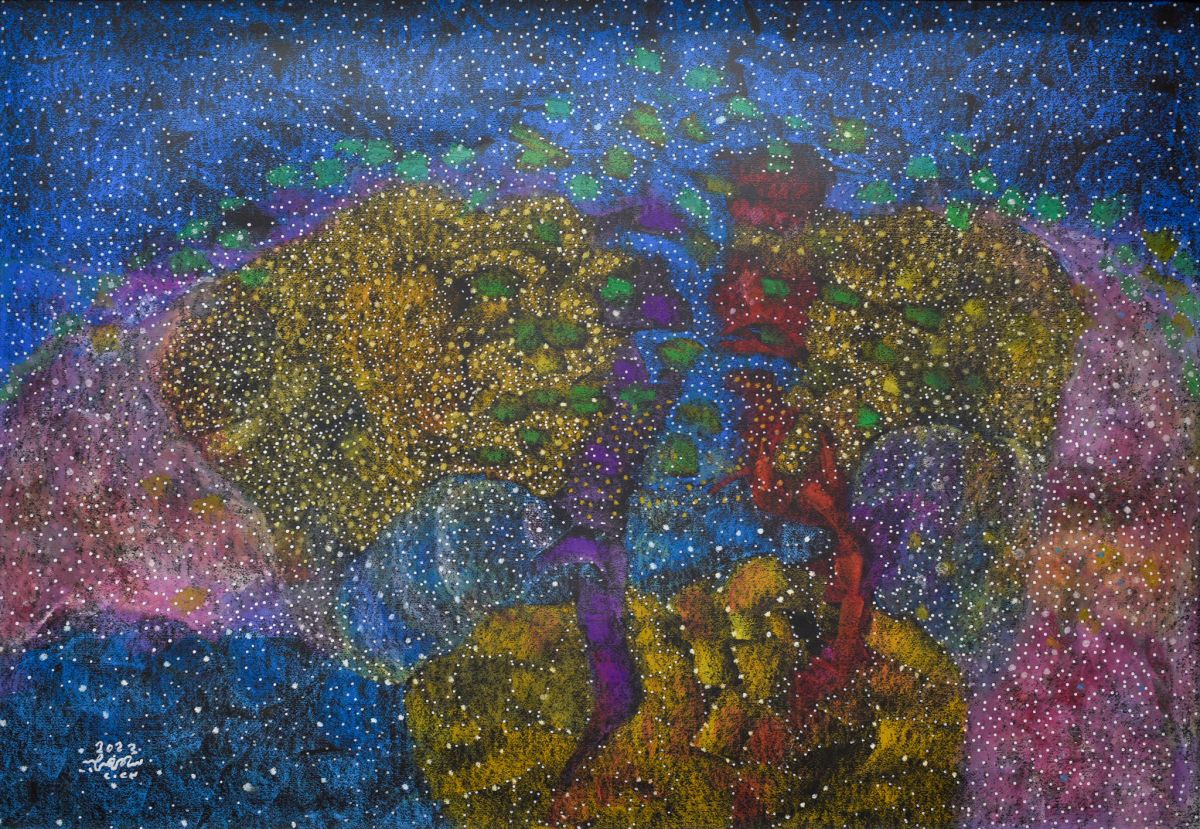
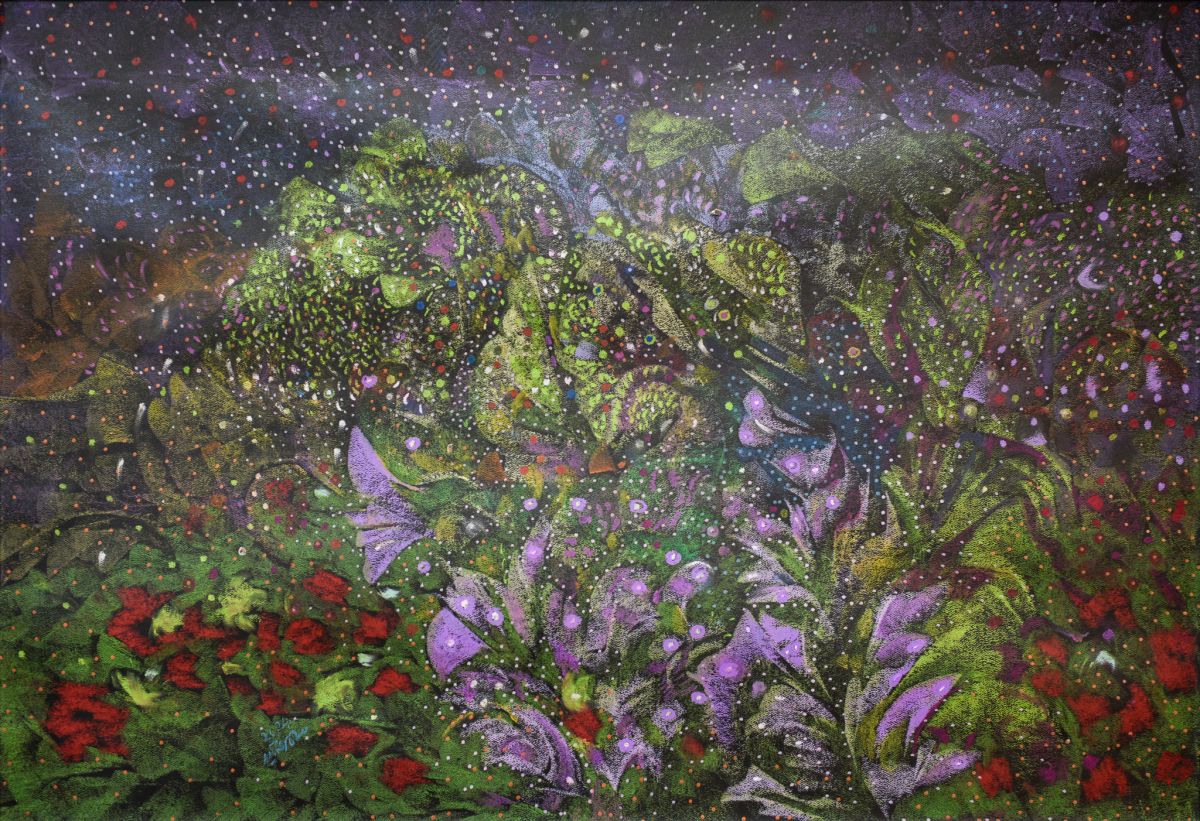
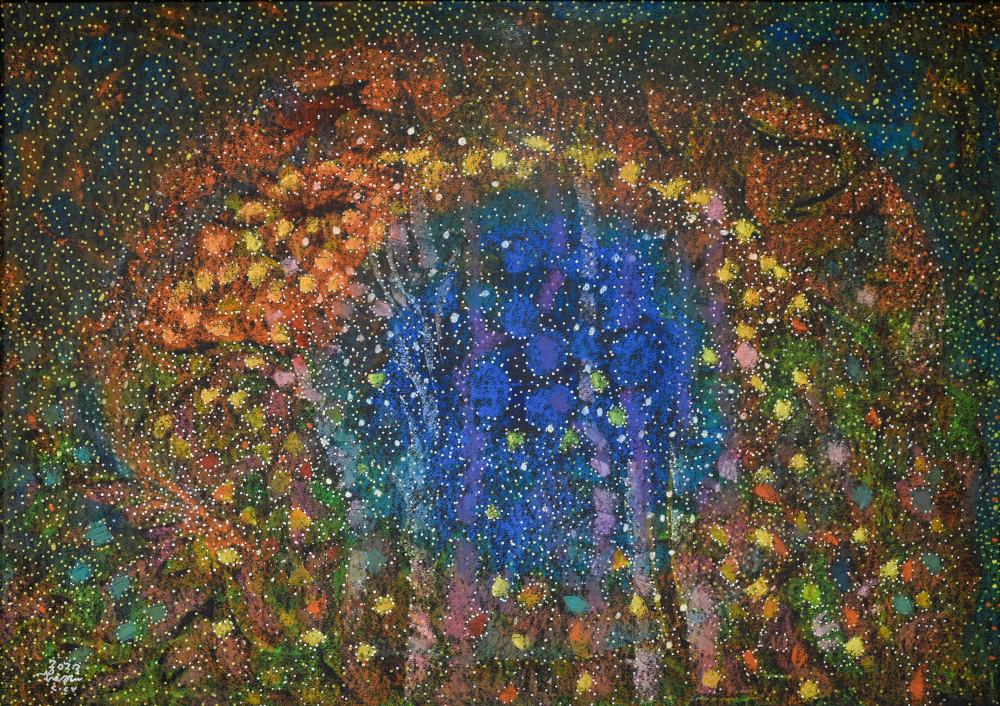
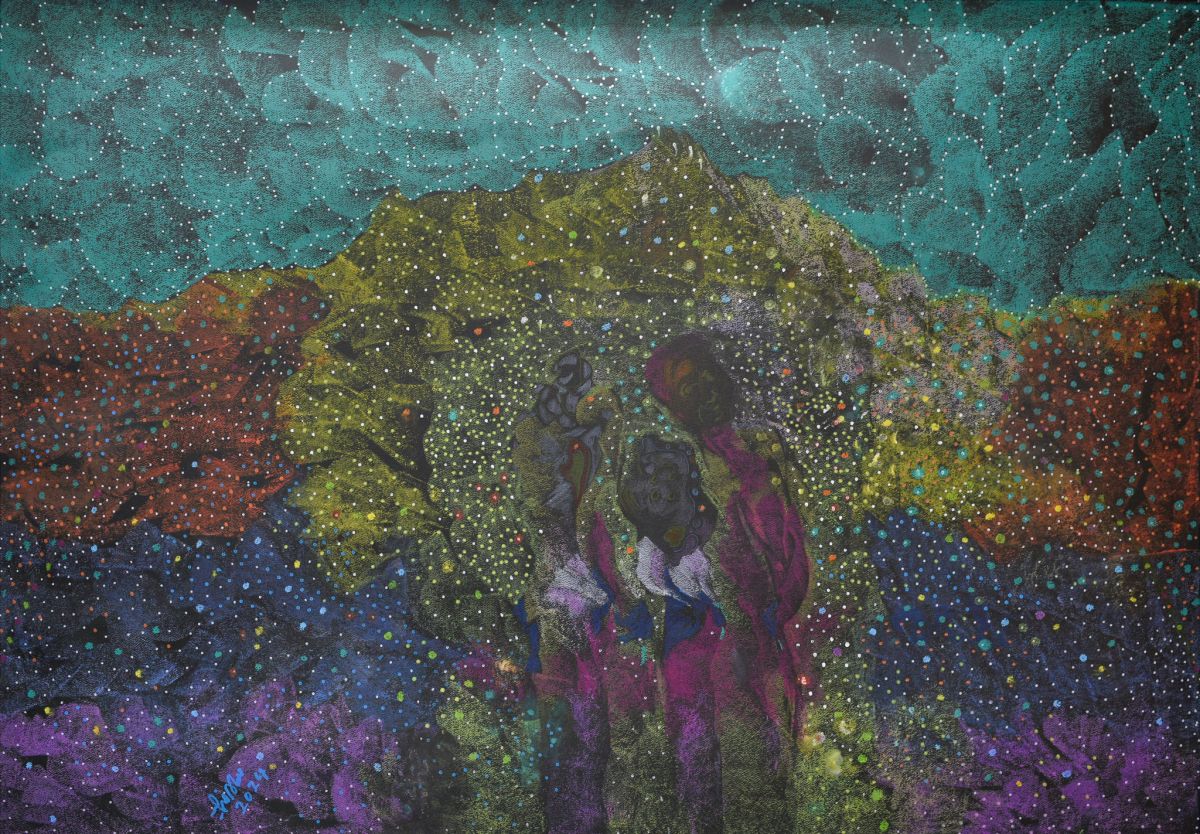
Salar Majeed, Pastel on Canson, 2024, 70*100 cm. From the Kashkul Archive.
English کوردی

Art as Symbolic Rebellion in Salar’s Works


At the core of a conquered reality, art is always the primary space of freedom. Its dots, lines, structures, and colors are essential tools of liberation. An era’s ability to achieve freedom is closely tied to the strength of its art. Freedom reaches its fullest voice in art; It is impossible to understand an era without knowing its art. I have never believed that we can first define a period and then, through its sociological, economic, and political conditions, interpret its art. It’s always the opposite: art is the space that opens wide gates to understanding an era. When new energy and transformative power emerge from the heart of a period, their first language is always the language of art. I would not exaggerate in saying that, to understand the soul of a period, looking at its paintings is the first gateway into the deep conflicts that stir a society.

I gaze at Salar’s art from that perspective—as a wide symbolic space for contemplating the values of the period we live in.

Art is the first gateway to understanding the trials that move an imprisoned soul toward freedom. The deep dimensions of freedom do not appear in politics; they reveal themselves in art. When we begin to see how artists practice freedom, we can understand what they seek to be free from and where they hope to go.

English کوردی
English کوردی

What draws me to art is not the techniques, materials, or composition, those are for the artists themselves to immerse in, but rather the secret code that these tools convey to us. A form becomes a dead space if it cannot express fresh vitality for perspective or worldview. Yet, worldview in art has its own language; it’s not captured in ordinary words. This worldview does not speak as directly as literature or philosophy, it doesn’t fit neatly into theoretical expressions either. The language of freedom is always symbolic in art: complex, elusive, encrypted. The depth of art begins when language moves away from clear sentences toward the language of dreams, where everything loses its literal meaning to build a bridge to the impossible, the surreal, and the imagined.

Painting is the space where an era’s symbolic language is born. Paintings are like poetry, it’s a place where freedom plays its most radical games. Yet, not every artistic work can convey the symbolic messages of its time or reflect the radical nature of art.

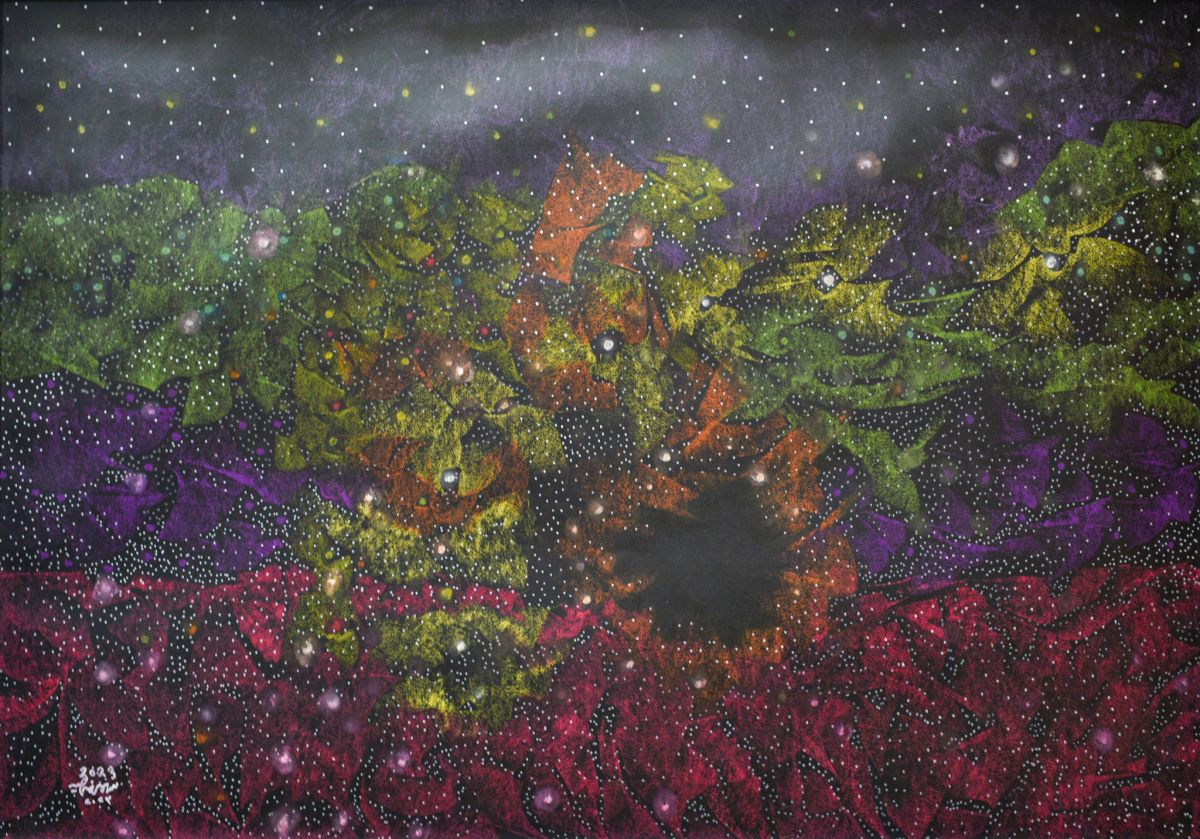
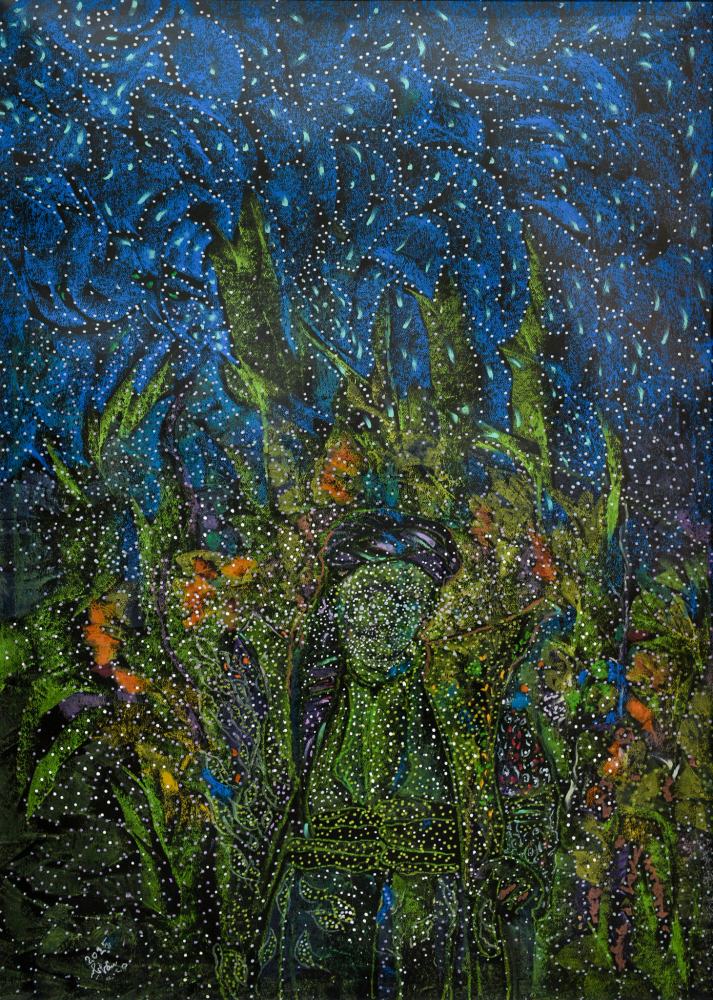
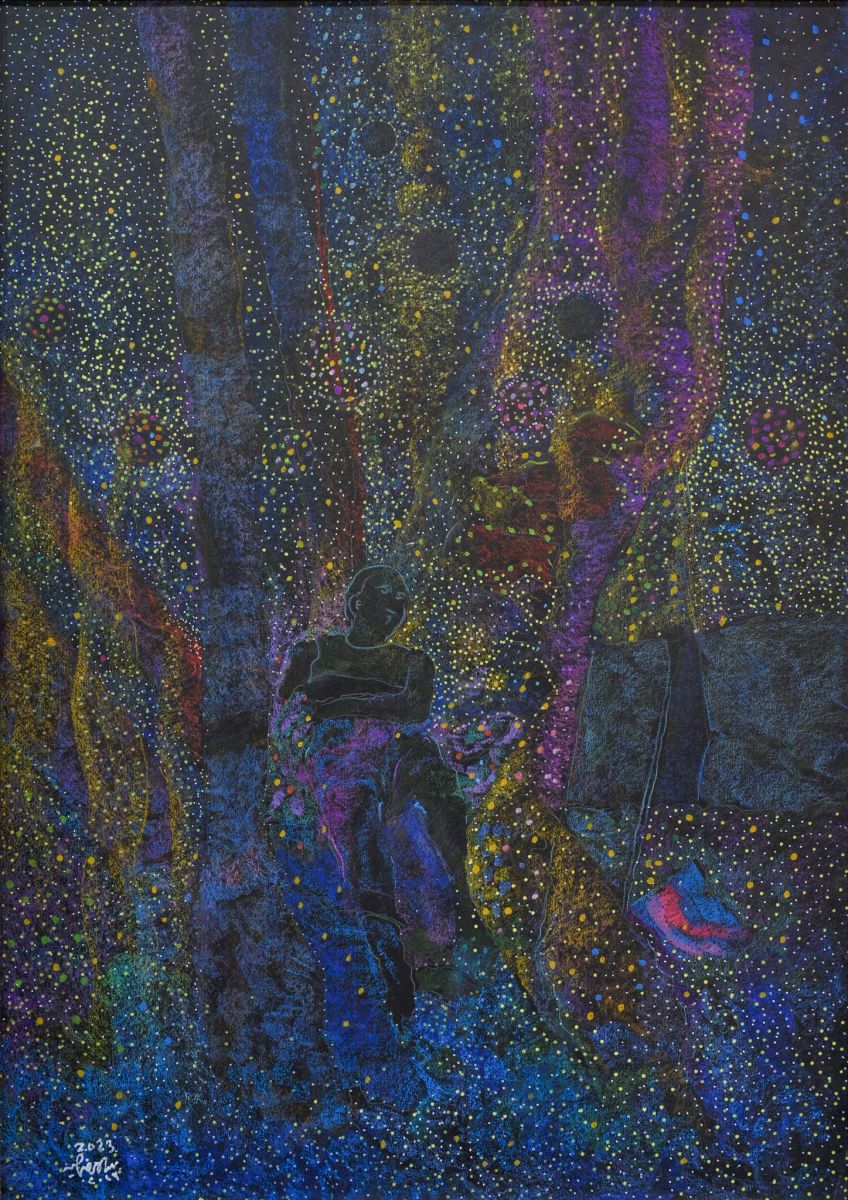
In Salar’s artistic experience, that radical game of freedom is visible in each stroke. There’s no subject in focus, there’s no realist story to be told. There’s no internal stir to be translated into colors, there’s no abstraction seeking what others haven’t done. What he does have is a form that never settles into a final shape; he tells the story of a setting that refuses to stay within a frame or composition.
 

English کوردی

In societies that pursue unaltered meanings, fixed images, and closed forms, any artistic act that reproduces unchanged, molded, fixed forms only repeats the system’s demand for rigid definitions. Salar’s art, on the other hand, refuses that demand; it is a constant destruction of the images that are trying to fit a mold.

In my view, it’s better not to take any of Salar’s works in isolation—none of them is a single entity from which you could draw its full meaning. The paintings, taken together, reveal the nature of that radical game of freedom: the game of escaping constriction in fixed meanings and forms. We cannot look for clear stories in Salar’s works; they have no single narrative to tell. Yet lacking a story does not mean lacking meaning. Through his entire practice, Salar shows that freedom cannot fit into a single form. By observing all his works, we see someone who repeats, only to prove that repetition is impossible; he repeats a form to reveal that within the depth of every form lies a power that deconstructs it.

Unlike most artists, Salar works within a single atmosphere that he repeats—unnaturally, insistently—as if to show that none of those forms can ever be final. Each painting feels like a reminder of the imperfection of the one before it, a quiet manifesto on the impossibility of perfection itself. When we look at any of his works, we should remember: this painting is only one point in a current that drifts and dissolves. What the work seeks to embody is not its own isolated moment, but the movement of the whole flow.

In art, there’s no “superior form.” Painting is a place where freedom shows itself as uncertainty, hesitation, even restlessness. In its broadest sense, freedom means nothing blocking the next step; in art, it means no form should stand in the way of the one that follows. Art is built on the refusal of finality, on the impossibility of perfection. Few artists manage to embody that essence. I’ve seen only a handful who can make it so clear—as Salar does—that a painting is just a single point on a line stretching toward infinity.

English کوردی
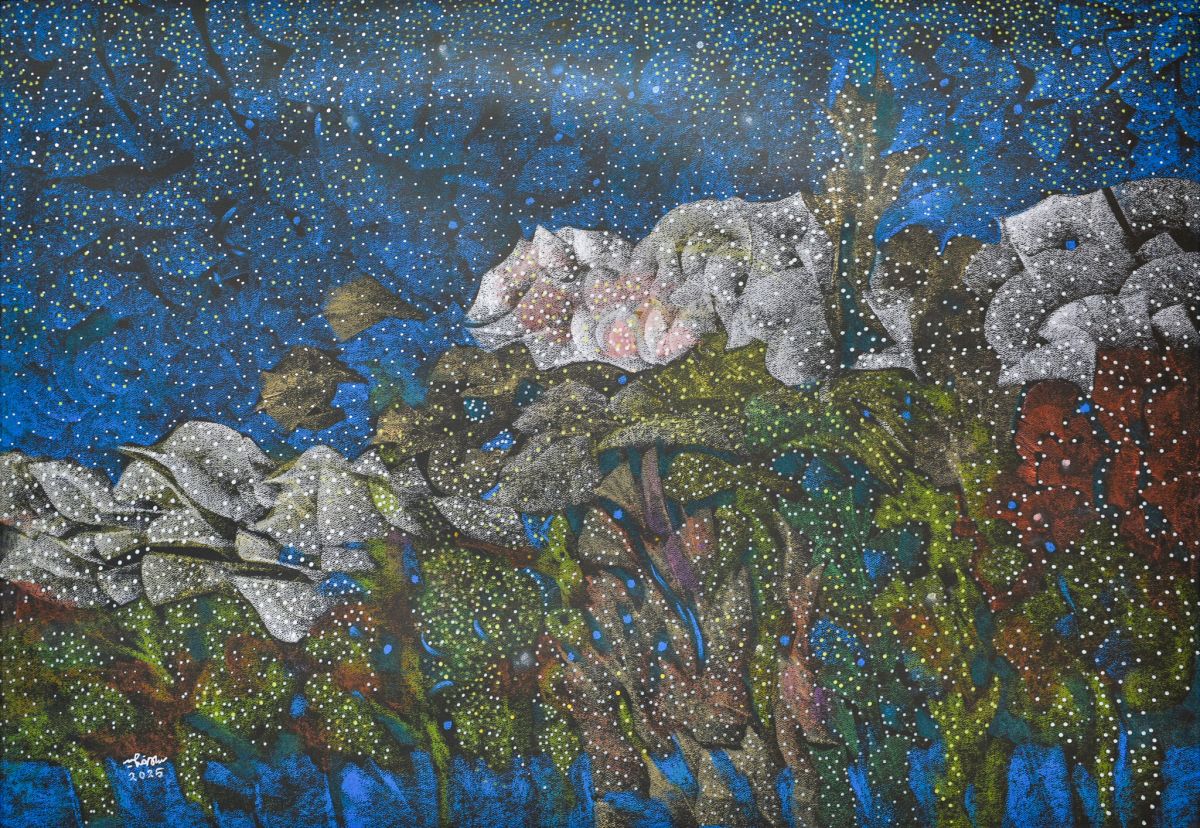
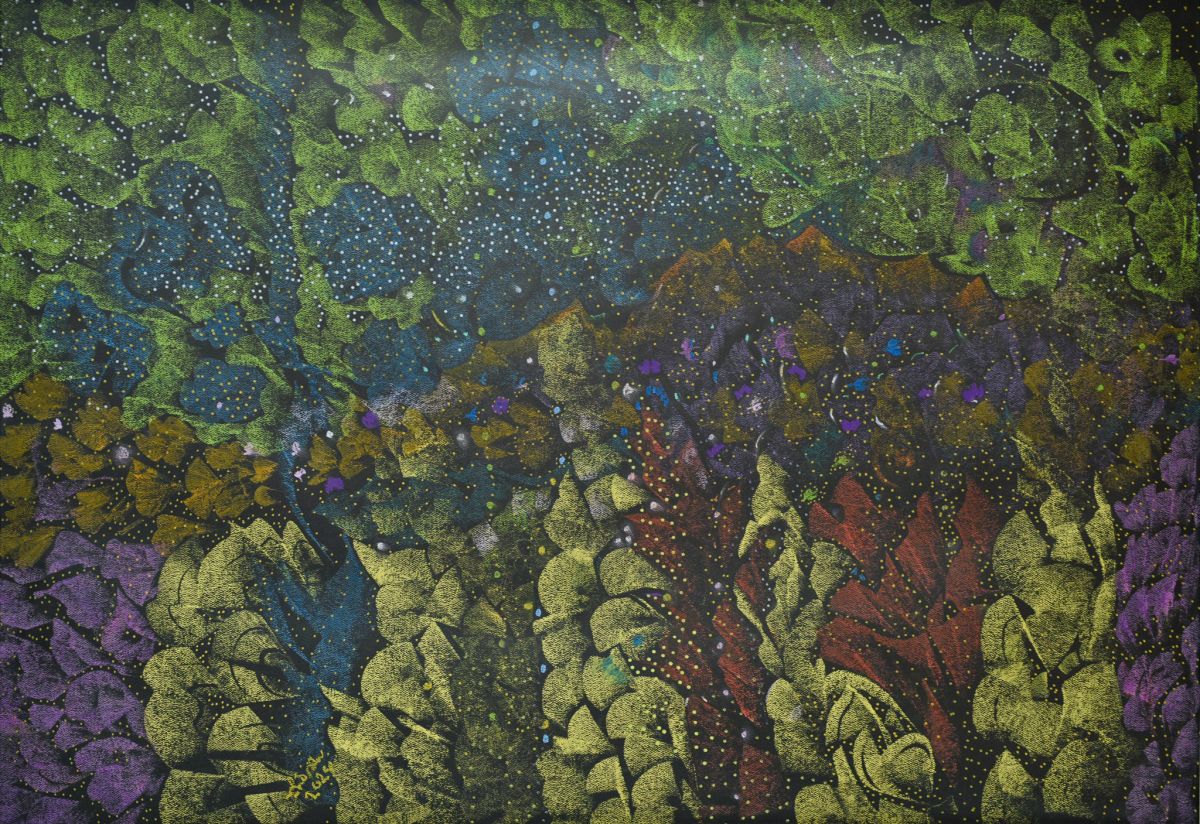
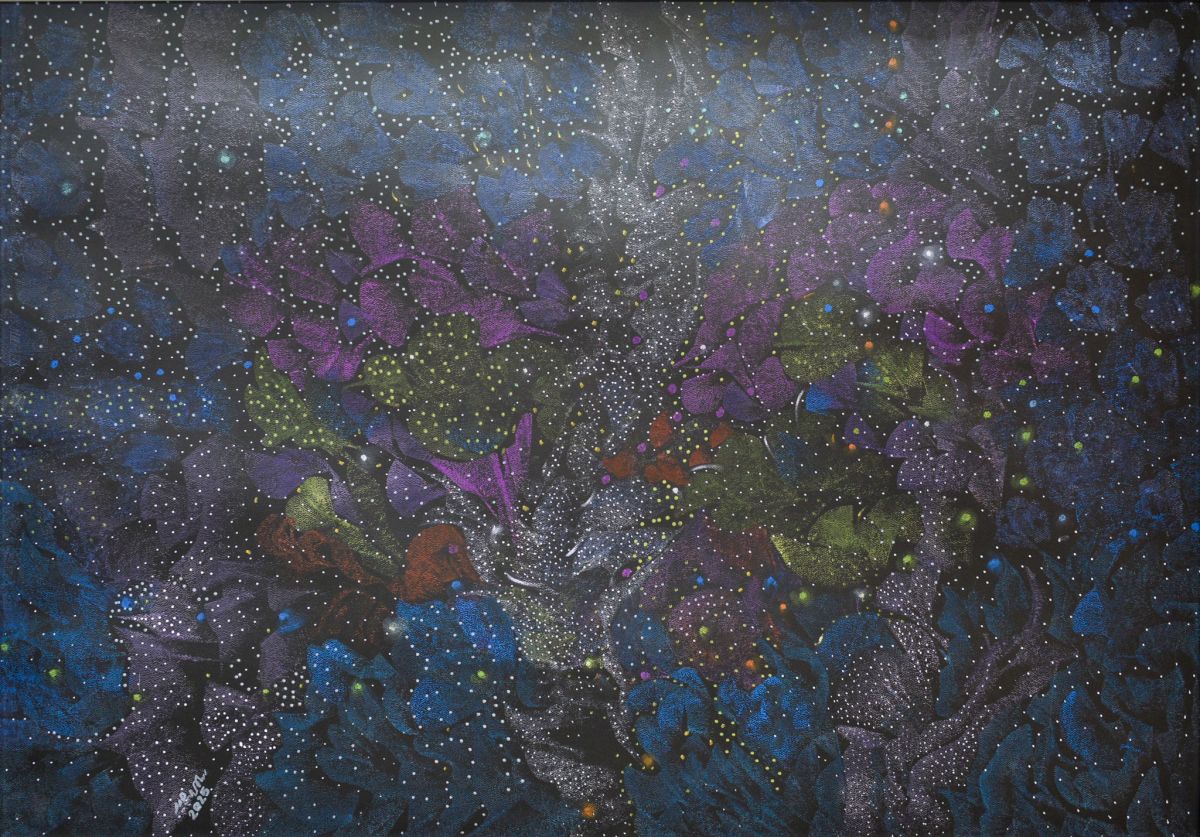
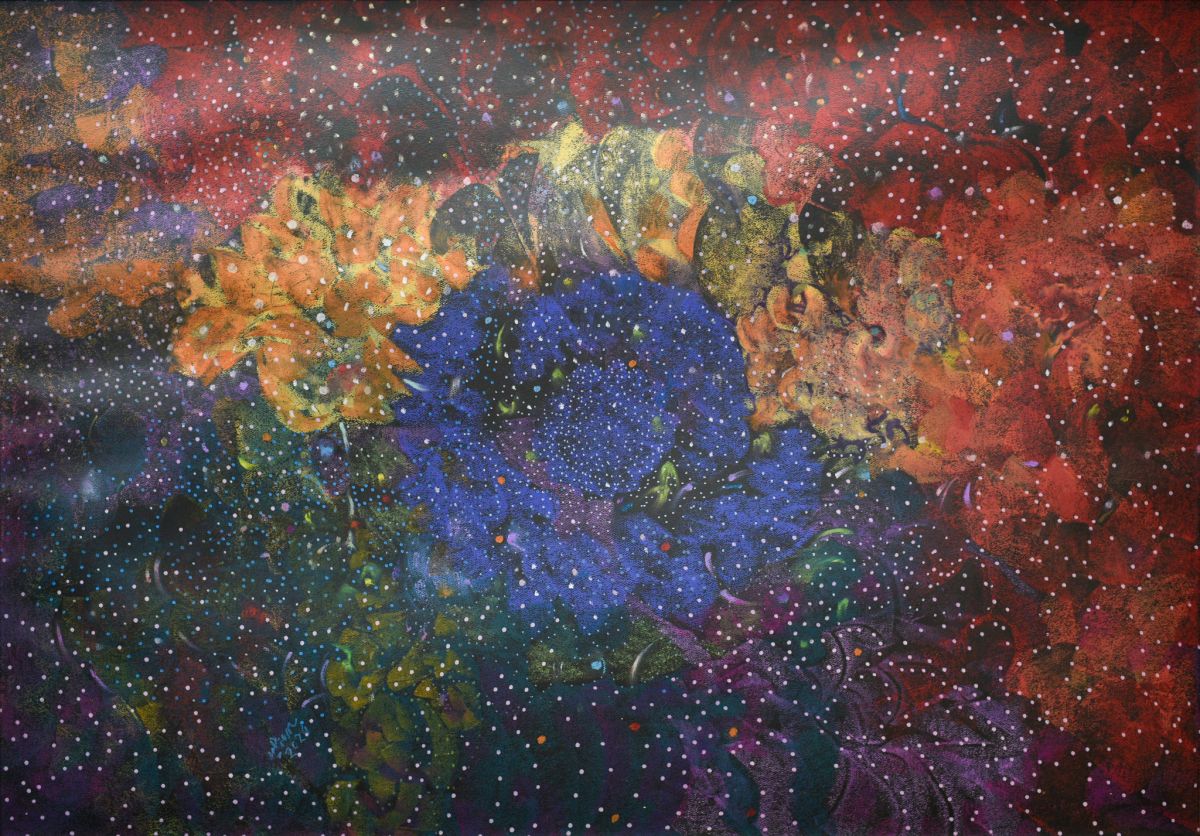
Salar Majeed, Pastel on Canson, 2025, 70*100 cm. From the Kashkul Archive.
English کوردی

In a conservative society, no one speaks of freedom without attaching it to an ideology or a fixed belief. Salar’s practice of freedom is a symbolic refusal of that culture. He turns painting into a place of unsettlement, a place where “meaning” loses its solidity. A painting isn’t there to deliver meaning, but to shake it—to show how unstable it really is. Freedom in art doesn’t announce itself in concrete slogans; it lingers as hesitation, never fully settling, never reaching certainty. To me, Salar’s entire artistic journey—every stage, every form, all his works taken together—through his daily need to immerse himself in color, gives voice to that unattainable assurance.

For Salar, form reveals a truth: the world is most beautiful in that fleeting moment before form fixes it in place and imprisons it. He photographs a world and hasn’t yet captured a clear photo; here, form doesn’t point to permanence but becomes a sign of constant undoing. Salar doesn’t paint to give us a solid object—he paints to dissolve, to vaporize, to let subjects disappear. When we set foot in this artist’s world, we find no steady footprints to follow, no tangible objects to hold, nothing the eye can measure. Colors, dots, and atmospheres gather instead into a restless movement that refuses to let the world settle into shape. 

If we take Salar’s works one by one, as closed and finished units, the deeper anxiety that ties them to the larger artistic experience isn’t immediately visible. Every artwork can, of course, stand on its own, as a world unto itself. Yet for artists whose work opens up wide perspectives, a single painting is never enough to reach what their art is really saying; the deeper experiences reveal themselves only across the whole journey. What one painting suggests is not the same as what dozens of them, together, begin to show. The independence of each work doesn’t cancel the fact that, in context, each one shifts in meaning and opens new horizons. A painting may speak in its own voice, but alongside its companions, it builds a sequence that generates new meanings. In the end, it is only by looking at the work as a whole that we glimpse the hidden symbols and deeper truths of the artist’s experience.
English کوردی
Auto 480p 720p 1080p
Video: Biyar Rasheed
English کوردی

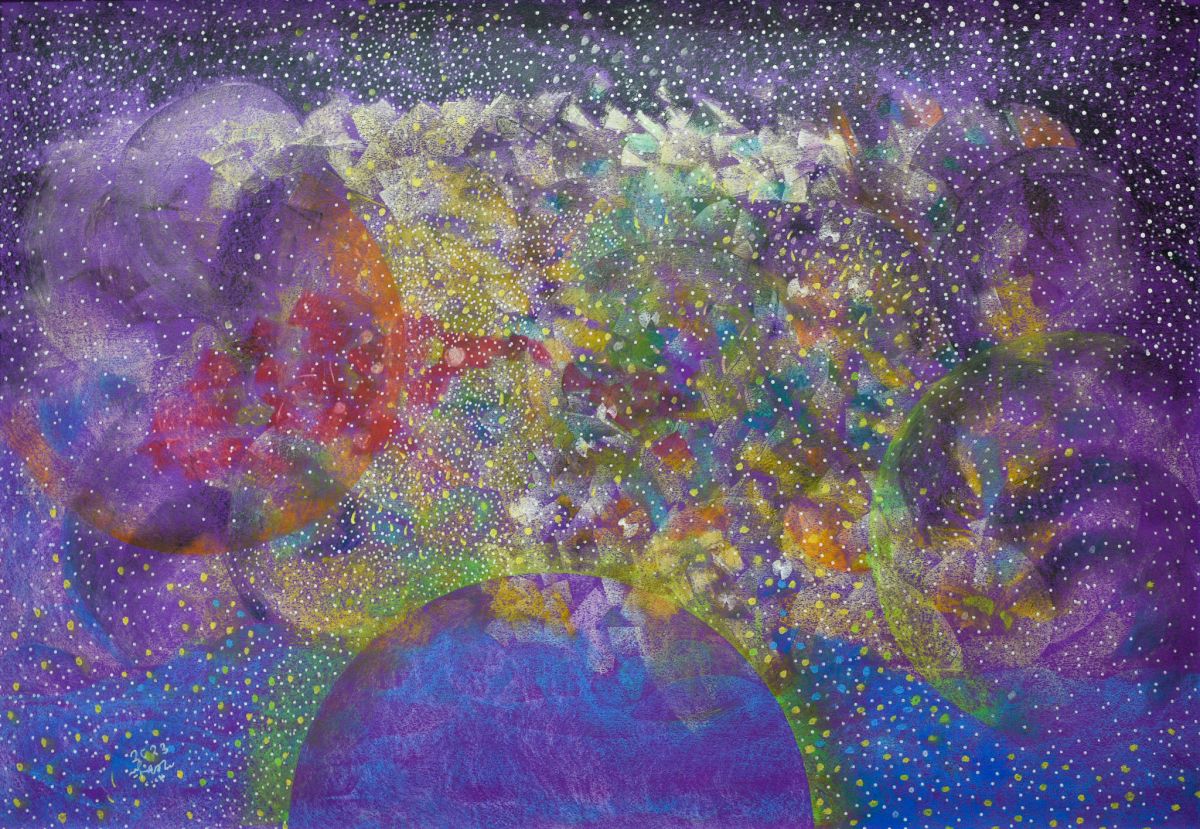
Looking at Salar’s work over the years, I often feel as if a single moment has burst open into countless shapes, or as if one form is testing the endless reach of its own boundaries, splintering into symbols that give rise to others. His forms are always in the act of breaking their borders, reorganizing themselves in an unending process, rearranging their pieces into new orders. Each time a painting breaks from its earlier shape, moving past its former station, it becomes a quiet ally against every rigid definition, every fixed interpretation of the world—as though Salar’s art bears witness to a rebellion against letting our gaze settle on one image alone, against every picture that insists on remaining locked in a frame. A painting is always a still moment; only in relation to others does its hidden meaning unfold. Much like language, where a single word finds its meaning within a sentence, Salar’s paintings, too, take on their true meaning when joined—when we find the secret thread that binds them into one continuous line.

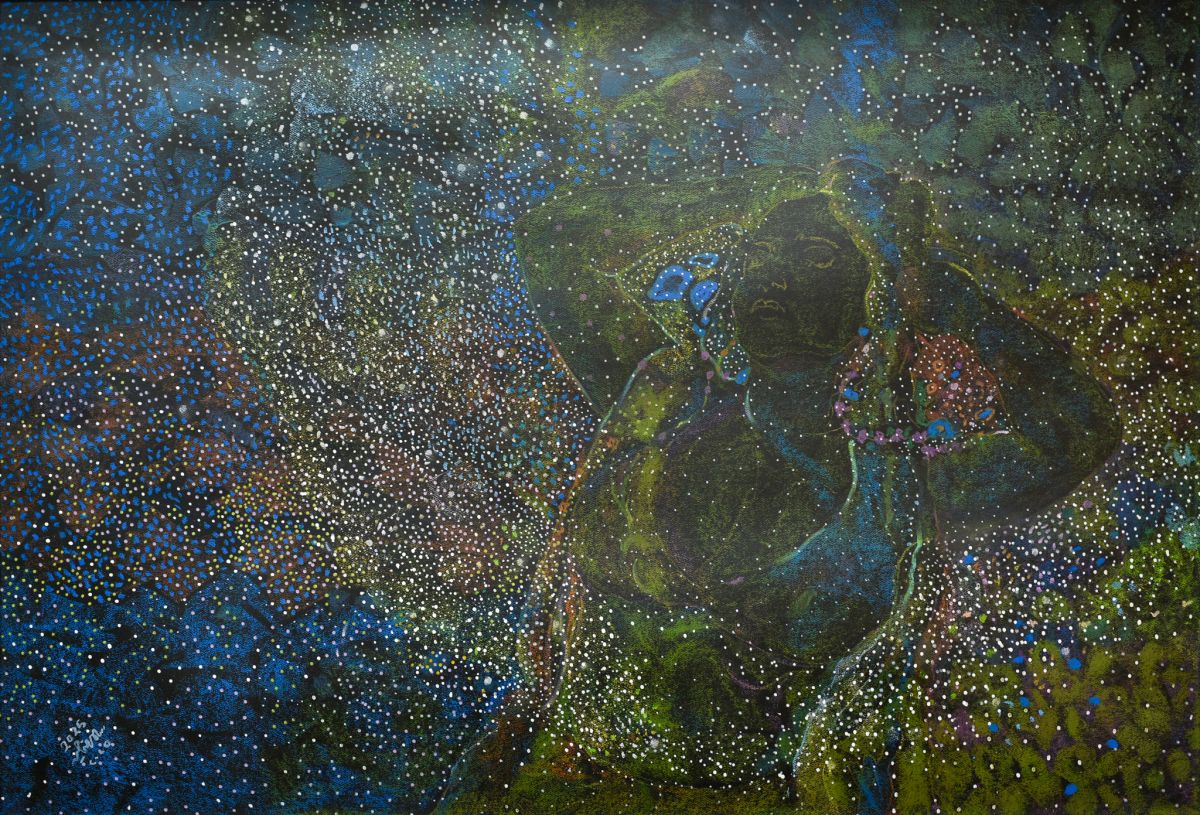
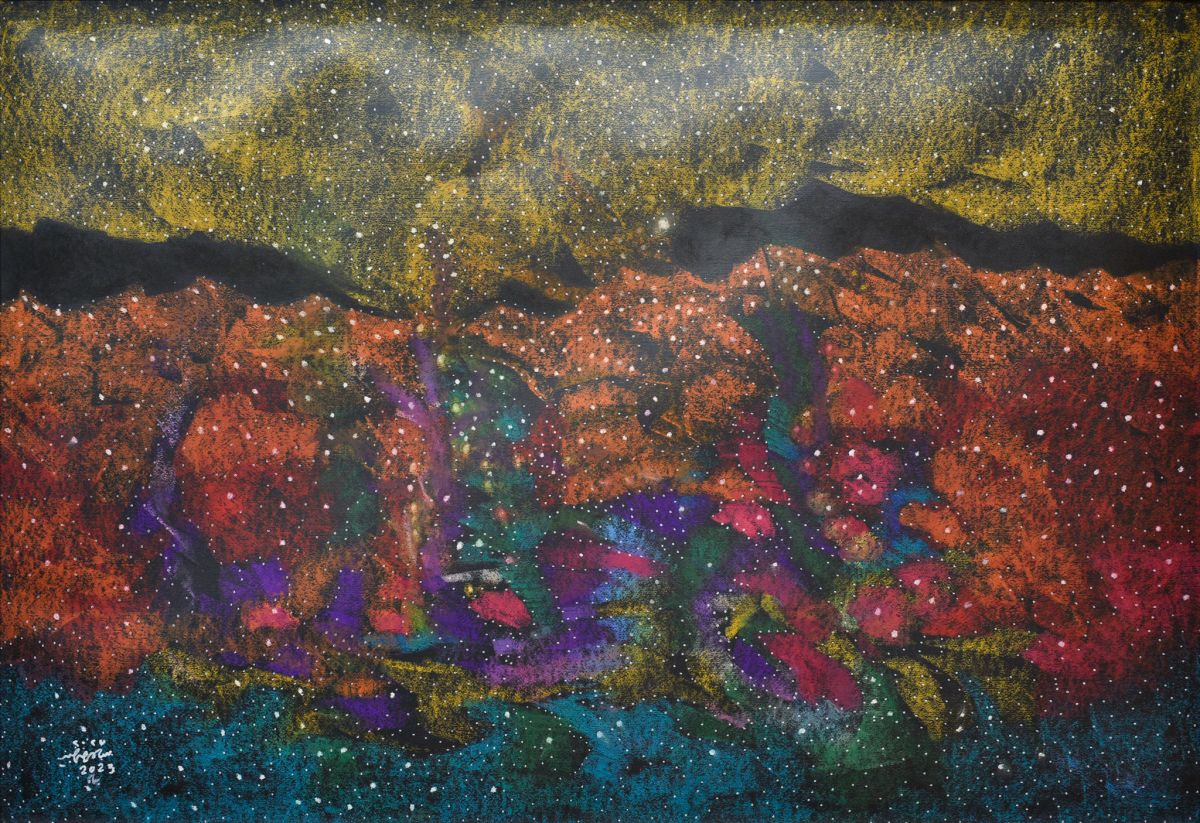
The world inside Salar’s paintings feels like a space of restless color—where a playful, unruly fog drifts about, carrying the tension between creation and un-creation. In his work, beauty never lingers; it departs almost as soon as it appears. Dots, lines, and colors rearrange themselves from one canvas to the next, offering only fleeting glimpses of beauty. It’s as though beauty exists only in transition, only in that passage when the eye moves from one painting to another. Many of Salar’s works need to be seen together, as if each painting is part of an endless process of becoming. To me, his art is neither purely abstract nor symbolic expressionism, but rather a witness to a world that refuses stillness. That untamable movement only reveals itself when we see each work as completing the one before it. Viewed in sequence, Salar’s paintings resemble a luminous, shifting nebula—appearing briefly in one form, dissolving, then emerging again in another. It’s as though he brings us back to the same dream again and again, and each time we wake, we find ourselves in a new dream. A painting by Salar should be seen as a bridge to the next—as a dream whose purpose is to carry us forward into another dream. His works come alive only in connection with each other, as part of a greater current of color, resisting every attempt to confine the world to a narrow, one-dimensional frame.

English کوردی
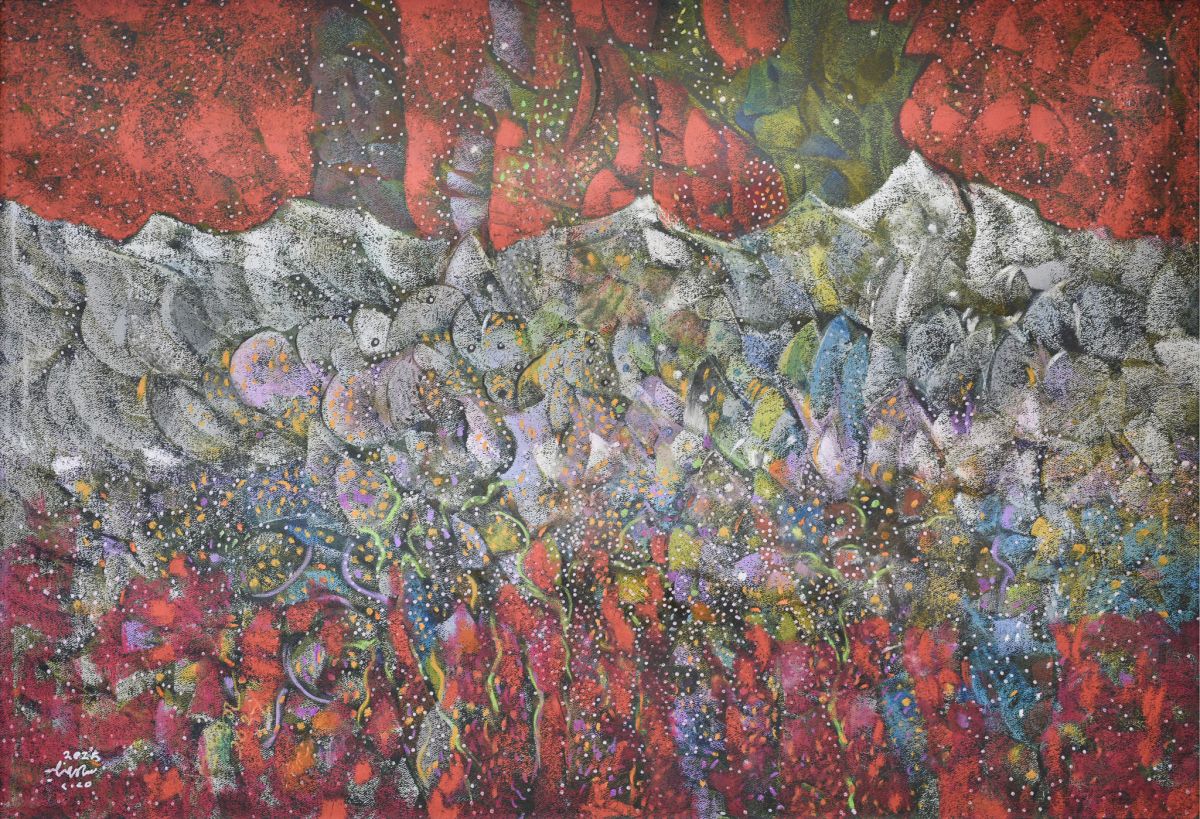
Salar Majeed, Pastel on Canson, 2025, 70*100 cm. From the Kashkul Archive.
Salar Majeed, Pastel on Canson, 2024, 70*100 cm. From the Kashkul Archive.
English کوردی

Art is the great workshop where the rigid, unchanging structures of society are dismantled. In Salar’s work, a quiet code declares: similarity is an illusion—what is universal and essential is difference. That message gains weight when we remember that Salar lives in a world boxed in by fixed frames and rigid images. It is a society where the past tragically repeats itself, where the very idea of becoming has stalled and circles endlessly in place. This is a world that builds systems to enforce sameness and reproduce repetition. Against this order, only art has the power to expose the illusion of sameness and repetition. Salar’s art, in this sense, is a symbolic act of rebellion—an uprising against an age bound by its own chains.


Bachtyar Ali

Translated from the Kurdish by Nawa Amin

English کوردی

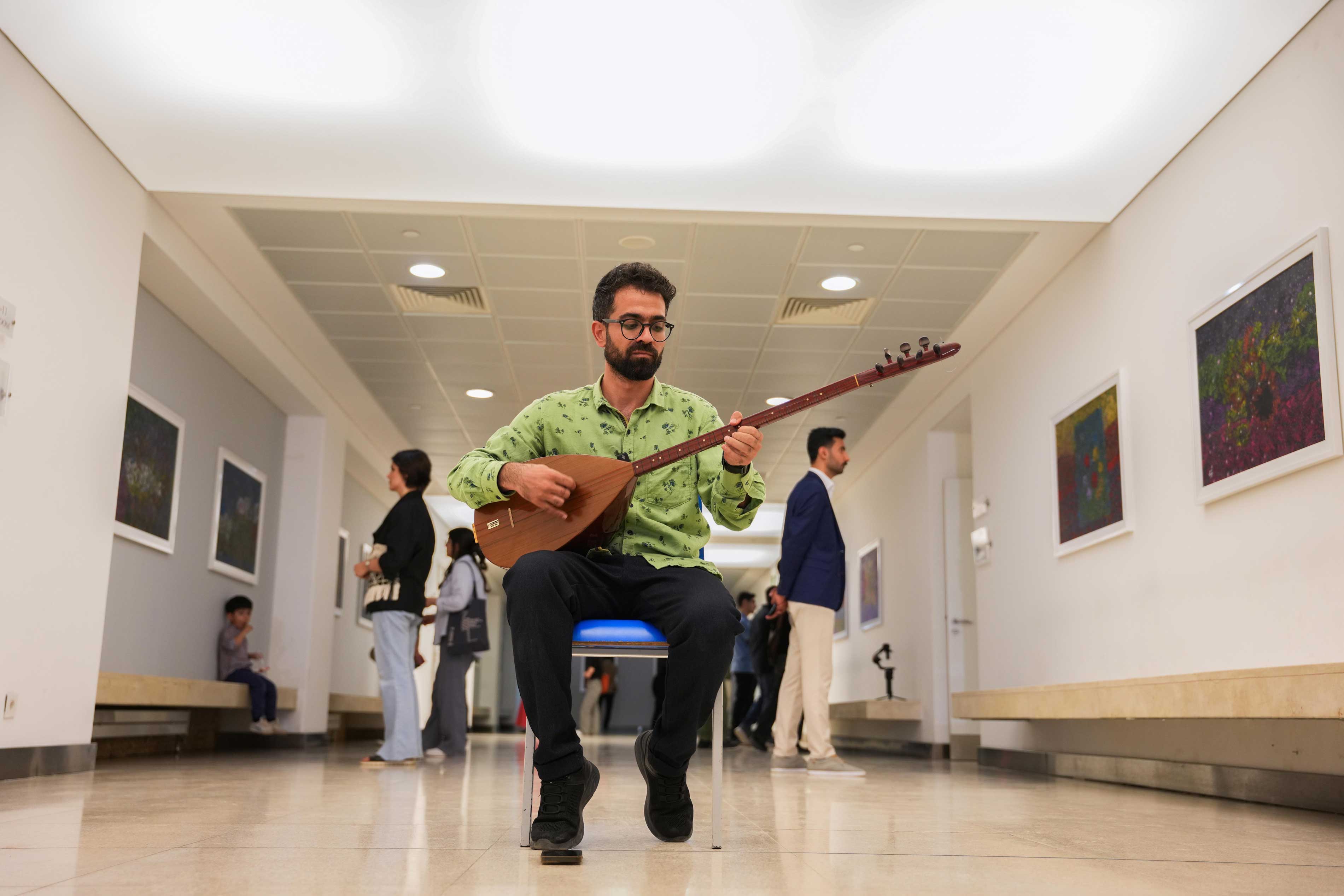
Before the end of the exhibition period, Kashkul wanted to do yet another experiment within the installed space. We designed a performance to cultivate a slow, attentive gaze through sound, stillness, and shared movement. In this performance, Fehedê Herbo improvised on the saz as each participant stood before a painting from A Glittering Darkness for one minute, moving quietly through all twenty-four works in the gallery. We extended the experience of sound and presence in relation to the paintings, through Kurdish dengbêjî performed by Fehedê Herbo and Iman Ahmed.


Fehedê Herbo improvised on the saz as each participant stood before a painting from A Glittering Darkness

English کوردی

During the First Kurdish Studies Forum, Kashkul hosted and curated a series of exhibitions at the American University of Iraq, Sulaimani (AUIS), transforming the campus into a dynamic intersection of art and scholarship. The Forum serves as an international platform for research and dialogue, connecting traditional Kurdish cultural expressions with modern scholarly inquiry.

By integrating galleries dedicated to visual artists, readings by writers and their translators, and musical performances, the Forum ensures that Kurdish heritage is not only preserved but actively celebrated and critically examined on a global stage. It is within this multi-layered environment of contemporary cultural production that Kashkul presented the curated work of Salar Majeed.

English کوردی
Auto 480p 720p 1080p
Video: Biyar Rasheed
KashKul Watermark