

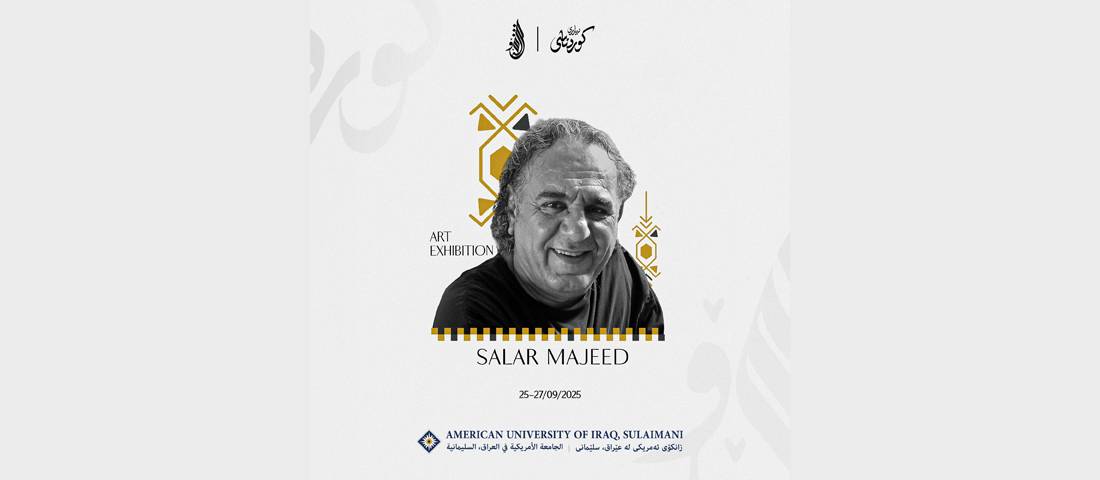
From September 25 to 27, the inaugural Kurdish Studies Forum will present a gathering focused entirely on the arts, culture, translation, publishing, and preservation at the American University of Iraq, Sulaimani. The art exhibition A Glittering Darkness will present the latest works of Salar Majeed.
Art as Symbolic Rebellion in Salar’s Works
Bachtyar Ali
July 31, 2025
At the core of a conquered reality, art is always the primary space of freedom. Its dots, lines, structures, and colors are essential tools of liberation. An era’s ability to achieve freedom is closely tied to the strength of its art. Freedom reaches its fullest voice in art; It is impossible to understand an era without knowing its art. I have never believed that we can first define a period and then, through its sociological, economic, and political conditions, interpret its art. It’s always the opposite: art is the space that opens wide gates to understanding an era. When new energy and transformative power emerge from the heart of a period, their first language is always the language of art. I would not exaggerate in saying that, to understand the soul of a period, looking at its paintings is the first gateway into the deep conflicts that stir a society.
I gaze at Salar’s art from that perspective—as a wide symbolic space for contemplating the values of the period we live in.
Art is the first gateway to understanding the trials that move an imprisoned soul toward freedom. The deep dimensions of freedom do not appear in politics; they reveal themselves in art. When we begin to see how artists practice freedom, we can understand what they seek to be free from and where they hope to go.
What draws me to art is not the techniques, materials, or composition, those are for the artists themselves to immerse in, but rather the secret code that these tools convey to us. A form becomes a dead space if it cannot express fresh vitality for perspective or worldview. Yet, worldview in art has its own language; it’s not captured in ordinary words. This worldview does not speak as directly as literature or philosophy, it doesn’t fit neatly into theoretical expressions either. The language of freedom is always symbolic in art: complex, elusive, encrypted. The depth of art begins when language moves away from clear sentences toward the language of dreams, where everything loses its literal meaning to build a bridge to the impossible, the surreal, and the imagined.
Painting is the space where an era’s symbolic language is born. Paintings are like poetry, it’s a place where freedom plays its most radical games. Yet, not every artistic work can convey the symbolic messages of its time or reflect the radical nature of art.
In Salar’s artistic experience, that radical game of freedom is visible in each stroke. There’s no subject in focus, there’s no realist story to be told. There’s no internal stir to be translated into colors, there’s no abstraction seeking what others haven’t done. What he does have is a form that never settles into a final shape; he tells the story of a setting that refuses to stay within a frame or composition.
In societies that pursue unaltered meanings, fixed images, and closed forms, any artistic act that reproduces unchanged, molded, fixed forms only repeats the system’s demand for rigid definitions. Salar’s art, on the other hand, refuses that demand; it is a constant destruction of the images that are trying to fit a mold.
In my view, it’s better not to take any of Salar’s works in isolation—none of them is a single entity from which you could draw its full meaning. The paintings, taken together, reveal the nature of that radical game of freedom: the game of escaping constriction in fixed meanings and forms. We cannot look for clear stories in Salar’s works; they have no single narrative to tell. Yet lacking a story does not mean lacking meaning. Through his entire practice, Salar shows that freedom cannot fit into a single form. By observing all his works, we see someone who repeats, only to prove that repetition is impossible; he repeats a form to reveal that within the depth of every form lies a power that deconstructs it.
Unlike most artists, Salar works within a single atmosphere that he repeats—unnaturally, insistently—as if to show that none of those forms can ever be final. Each painting feels like a reminder of the imperfection of the one before it, a quiet manifesto on the impossibility of perfection itself. When we look at any of his works, we should remember: this painting is only one point in a current that drifts and dissolves. What the work seeks to embody is not its own isolated moment, but the movement of the whole flow.
In art, there’s no “superior form.” Painting is a place where freedom shows itself as uncertainty, hesitation, even restlessness. In its broadest sense, freedom means nothing blocking the next step; in art, it means no form should stand in the way of the one that follows. Art is built on the refusal of finality, on the impossibility of perfection. Few artists manage to embody that essence. I’ve seen only a handful who can make it so clear—as Salar does—that a painting is just a single point on a line stretching toward infinity.
In a conservative society, no one speaks of freedom without attaching it to an ideology or a fixed belief. Salar’s practice of freedom is a symbolic refusal of that culture. He turns painting into a place of unsettlement, a place where “meaning” loses its solidity. A painting isn’t there to deliver meaning, but to shake it—to show how unstable it really is. Freedom in art doesn’t announce itself in concrete slogans; it lingers as hesitation, never fully settling, never reaching certainty. To me, Salar’s entire artistic journey—every stage, every form, all his works taken together—through his daily need to immerse himself in color, gives voice to that unattainable assurance.
For Salar, form reveals a truth: the world is most beautiful in that fleeting moment before form fixes it in place and imprisons it. He photographs a world and hasn’t yet captured a clear photo; here, form doesn’t point to permanence but becomes a sign of constant undoing. Salar doesn’t paint to give us a solid object—he paints to dissolve, to vaporize, to let subjects disappear. When we set foot in this artist’s world, we find no steady footprints to follow, no tangible objects to hold, nothing the eye can measure. Colors, dots, and atmospheres gather instead into a restless movement that refuses to let the world settle into shape.
If we take Salar’s works one by one, as closed and finished units, the deeper anxiety that ties them to the larger artistic experience isn’t immediately visible. Every artwork can, of course, stand on its own, as a world unto itself. Yet for artists whose work opens up wide perspectives, a single painting is never enough to reach what their art is really saying; the deeper experiences reveal themselves only across the whole journey. What one painting suggests is not the same as what dozens of them, together, begin to show. The independence of each work doesn’t cancel the fact that, in context, each one shifts in meaning and opens new horizons. A painting may speak in its own voice, but alongside its companions, it builds a sequence that generates new meanings. In the end, it is only by looking at the work as a whole that we glimpse the hidden symbols and deeper truths of the artist’s experience.
Looking at Salar’s work over the years, I often feel as if a single moment has burst open into countless shapes, or as if one form is testing the endless reach of its own boundaries, splintering into symbols that give rise to others. His forms are always in the act of breaking their borders, reorganizing themselves in an unending process, rearranging their pieces into new orders. Each time a painting breaks from its earlier shape, moving past its former station, it becomes a quiet ally against every rigid definition, every fixed interpretation of the world—as though Salar’s art bears witness to a rebellion against letting our gaze settle on one image alone, against every picture that insists on remaining locked in a frame. A painting is always a still moment; only in relation to others does its hidden meaning unfold. Much like language, where a single word finds its meaning within a sentence, Salar’s paintings, too, take on their true meaning when joined—when we find the secret thread that binds them into one continuous line.
The world inside Salar’s paintings feels like a space of restless color—where a playful, unruly fog drifts about, carrying the tension between creation and un-creation. In his work, beauty never lingers; it departs almost as soon as it appears. Dots, lines, and colors rearrange themselves from one canvas to the next, offering only fleeting glimpses of beauty. It’s as though beauty exists only in transition, only in that passage when the eye moves from one painting to another. Many of Salar’s works need to be seen together, as if each painting is part of an endless process of becoming. To me, his art is neither purely abstract nor symbolic expressionism, but rather a witness to a world that refuses stillness. That untamable movement only reveals itself when we see each work as completing the one before it. Viewed in sequence, Salar’s paintings resemble a luminous, shifting nebula—appearing briefly in one form, dissolving, then emerging again in another. It’s as though he brings us back to the same dream again and again, and each time we wake, we find ourselves in a new dream. A painting by Salar should be seen as a bridge to the next—as a dream whose purpose is to carry us forward into another dream. His works come alive only in connection with each other, as part of a greater current of color, resisting every attempt to confine the world to a narrow, one-dimensional frame.
Art is the great workshop where the rigid, unchanging structures of society are dismantled. In Salar’s work, a quiet code declares: similarity is an illusion—what is universal and essential is difference. That message gains weight when we remember that Salar lives in a world boxed in by fixed frames and rigid images. It is a society where the past tragically repeats itself, where the very idea of becoming has stalled and circles endlessly in place. This is a world that builds systems to enforce sameness and reproduce repetition. Against this order, only art has the power to expose the illusion of sameness and repetition. Salar’s art, in this sense, is a symbolic act of rebellion—an uprising against an age bound by its own chains.
Translated by Nawa Amin
هونەر وەک جۆرە یاخیبوونێکی ڕەمزی لە کارەکانی سالاردا
لە ناو جەرگەی واقعێکی داگیرکراودا، کارە هونەرییەکان هەمیشە ڕوبەری هەرە گرنگی ئازادیین. خاڵەکان، هێڵەکان، پێکهاتەکان، ڕەنگەکان بەشێکن لە کەرەستە هەرە گرنگەکانی ئازادی. هێزی سەردەمێکیش لەسەر ئازادبوون، گرێدراوی هێزی هونەرەکەیەتی بۆ دەربازبوون و ڕزگاری. "ئازادی" تەنیا لە هونەردا بە ترۆپکی هاواری خۆی دەگات، لێرەوە تێگەیشتن لە سەردەمێک بەبێ تێگەیشتن لە هونەری ئەو سەردەمە پرۆسەیەکی مەحاڵە. هەرگیز باوەڕم بەوە نەبووە، سەرەتا پێناسی سەردەمێک بکەین، دواتر لەسەر ڕۆشنایی تێگەیشتن لە هەلومەرجە سۆسیۆلۆژی و ئابووری و سیاسییەکاندا لە هونەر تێبگەین، هەمیشە پێچەوانەکەی دروستە، هونەر ئەو جێگایەیە کە دەشێت دەروازەی گەورەی تێگەیشتن لە سەردەمەکان بێت. وزەی نوێ و هێزی گۆڕانکار، کاتێک لە هەناوی سەردەمێکەوە دێنە گۆ، یەکەمین زمان قسەی پێدەکەن، زمانی هونەرە. زیادەڕەویی نییە بڵێم، بۆئەوەی لە ڕۆحی قۆناغێک تێبگەین، ڕوانین لە تابلۆکان، دەروازەی یەکەمی ڕۆچوونە بۆ لای ئەو کێشمەکێشە قووڵانەی لە ژێرەوەڕا کۆمەڵگایەک دەبزوێنن.
من لەو ڕوانگەیەوە لە هونەری سالار دەڕوانم، وەک ڕووبەرێکی دەلالی گەورە، بۆ ڕوانین و تێڕامان لە ماهییەتی ئەم سەردەمەی تێیدا دەژین.
هونەر دەروازەی یەکەمی تێگەیشتنە لەو هەوڵانەی ڕۆحێکی دیلکراو بەرەو ئازادیی دەجوڵێنێت. ڕەهەندە قووڵەکانی ئازادیی لە سیاسەتدا دەرناکەون، بەڵکو لە هونەردا گوزارشت لە خۆیان دەکەن. کاتێک تێگەیشتین هونەرمەندان چۆن پراکتیکی ئازادیی دەکەن، دەتوانین تێبگەین دەیانەوێت لە چی ئازاد بن و بەرەو کوێ بجوڵێن.
ئەوەی لە هونەردا بۆ من شوێنی سەرنجە تەکنیک و مەتریال و کۆمپۆزسیۆن نییە، ئەوە ئاستێکە چاکترە هونەرمەندان خۆیان پێوەی سەرقاڵ بن، بەڵکو ئەو شفرە نهێنییانەیە کە ئەو کەرەستانە بۆ ئێمەی دەگوازنەوە. ڕۆحی فۆرم دەبێتە ڕووبەرێکی مردوو، ئەگەر توانای گوزارشتی لە هێزێکی نوێی ڕوانین و جیهانبینییەک نەبێت. بەڵام جیهانبینی لە هونەردا زمانێکی جیاوازی هەیە و بە زمانی ئاسایی گوزارشتی لێ ناکرێت. ئەم جیهانبینییە وەک لە دونیای ئەدەب و فەلسەفەدا ڕاستەوخۆ و ئاسان نادوێت، ڕوونیش لە گوزارشتی تیوریدا جێگای نابێتەوە. "زمانی ئازادی" لە هونەردا هەمیشە زمانێکی ڕەمزییە، ئاڵۆزە، تەماوییە، هێماسازە. قووڵایی هونەر لەو جێگایەوە دەست پێدەکات، کاتێک زمانی گوزارشت لە ڕستەی ڕوونەوە بەرەو نزیکبوونەوە لە زمانی خەون دەجوڵێت، کاتێک هەموو شتێک مانا ڕاستەوخۆکەی لە دەستدەدات تا پردێک لەگەڵ مەحاڵ، سوریال، خەیاڵدا بونیادبنێت.
تابلۆ شوێنی سەرهەڵدانی ئەو زمانە ڕەمزییەیە کە "سەردەمێک" لە ڕێگایەوە دەدوێت. تابلۆ وەک شیعر وایە، ڕووبەرێکە "ئازادی" لە نێویدا ڕادیکالترین یارییەکانی خۆی دەکات، بەڵام مەرج نییە هەموو ئەزموونێکی هونەری بتوانێت گوزارشت لە پەیامە ڕەمزییەکانی سەردەمی خۆی بکات و بتوانێت دیوە ڕادیکالەکەی هونەر نیشانبداتەوە.
لە ئەزموونی سالاردا ئەو گەمە ڕادیکالەی "ئازادی" بە ڕوونی دەبینین، سالار بابەتێکی نییە تیشکی بهاوێتەسەر، بەسەرهاتێکی واقعی نییە بیەوێت نیگاری بکێشێت، هەڵچوونێکی دەروونی نییە، بیەوێت بیخاتە سەر زمانی ڕەنگ و بە تابلۆ گوزارشتی لێ بکات، ئەبستراکتیستێک نییە بۆ شێوەسازییەکی نوێ بگەڕێت کە هونەرمەندانی پێش خۆی نەیانکێشاوە، سالار بە پێچەوانەوە فۆرمێکی هەیە کە هەرگیز شێوەیەکی کۆتایی لە خۆی ناگرێت، ئەو حیکایەتخوانی فەزایەکە لە چێوە و داڕشتەیەکدا ناسرەوێت.
لەو کۆمەڵگایانەدا کە هەمیشە بە دوای مانای نەگۆڕ و وێنەی چەسپیو و فۆرمی داخراودا دەگەڕێن، هەر کردارێکی هونەریی فۆرمی نەگۆڕ و لەقاڵبدراو و چەسپیو بەرهەمبهێنێتەوە، بە جۆرێکی ڕەمزی هەمان خواستی سیستەم بۆ داڕشتنی پێناسەی نەگۆڕ دووبارەدەکاتەوە، بەڵام هونەر لای سالار پۆڵی پێچەوانەی ئەو خواستەیە، دەستکاریکردن و شکاندنێکی بەردەوامی ئەو وێنانەیە کە بۆ قاڵب دەگەڕێن.
بە بڕوای من چاکترە هیچ کارێکی سالار بە تەنیا وەرنەگیرێت، هیچ کارێکی یەکەیەکی داخراو نییە بشێت مانا قووڵەکەی لە خودی خۆیەوە بە تەنیا وەربگرین. تابلۆکان تێکڕا پێکەوە سروشتی ئەو یارییە ڕادیکالەی ئازادی ئاشکرادەکەن، یاریی ڕاکردن لە قەتیسمان لە فۆرم و مانای نەگۆڕدا. ناتوانین لە کارەکانی سالاردا بۆ مانای ڕوون بگەڕێین، کارەکانی سالار چیرۆکێکی ڕوونیان نییە بیگێڕنەوە، بەڵام نەبوونی چیرۆکێک بە مانای نەبوونی مانا نییە. سالار بە کۆی ئەزموونەکەی ئەو ڕاستییە دەسەلمێنێت کە "ئازادی" لە یەک فۆرمدا جێگای نابێتەوە، بە ڕوانین لە تەواوی کارەکانی، دەگەینە ئەو دەرەنجامەی لێرەدا یەکێک هەیە شتێک دووبارەدەکاتەوە، تا بیسەلمێنێت دووبارەبوونەوە مەحاڵە، فۆرمێک دووبارەدەکاتەوە، بۆئەوەی بیسەلمێنێت لە قووڵایی هەموو فۆرمێکدا هێزێک هەیە هەڵیدەوەشێنێتەوە.
سالار بە پێچەوانەی زۆر لە هونەرمەندانی ترەوە، هەندێک جار یەک فەزا بە جۆرێکی ناسروشتی دووبارەدەکاتەوە، بە شێوەیەک وەک بیسەلمێنێت هیچ یەک لەو فۆرمانە ناتوانن دوا فۆرم بن، وەک ئەوەی هەموو تابلۆیەک ئاماژەبێت بۆ نوقسانیی تابلۆیەکی پێشووتر، وەک هەموو تابلۆیەک مانفێستێک بێت، دەربارەی نەگەیشتن بە کەماڵ. هەر تابلۆیەکی سالار کە لێی دەڕوانین، دەبێت ئەوەمان لە بیر بێت، ئەم تابلۆیە خاڵێکە لە ناو جەریانێکدا کە دەردەکەوێت و دەڕوات، ئەوەی تابلۆکەش دەیەوێت بەرجەستەی بکات پتر جوڵەی لێشاوەکەیە، نەوەک ساتەوەختی ناوازە و سەربەخۆی خۆی.
لە هونەردا هیچ فۆرمێک نییە بە شافۆرم ناویبنێین، تابلۆ شوێنێکە لە نێویدا "ئازادی" خۆی وەک دوودڵی، ڕاڕایی، نائارامی بەرجەستەدەکات. ئازادی لە مانا گەورەکەیدا، واتە هیچ بەربەستێک نەبێت بە ڕێگر لە بەردەم هەنگاوی دواتردا، ئازادییش لە هونەردا، واتە هیچ فۆرمێک نەبێت بە بەربەست لە بەردەم فۆرمی داهاتوودا. هونەر لەسەر نەگەیشتن بە کۆتایی و کەماڵ دادەمەزرێت، بەڵام کەم هونەرمەند دەتوانن ئەم جەوهەرەی هونەر لە کارەکانیاندا بەرجەستەبکەنەوە. کەم هونەرمەندم بینیوە وەک سالار، بەو ڕوونییە گوزارشت لەوە بکەن، کە تابلۆ تەنیا خاڵێکە لەسەر هێڵێک بەرەو ناکۆتا درێژدەبێتەوە.
لە کولتوورێکی داخراوی وەک کولتووری ئێمەدا، کەس ناتوانێت بەبێ پاڵپشتی ئایدۆلۆژیا و ئیمانی نەگۆڕ باس لە ئازادیی بکات، ئەم جۆرە پراکتیکەی سالار بۆ ئازادی، ڕەتکردنەوەیەکی ڕەمزیی ئەو کولتوورەیە، کاتێک تابلۆ دەگۆڕێتە سەر جێگایەک بۆ نەسرەوتن، جێگایەک "مانا" لە نێویدا سروشتە جێگیرەکەی خۆی لە دەستدەدات. ئیشی تابلۆ ئەوە نییە مانا بەرهەمبهێنێت، بەڵکو ئەوەیە ماناکان بلەقێنێت و نابەجێ دەریانبخات. "ئازادی" لە هونەردا لە دروشمی کۆنکرێت و ڕووندا گوزارشت لە خۆی ناکات، بەڵکو خۆی لە دوودڵییەکدا دەبینێتەوە کە ناسرەوێت و ناگاتە یەقین. بە بڕوای من ئەزموونی سالار بە گشتی، بە هەموو قۆناغ و فۆرمە جیاوازەکانییەوە، بە کۆی کارەکانی، بە خواستە ڕۆژانەکەی بۆ نوقمبوون لە ڕەنگدا، گوزارشت لەو نەگەیشتنە بە "یەقین" و "دڵنیایی" دەکەن.
فۆرم لای سالار گوزارشتە لەو ڕاستییەی، جیهان تەنیا لەو ساتەدا جوانە، پێش ئەوەی قاڵبێک بێت و بیگرێت و دیلی بکات. سالار وێنەگری جیهانێکە کە هێشتا نەبۆتە خاوەنی وێنەیەکی ڕوون، لێرەوە فۆرم ئاماژە بۆ شێوەیەکی نەگۆڕ ناکات، بەڵکو هێمای ترازان و هەڵوەشانەوەیەکی هەمیشەییە، سالار نیگارناکێشێت تا بابەتێک «ئۆبژێکتێک»ـی کۆنکرێت بخاتە بەردەممان، بەڵکو نیگاردەکێشێت تا ڕەوینەوە و بەهەڵمبوون و دیارنەمانی تەواوەتی هەموو بابەتەکان بەرجەستەبکات. کاتێک پێدەخەینە سەر سەرزەمینی ئەم هونەرمەندە، هیچ جێپێیەکی جێگیر و نەلەرزیو و سەقامگیر بوونی نییە، پێی لەسەر دابنێین، هیچ ئۆبجێکتێکی کۆنکرێت نییە بە دەست بیگرین و بە چاو مەوداکانی بپێوین... ڕەنگ، خاڵ، فەزا، تێکڕا جوڵەیەک بەرجەستەدەکەن ناهێڵێت جیهان شێوەیەک لە خۆی بگرێت و بوەستێت.
ئەگەر کارەکانی سالار بە تەنیا وەربگرین و وەک یەک یەکەی داخراو لێیان بڕوانین، یاخود قۆناغەکانی وێنەکێشانی جودا لە یەک تەماشابکەین، ئاسان ئەو دڵەڕاوکێ قووڵە نابینین کە بە کۆی ئەزموونەکەی دێتە دەستمان. ڕاستە هەموو کارێکی هونەریی بۆ خۆی یەکەیەکی دەلالییە، دەشێت وەک جیهانێکی سەربەخۆش مامەڵەی لەگەڵدا بکرێت، بەڵام لای ئەو هونەرمەندانەی کارەکانیان شفرە و دەلالەتی جیهانبینییەکی قووڵ دەگوێزنەوە، گەیشتن بەو دەلالەتانە لە ڕێگای یەک کارەوە مەیسەر نابێت، بەڵکو ئەزموونی گەورە هەمیشە لە ڕێگای ڕوانین لە کۆی هەنگاوەکانییەوە دەبینرێت و دەخوێندرێتەوە. ئەو مانایەی یەک تابلۆی سەربەخۆی هونەرمەندێک دەمانداتێ، وەک ئەو مانایە نییە كه دەیان تابلۆی هەمان هونەرمەند پێکەوە پێمان دەبەخشن. ئەوەی هەموو کارێکی هونەریی کارێکی سەربەخۆیە، ئەو ڕاستییە ڕەدناکاتەوە کە هەموو کارێکی هونەریی لە بەستێنێکی تایبەت و لە ناوکۆییەکی تایبەتدا مانای دیکە وەردەگرێت و ئاسۆی دیکە ئاشکرادەکات. تابلۆ بە تەنیا دەشێت مانایەک ببەخشێت، بەڵام لە دۆخی پەیوەندیدا لەگەڵ کارە هاوشێوەکانیدا، زنجیرەیەکی نوێ دروستدەکات و مانای نوێ دەخولقێنێت. بە کورتی تەنیا بە ڕوانین لە کۆی کارەکانی هونەرمەندێک، دەتوانین شفرە قووڵ و هێما شاردراوەکانی ئەزموونێک بخوێنینەوە.
کاتێک لە کۆی ئەزموونی چەند ساڵەی سالاریش دەڕوانم، لەگەڵ تابلۆکاندا ئەو هەستەم هەیە، وەک یەک سات بەسەر دەیان شێوەدا بکرێتەوە، یەک فۆرم سنوورە ناکۆتاکانی خۆی تاقیبکاتەوە، یەک دەلالەت بە جۆرێک خۆی وردبکات، دەیان دەلالەتی دیکەی لێوە هەڵبقوڵێت. لێرەدا فۆرم بەردەوام سنوورە زانراوەکانی خۆی دەشکێنێت، تا لە پرۆسەیەکی ناکۆتادا ڕەگەزە جیاوازەکانی خۆی لە ڕیزبەندیی نوێدا ڕێکبخاتەوە. کاتێک فۆرم لە تابلۆدا شێوەی پێشووی دەشکێنێت و وێستگەی پێشووی جێدەهێڵێت، دەبێتە هاوتەریبێکی ڕەمزیی بۆ شکاندنی هەموو پێناسەیەکی نەگۆڕ و هەموو نیگارێکی نەگۆڕ بۆ دونیا، وەک هونەری سالار زمانحاڵی یاخیبوونێک بێت دژ بە بەستنەوەی نیگامان بە تەنیا نیگارێکەوە، وەک شۆڕشێک بێت دژ بە هەر وێنەیەک بیەوێت لە چرکەساتێکی وەستاو و لە قاڵبدراودا بمێنێتەوە. تابلۆ خۆی بە تەنیا ساتێکی نەگۆڕە، تەنیا لە ساتی بەراورد و گرێدانەوەدا بە تابلۆکانی دییەوە، تێدەگەین چ دەلالەتێکی شاردراوە و چ شفرەیەکی پەنهانی هەڵگرتووە. چۆن لە زماندا هەموو وشەیەک تەنیا لە ڕستەدا دەلالەتی ڕاستەقینە وەردەگرێت، کارەکانی سالاریش وەک وشەگەلێک وەهان تەنیا لە ڕستە گەورەکەدا مانایان ئاشکرادەبێت، واتە لە کاتی گرێدانەوەی ئیشەکاندا بە یەکتر... لە کاتی دۆزینەوەی ئەو هێڵە نهێنییەی تابلۆکان پێکەوە دەبەستێتەوە.
دنیای تابلۆکانی سالار لە ناوەوە، وەک شوێنی هەڵچوونی ڕەنگ وەهان، هەمیشە تەمێکی بزۆک و ڕەنگین و خۆنەگر لە نێویاندا دەجوڵێت، وەک بیەوێت دۆخی گەردوونێک لە دوودڵی خولقان و نەخولقاندا بگوازێتەوە. جوانی لە ئیشەکانی سالاردا دێت تا زوو بڕەوێتەوە، خێرا خاڵەکان، هێڵەکان، ڕەنگەکان لە تابلۆی داهاتوودا جێگای خۆیان دەگۆڕن و کورتە ساتێکی دیکەی جوانی پیشاندەدەن. وەک ئەوەی جوانی شتێک بێت تەنیا لە گۆڕاندا ببینرێت، تەنیا لەو مەودای گواستنەوەیەدا بێتەبەرچاو کە لە تابلۆیەکەوە بۆ تابلۆیەکی تر دەگوازینەوە. زۆر ئیشی سالار هەیە دەبێت پێکەوە ببینرێن، وەک تابلۆکان پێکڕا پرۆسەی «بەرەوبوون ـ صیرورة»ێکی بەردەوام نیشانبدەنەوە. بە بڕوای من دونیای سالار نە ئەبستراکتە و نە جۆرێکیشە لە تەعبیرییەتی ڕەمزی، بەڵکو ئیشەکانی ئەو زمانحاڵی جیهانێکن نایەوێت لە سرەوت و وەستاندا دەربکەوێت، ئەو جوڵە نەسرەوت و نەگیراوەش تەنیا کاتێک دەبینرێت کە کۆی کارەکانی وەک تەواوکەری یەک ببینین. تەماشاکردنی یەک لە دوای یەکی ئیشەکانی سالار، وەک ڕاوەستانە بەرامبەر سەدیمێکی گەردوونی ڕەنگاوڕەنگ کە لە هەموو ساتێکدا فۆرمێک وەردەگرێت، کورت دەردەکەوێت بۆئەوەی ونبێت، هەموو تابلۆیەک ساتێکی دەرکەوتنی ئەو سەدیمەیە کە خێرا بە دوایدا ساتێکی تر و فۆرمێکی تر لەدایکدەبێت. وەک سالار دەیانجار بمانباتەوە ناو هەمان خەون، بۆئەوەی هەموو جارێک کاتێک وریادەبینەوە تێبگەین لە خەونێکی نوێدا بووین. کاتێک تابلۆیەکی سالار دەبینین، دەبێت وەک خاڵی پەڕینەوە بۆ کارێکی تر لێی بڕوانین، وەک خەونێک کە تەنیا بۆئەوە لێرەیە، لە ڕێگایەوە بپەڕێینەوە بۆ ناو خەونێکی تر. ئەو کارانە تەنیا لە پیوەندییاندا بە یەکەوە زیندووێتییان دەردەکەوێت، وەک بەشێک لە جوڵەیەکی فراوانتر بەرەو هەمەڕەنگی، دژ بە هەر جیهانێک خۆی لە قاوغە تەسک و بیرۆکە تاک ڕەهەندەکاندا دیلبکات.
هونەر ئەو کارخانە گەورەیەیە، لە نێویدا دیوە نەگۆڕ و چەسپیوەکەی کۆمەڵگا دەشکێنرێت. لە ئەزموونی سالاردا شفرەیەک هەیە پێماندەڵێت، «لێکچوون» وەهمە، ئەوەی گەردوونی و بنەڕەتییە «جیاوازی» یە. بایەخی ئەو پەیامە نهێنییە کاتێک دەردەکەوێت، کە دەزانین سالار لە جیهانێکدا دەژی لە قاڵبە جێگیر و وێنە نەگۆڕەکانی خۆیدا دیل بووە، لە کۆمەڵگایەکدا بە جۆرێکی تراژیدی ڕابوردوو خۆی دووبارەدەکاتەوە، جیهانێک «بەرەوبوون ــ صیرورة» تێیدا لە ڕەوتی خۆی وەستاوە و لە بازنەی داخراودا گیریکردوە. جیهانێک هەموو سیستمی خۆی خستۆتەکار تا لێکچوون دروستبکات و دووبارەبوونەوە بخولقێنێت، تەنیا هێزی ڕاستەقینەش کە ئەو لێکچوون و دووبارەبوونەوە ساختەیە ئاشکرادەکات، هونەرە. هونەری سالار جۆرە یاخیبوونێکی ڕەمزییە، دژ بە سەردەمێک لە زنجیرەکانی خۆیدا گیری خواردوە.